Women's quota, Delimitation Bills will be passed in Monsoon Session: Athawale
Source Entity
India Latest News: Top National Headlines Today & Breaking News | The Hindu
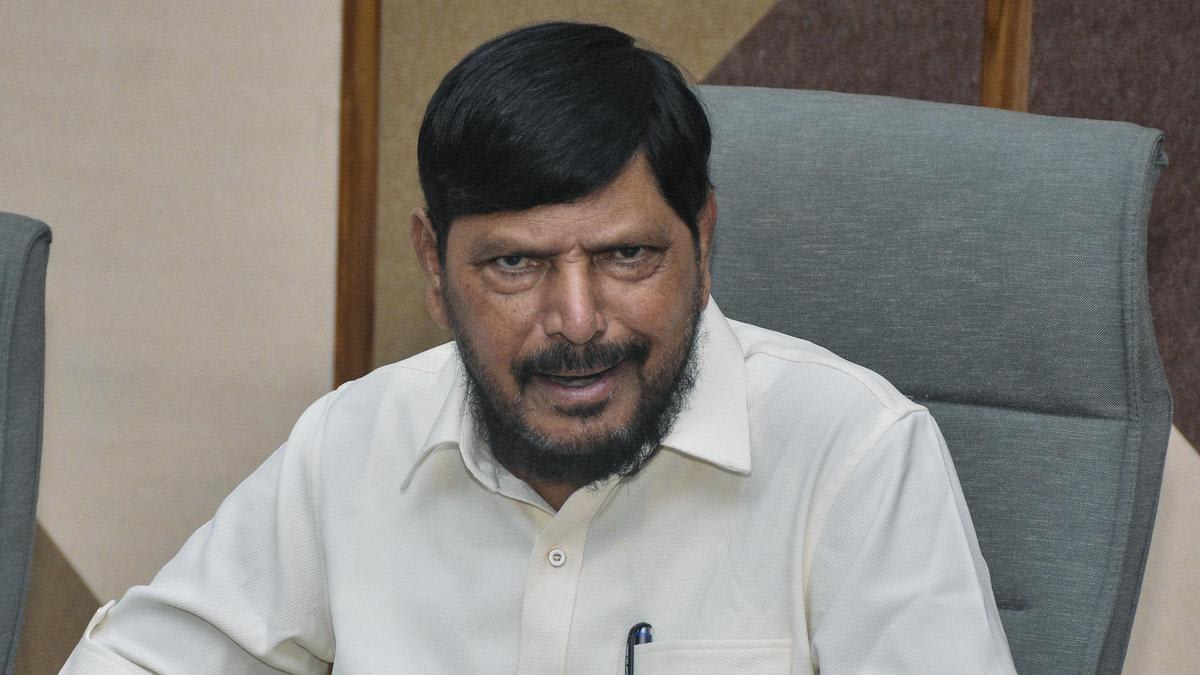
Union Minister Ramdas Athawale has stated that the Women's Reservation Bill and the Delimitation Bill are set to be passed during the Monsoon Session, leveraging the government's two-thirds majority in Parliament.
Legislative Momentum: Analyzing the Push for Women's Quotas and Delimitation
Union Minister Ramdas Athawale's recent assertion that the Women's Reservation Bill and the Delimitation Bill will be passed during the upcoming Monsoon Session signals a high-stakes legislative push by the current administration. By explicitly citing a "two-thirds majority," Athawale is highlighting the government's capacity to pass constitutional amendments, which require a special majority rather than a simple one. This statement underscores a strategic intent to finalize two of the most contentious and transformative pieces of legislation in recent Indian political history, aiming to reshape the demographic and geographic landscape of parliamentary representation.
The Quest for Gender Parity: The Women's Reservation Bill
The Women's Reservation Bill, often referred to as the Nari Shakti Vandan Adhiniyam in recent contexts, seeks to reserve one-third of all seats in the Lok Sabha and state legislative assemblies for women. Historically, the struggle for gender representation in the Indian Parliament has been a decades-long journey marked by repeated failures and political hesitation. By institutionalizing a quota, the government aims to move beyond tokenism, ensuring that women have a structural role in law-making. This move is expected to not only empower women politically but also shift the legislative focus toward issues of gender-based violence, maternal health, and female economic participation, thereby altering the social fabric of Indian governance.
The Complexity of Delimitation
Parallel to the quota system is the Delimitation Bill, a process that involves redrawing the boundaries of parliamentary and assembly constituencies based on the most recent census data. Delimitation is fundamentally about ensuring "one vote, one value," but it is fraught with political sensitivity. In India, this process often triggers a regional power struggle; states that have successfully implemented population control measures (predominantly in the South) fear a loss of parliamentary seats to states with higher population growth (predominantly in the North). Athawale's confidence in passing this bill suggests the government is prepared to navigate these regional tensions to update the electoral map for the first time in several decades.
The Interplay Between Quotas and Boundaries
A critical point of analysis is the symbiotic relationship between the Women's Reservation Bill and the Delimitation process. In many legislative frameworks, the implementation of women's quotas is tied to the completion of a fresh delimitation exercise and the subsequent census. This means that the actual reservation of seats may not happen immediately but will be triggered once the new boundaries are established. By pushing both bills simultaneously, the government is attempting to create a streamlined roadmap for electoral reform, ensuring that the legal framework for gender quotas is in place before the physical restructuring of constituencies begins.
Political Implications of the Two-Thirds Majority
The mention of a "two-thirds majority" is a calculated political signal. Passing bills of this magnitude requires broad consensus or overwhelming strength in both houses of Parliament. Athawale's statement serves as a warning to the opposition that the government possesses the numerical strength to override dissent. However, the true challenge lies not just in the vote count, but in managing the political fallout from regional parties who may feel marginalized by the new delimitation boundaries. The ability to maintain this majority while negotiating the nuances of seat distribution will be the ultimate test of the administration's legislative strategy.
Future Trends and Democratic Evolution
Looking forward, the successful passage of these bills would mark a paradigm shift in Indian democracy. We can predict a surge in female political leadership at the national level, potentially leading to a more inclusive policy-making process. Furthermore, the delimitation process will likely redefine the political gravity of the country, potentially shifting the center of power toward more populous states. While this may cause short-term friction, it is a necessary step in aligning political representation with current demographic realities. The Monsoon Session will therefore serve as a litmus test for the government's ability to implement structural reforms that balance gender equity with regional stability.
Conclusion
In summary, Minister Ramdas Athawale's announcement points toward a transformative legislative agenda. By combining the Women's Reservation Bill with the Delimitation Bill, the government is attempting to modernize India's democratic architecture. While the two-thirds majority provides the necessary muscle, the success of these initiatives will depend on the government's ability to manage the complex interplay between gender representation and regional political interests.
Verification Required?