Xi Jinping expels another leader from his top team
Source Entity
Latest News: Today's Latest News Headlines from India & World | Hindustan Times | Hindustan Times
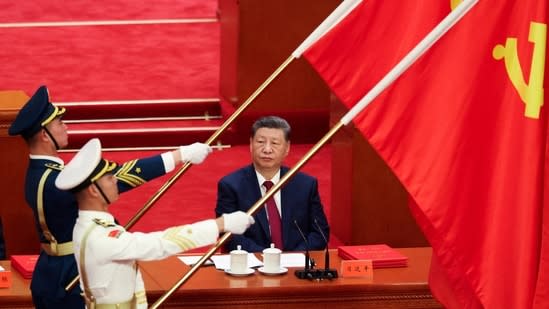
Xi Jinping has expelled another high-ranking member of the Politburo, continuing a trend of purging top leadership to consolidate absolute authority within the Chinese Communist Party.
The Consolidation of Power: Xi Jinping's Politburo Purges
An Unprecedented Shift in CCP Governance
The recent expulsion of another high-ranking leader from the Politburo marks a significant milestone in the political trajectory of the Chinese Communist Party (CCP). By setting a record for the number of top-tier officials removed from the party's inner circle, Xi Jinping is signaling a departure from the traditional norms of the CCP. The Politburo serves as the primary decision-making body for the world's second-largest economy, and the volatility currently seen within its ranks suggests a systemic shift toward a more centralized, autocratic style of governance.
The Mechanism of Political Control
These expulsions are rarely isolated incidents; they are typically the culmination of internal investigations often framed as "anti-corruption" drives. By utilizing the Central Commission for Discipline Inspection (CCDI), the leadership can remove perceived rivals or those deemed insufficiently loyal under the guise of maintaining party purity. This strategy allows the central leadership to cleanse the top echelons of the party of any dissenting voices, ensuring that the Politburo functions less as a deliberative body and more as a vehicle for executing the General Secretary's specific vision.
From Collective Leadership to Centralized Authority
To understand the gravity of these record-breaking expulsions, one must look at the historical context of the CCP. For decades following the era of Mao Zedong, the party moved toward a model of "collective leadership." Under leaders like Jiang Zemin and Hu Jintao, power was distributed across the Standing Committee to prevent the rise of a single omnipotent leader. Xi Jinping's systematic removal of Politburo members represents a deliberate dismantling of this collective framework, returning China to a leadership model that mirrors the centralized power structures of the mid-20th century.
Implications for Institutional Stability
While these purges effectively eliminate immediate opposition, they introduce significant long-term risks to institutional stability. The constant threat of expulsion creates a culture of fear and extreme conformity among the remaining leadership. When top officials are afraid to provide honest feedback or challenge flawed policies for fear of being labeled as "disloyal" or "corrupt," the risk of catastrophic policy errors increases. The record number of booted leaders suggests that the threshold for loyalty has become impossibly high, potentially alienating the very technocrats needed to manage China's complex economic challenges.
Future Trends in Party Discipline
Looking forward, it is likely that these purges will continue as Xi Jinping seeks to secure his legacy and ensure a seamless transition of his ideologies into the party's permanent charter. The record-setting nature of these expulsions indicates that the "cleaning" of the party is not a phase, but a permanent feature of the current administration. We can expect further reshuffling of the Politburo as the leadership prepares for future party congresses, with loyalty to the core being the sole metric for survival within the top team.
Summary of Political Realignment
In conclusion, the expulsion of yet another top leader is a clear manifestation of Xi Jinping's drive for absolute control. By breaking records in the removal of Politburo members, he has effectively rewritten the rules of political survival within the CCP. While this consolidates power in the short term, the erosion of collective deliberation and the rise of a loyalty-based hierarchy may create systemic vulnerabilities that will define the next decade of Chinese politics.
Verification Required?