‘Deeply flawed’: Editors Guild slams MEA’s defence of PM Modi’s media silence
Source Entity
The Indian Express
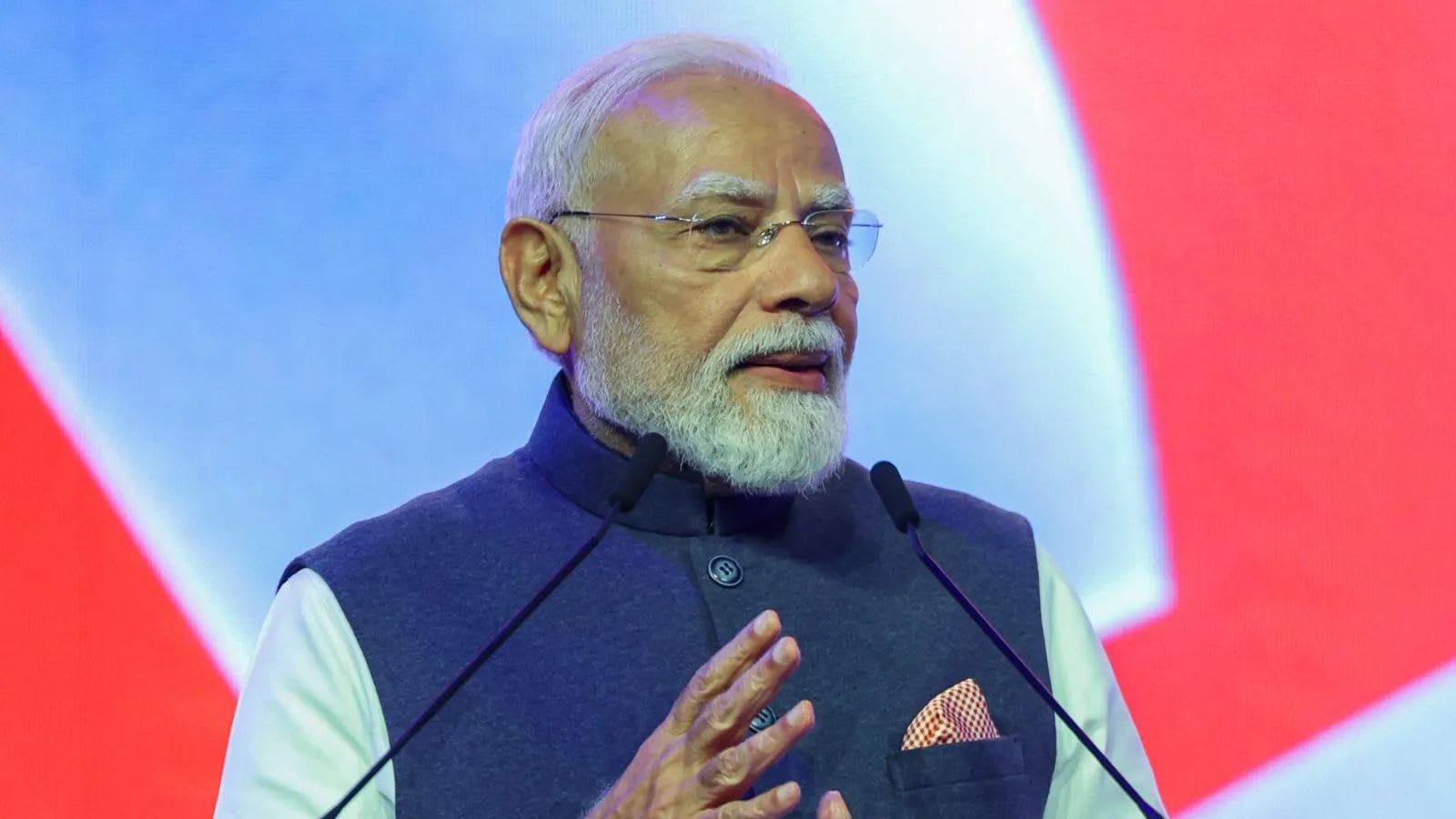
The Editors Guild of India (EGI) has criticized the Ministry of External Affairs (MEA) for defending Prime Minister Narendra Modi's avoidance of press conferences, calling the government's reasoning 'deeply flawed' and emphasizing the need for journalistic accountability.
The Clash Between Press Accountability and Executive Silence
The Editors Guild of India (EGI), a premier body representing journalists, has sparked a significant debate by slamming the Ministry of External Affairs (MEA) over its defense of Prime Minister Narendra Modi’s avoidance of press conferences. This clash highlights a fundamental tension in contemporary Indian governance: the balance between a leader's preference for controlled communication and the media's democratic mandate to hold power accountable. By labeling the MEA's justifications as "deeply flawed," the EGI is not merely criticizing a specific administrative decision but is challenging the systemic shift in how the Prime Minister's Office (PMO) interacts with the fourth estate.
Analysis of the 'Deeply Flawed' Argument
The crux of the EGI's criticism lies in the belief that the MEA's defense of the PM's silence ignores the essential nature of journalistic scrutiny. In a functioning democracy, the ability of the press to ask spontaneous, unscripted, and challenging questions is the primary mechanism for transparency. When the government justifies the absence of such interactions—perhaps by citing the use of other communication channels or the nature of the PM's schedule—it undermines the principle of public accountability. The EGI argues that no amount of curated digital content or one-way communication can replace the rigors of a live press conference where the executive must defend its policies in real-time.
The Evolution of Government Communication
To understand the MEA's defense, one must look at the shift toward "direct-to-citizen" communication. Prime Minister Modi has pioneered a model that bypasses traditional media intermediaries through platforms like Mann Ki Baat and social media. From the government's perspective, this approach removes the "filter" of the press, which they may view as biased or adversarial. However, this strategy effectively transforms political communication from a dialogue into a monologue. The MEA's attempt to defend this practice suggests a strategic preference for narrative control over journalistic interrogation, a move that the EGI views as detrimental to the health of the republic.
Historical Context of the Indian Press
Historically, the Indian Prime Minister's office has had a varied relationship with the press, but the practice of facing the media—even if selectively—was a standard expectation of the office. The current era marks a departure from this norm, where the absence of formal press conferences has become a defining characteristic of the administration. This shift is not happening in a vacuum; it coincides with a broader global trend of "populist" communication styles where leaders cultivate a direct bond with the masses while distancing themselves from traditional news institutions. The EGI's intervention is an attempt to steer the Indian executive back toward the tradition of open journalistic engagement.
Broader Implications for Democratic Oversight
The implications of this "media silence" extend beyond mere optics. When the head of government avoids questioning, it creates an information vacuum that is often filled by speculation or polarized narratives. Moreover, it sets a precedent for other government officials to avoid transparency, potentially weakening the overall culture of accountability within the bureaucracy. The EGI's critique underscores the fear that without the pressure of direct questioning, policy decisions may be made with less regard for public scrutiny, and the media's role is reduced from a watchdog to a mere megaphone for government announcements.
Future Outlook on Press-State Relations
Looking forward, the tension between the EGI and the MEA is likely to intensify as the media continues to push for greater access. We can expect a continued struggle over the definition of "access," with the government potentially offering more curated "interviews" while still avoiding open-floor press conferences. If the government continues to dismiss the EGI's concerns, it may lead to a further alienation of the professional journalistic community and a deeper reliance on state-aligned media outlets. The resolution of this conflict will ultimately determine whether the Indian media can maintain its role as an independent auditor of power or if it will be forced into a secondary role of narrative dissemination.
Conclusion
In summary, the Editors Guild of India's condemnation of the MEA's stance reflects a critical juncture in the relationship between the Indian state and the press. The debate over Prime Minister Modi's media silence is not about a personal preference for privacy, but about the institutional requirement for transparency in a democratic society. By challenging the "deeply flawed" logic of the government, the EGI is fighting to preserve the essential right of the press to question the executive, ensuring that the government remains answerable to the people through the medium of an independent and inquisitive press.