World Chess Championship: Now, Berlin with Rio variation too produces a draw in Game 3
Source Entity
Latest News: Todays Latest News Headlines from India & World | Hindustan Times
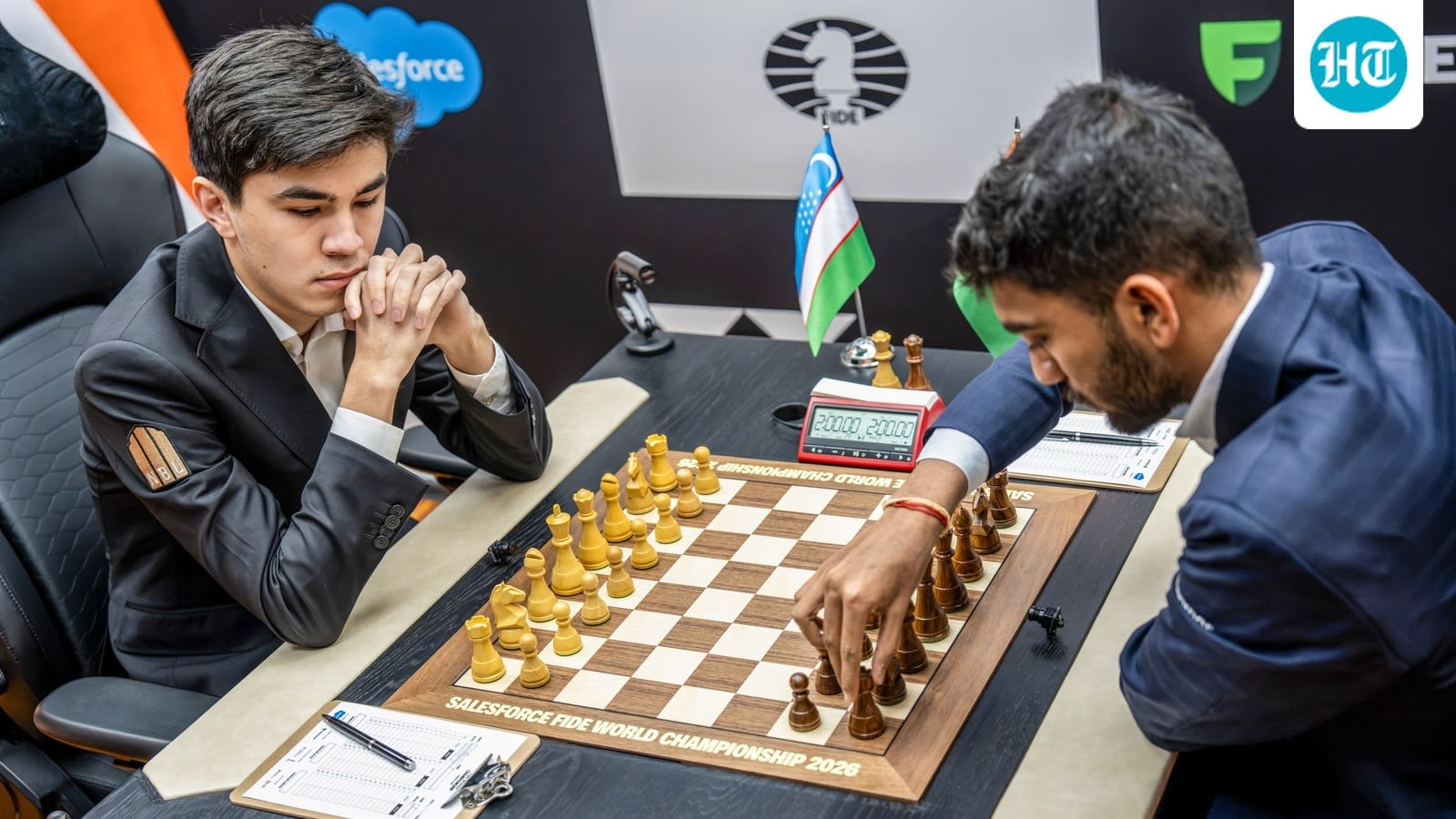
The third game of the 2026 FIDE World Chess Championship between Javokhir Sindarov and Gukesh D resulted in a third consecutive draw. The match intensified as Sindarov employed the Rio de Janeiro variation of the Berlin Defense, leading to a complex 60-move struggle.
The Strategic Standoff: Game 3 Analysis
The 2026 FIDE World Chess Championship has entered a tense phase, with the third consecutive draw between Javokhir Sindarov and Gukesh D marking a significant escalation in competitive intensity. While the initial games of a championship match are often characterized by cautious probing, this third encounter lasted nearly five hours and spanned 60 moves, signaling that both grandmasters are moving past the 'feeling-out' period and into deep theoretical preparation.
The Berlin Defense Evolution
The game began with Sindarov opting for 1.e4, met by Gukesh’s 1...e5, leading to the familiar structure of the Berlin Defense (1.e4 e5 2. Nf3 Nc6 3. Bb5 Nf6). The Berlin Defense has long been a bedrock of top-level chess, famously known as the 'Berlin Wall' for its resilience. However, the decision to revisit this opening after Game 1 highlights the meticulous preparation both camps have invested in this specific line.
The Shift to the Rio Variation
The narrative of the match shifted when Gukesh deviated from the standard Berlin Endgame seen in Game 1, opting instead for 5...Be7. This transition into the Rio de Janeiro Variation caught the defending champion, Sindarov, off guard. The Rio variation is known for its tactical complexity and potential for imbalanced positions, a stark contrast to the draw-heavy reputation of the standard Berlin structure. This move forced Sindarov to spend an uncharacteristic amount of time in his chair during the first hour, indicating that the preparation had moved into unchartered territory for the Uzbek grandmaster.
Psychological and Clock Management
The fact that Sindarov remained planted in his chair for the first hour is a testament to the psychological warfare inherent in modern championship chess. In elite play, clock management is as vital as board evaluation; by burning through his time early, Sindarov was forced to play under increased pressure for the remainder of the five-hour marathon. This tactical adjustment by Gukesh demonstrated a clear intent to disrupt the defending champion’s rhythm and force a more creative, less engine-perfect approach to the middle game.
Broader Implications for the Match
As the match progresses, the trend of draws suggests that both players are currently well-matched in their defensive preparations. However, the increased move count and the shift toward the Rio variation suggest that we are approaching a 'breaking point' where one player may eventually overextend. For spectators and analysts, the third game serves as a harbinger of more volatile contests ahead, as both players look to capitalize on the smallest of inaccuracies in the opening phase.
Concluding Outlook
While the scoreboard remains tied, the momentum is clearly shifting toward a more aggressive style of play. With both players now familiar with the other's defensive nuances, the upcoming games will likely involve even deeper preparation and potentially more high-stakes gambles. The 2026 World Championship continues to be a display of extreme endurance and intellectual rigor, setting the stage for a dramatic conclusion.
Verification Required?