Xpeng shares sink as weak delivery forecast overshadows $6.3 billion robot unit valuation
Source Entity
US Top News and Analysis
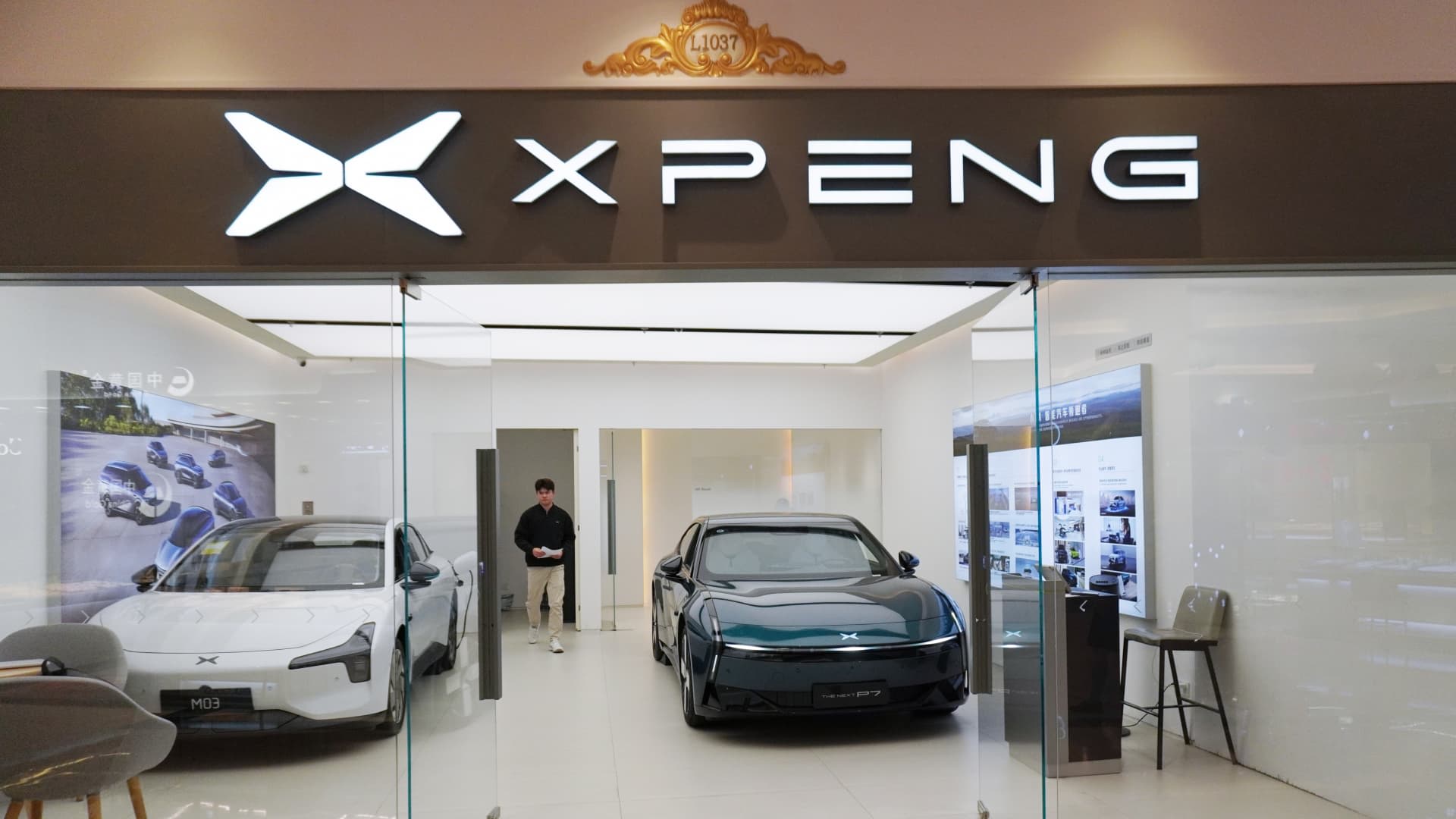
Xpeng shares fell sharply following a weak third-quarter delivery forecast despite a strong $6.3 billion valuation for its robotics unit. The company also reported a widening second-quarter net loss despite modest revenue growth.
Market Volatility and Investor Sentiment
The recent downturn in Xpeng’s market performance, marked by a 9% slide in Hong Kong shares and an 8.5% drop on the U.S. markets, underscores the intense pressure facing Chinese electric vehicle (EV) manufacturers. Despite the company’s efforts to diversify into advanced sectors like robotics, the market remains primarily fixated on core delivery metrics. The discrepancy between the company’s technological valuation and its operational output highlights a growing skepticism among investors regarding the speed of mass-market EV adoption versus the long-term potential of speculative tech ventures.
Financial Performance and Operational Challenges
Xpeng reported a second-quarter net loss of 1.34 billion yuan, a significant expansion compared to the previous year. While revenue managed a modest 8% increase to 19.74 billion yuan, this growth failed to offset the mounting costs associated with research, development, and market expansion. The widening net loss serves as a stark reminder of the capital-intensive nature of the EV industry, where profitability is frequently sacrificed in favor of market share acquisition and technological innovation.
The Delivery Forecast Dilemma
The core of the current investor dissatisfaction stems from the company's third-quarter delivery guidance, which projected between 115,000 and 121,000 vehicles. For shareholders, these figures represent a potential plateau or slowdown in growth, which is particularly alarming in the hyper-competitive Chinese EV market. When a company fails to meet the growth expectations of analysts, the market often ignores secondary successes, such as the impressive $6.3 billion valuation achieved by the robotics unit.
The Robotics Unit: A Strategic Hedge?
It is notable that Xpeng’s nascent robotics business has secured a valuation nearly equivalent to its core EV business. This suggests that while investors are wary of near-term vehicle sales, they remain highly optimistic about Xpeng’s pivot toward robotics and artificial intelligence. This dual-track strategy reflects a broader trend in the tech sector, where EV manufacturers are increasingly branding themselves as 'mobility and robotics companies' to attract venture capital and diversify revenue streams away from the volatile hardware market.
Broader Implications and Future Outlook
The situation at Xpeng reflects a broader macroeconomic environment in China where consumer demand is under scrutiny. As the company navigates these financial headwinds, its ability to bridge the gap between high-tech valuation and operational profitability will be critical. Future market trends will likely depend on whether Xpeng can stabilize its delivery numbers while successfully integrating its robotics advancements into commercial applications, effectively proving that its technological investments can provide a tangible buffer against the cyclical nature of the automotive sector.