Yalta 2.0 in making? Nuclear arms, two wars on the table as Trump, Xi and Putin meet
Source Entity
AYUSH PANDEY
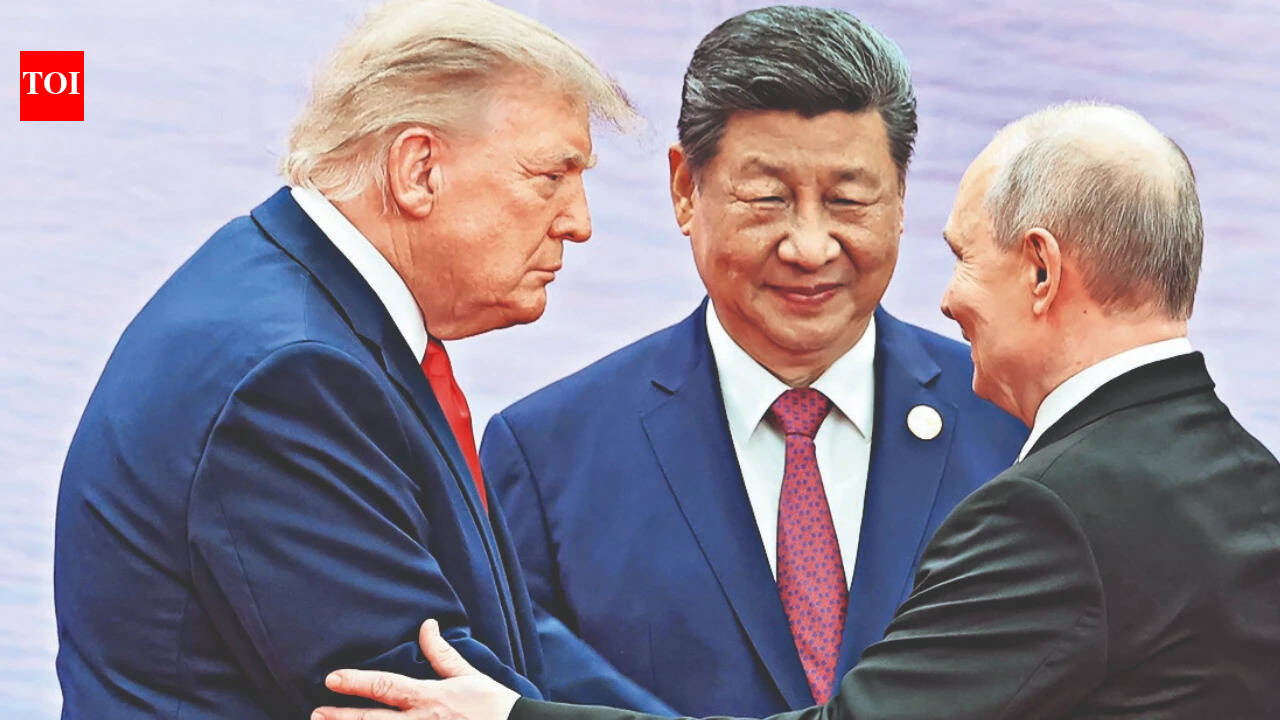
US President Donald Trump, China's Xi Jinping, and Russia's Vladimir Putin are convening in Shenzhen during the APEC summit to address critical global security and economic challenges. The high-stakes meeting focuses on nuclear arms control, ongoing conflicts in Ukraine and Iran, and complex trade and technology rivalries.
The Shenzhen Summit: A New Geopolitical Architecture
The gathering of US President Donald Trump, Chinese President Xi Jinping, and Russian President Vladimir Putin in Shenzhen marks a pivotal moment in contemporary international relations. As these three leaders converge alongside the APEC Economic Leaders' Summit, the international community is closely watching whether this trilateral engagement will serve as a modern-day 'Yalta'—a forum capable of redrawing the rules of engagement for a volatile world. The meeting arrives at a time when traditional diplomatic channels are strained by rapid technological shifts and a series of intractable regional conflicts.
Navigating the Nuclear and Conflict Landscape
Central to the agenda is the urgent need for nuclear arms control. With global security architectures fraying, the ability of these three powers to establish a stable dialogue on nuclear proliferation is paramount. Furthermore, the leaders are faced with the immediate pressure of the ongoing wars in Ukraine and Iran. The Iran conflict, now entering its ninth month, continues to exert significant upward pressure on global energy prices, creating economic instability that transcends borders. Negotiating a path toward de-escalation in these theaters requires balancing the divergent strategic interests of Washington, Moscow, and Beijing.
Trade, Technology, and the AI Race
Economic friction remains a defining feature of the US-China relationship. President Xi Jinping’s recent calls for the removal of trade and investment barriers, alongside promises to reform market access for foreign businesses, suggest a strategic attempt to lower the temperature of current disputes. However, this is complicated by the intensifying tech rivalry, particularly regarding semiconductor access. Washington’s ongoing scrutiny of Nvidia’s chip sales to China highlights a fundamental tension: the struggle for dominance in the Artificial Intelligence sector, which is increasingly viewed as the bedrock of future national security and economic power.
The Shadow of Regional Instability
Beyond the trilateral dynamic, the broader APEC context reveals a fractured Asia-Pacific region. Tensions between China and Japan have escalated significantly since the last APEC summit, introducing an additional layer of complexity to the regional security environment. The leaders in Shenzhen must navigate these localized disputes while simultaneously managing their broader global competition. The presence of these leaders in one city provides a rare opportunity for direct communication, yet the deep-seated mistrust between the parties suggests that progress will be incremental at best.
Personal Diplomacy vs. Strategic Realities
While the personal dynamics between Trump, Xi, and Putin will undoubtedly color the tone of the summit, the substantive outcomes will be dictated by hard national interests. The transition from the Yalta-style power-brokering of the mid-20th century to the current multipolar era is defined by a more complex web of interdependence and rivalry. Whether this meeting produces a breakthrough or merely serves as a diplomatic theater will depend on the leaders' willingness to prioritize long-term stability over short-term tactical advantages.
Conclusion: Assessing the Future Global Order
As the Shenzhen summit concludes, the world will be looking for signs of a new consensus on global order. The convergence of nuclear security, conflict resolution, and technological competition creates an unprecedented set of challenges for these three heads of state. If they can move toward a framework that mitigates the risk of direct confrontation, the Shenzhen meeting may indeed be remembered as a turning point in the 21st-century geopolitical landscape.