Delhi Minister says no froth in 52-km Yamuna stretch, blames AAP for politicising Chhath
Source Entity
India Latest News: Top National Headlines Today & Breaking News | The Hindu
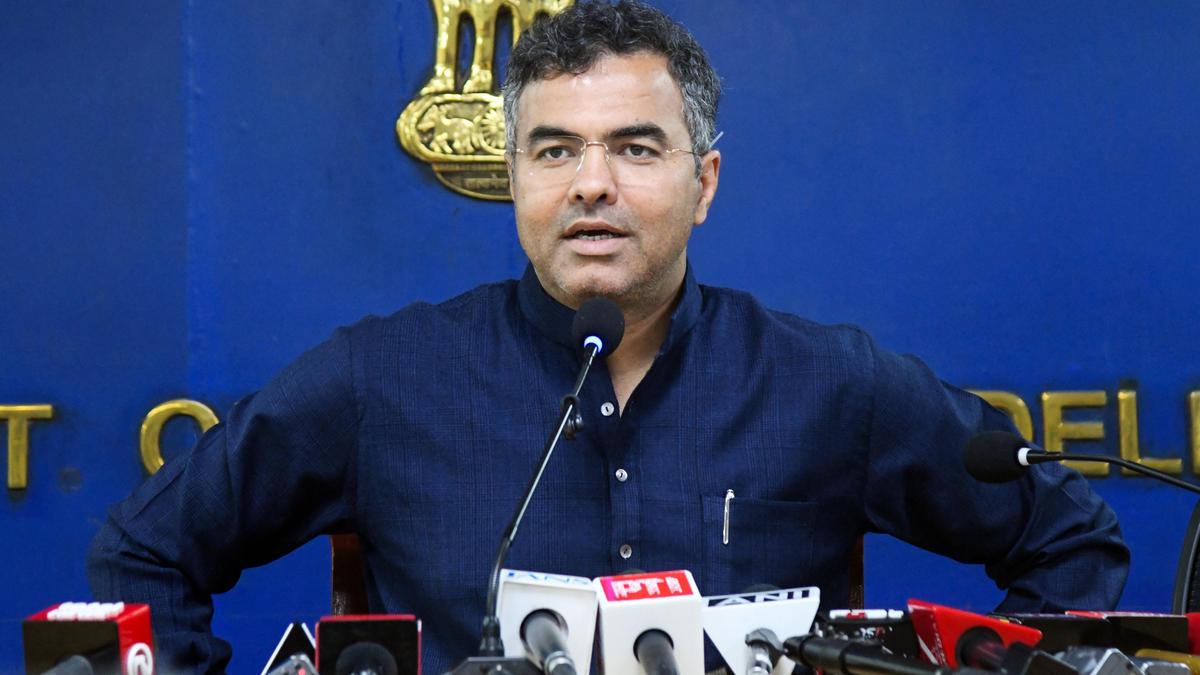
Delhi Water Minister Parvesh Sahib Singh has denied the presence of froth in the Yamuna River during Chhath Puja, dismissing AAP's allegations as politically motivated. The government is coordinating with Uttar Pradesh to manage pollution near the Okhla Barrage.
The Yamuna Froth Controversy: Political Tensions and Environmental Reality
Conflicting Narratives on River Health
Delhi Water Minister Parvesh Sahib Singh recently addressed the state of the Yamuna River following the conclusion of Chhath Puja, asserting that the 52-km stretch of the river flowing through the national capital remained free of toxic froth. This declaration directly counters allegations leveled by the Aam Aadmi Party (AAP), which had claimed that devotees were forced to perform rituals in hazardous, foam-covered waters. By publicly refuting these claims, Minister Singh has framed the discourse as a political maneuver, suggesting that the opposition is attempting to undermine the BJP’s connection with the Purvanchali community.
The Role of Wastewater and Chemical Agents
While the political debate rages, the Central Pollution Control Board (CPCB) provides a technical perspective on the phenomenon. The presence of froth in the Yamuna is not merely a matter of political optics but is fundamentally linked to the discharge of untreated wastewater containing high levels of surfactants and phosphates. These foaming agents, often originating from industrial and domestic detergents, accumulate in the riverbed. When the water experiences significant turbulence—often at barrages like Okhla—these agents aerate, resulting in the thick, white layers of foam that frequently characterize the river's condition in the region.
Inter-State Governance and the Okhla Barrage
Minister Singh acknowledged that while the Delhi stretch might remain clear, challenges persist near the Okhla Barrage. Addressing this requires a collaborative approach, as the river’s health is a trans-boundary issue. The government is currently engaged in discussions with Uttar Pradesh to synchronize water management strategies. Because the Okhla Barrage acts as a critical junction, effective pollution mitigation requires unified efforts to control the flow of untreated effluents before they reach the city’s dense urban corridors.
Political Implications for Chhath Puja
Chhath Puja holds immense cultural and political significance for the Purvanchali population in Delhi. The ability of the government to provide clean, safe ghats for the festival is often used as a litmus test for administrative competence. Minister Singh’s assertion that the BJP has “won the hearts” of the Purvanchali people suggests that the management of the Yamuna is deeply intertwined with electoral strategy. By labeling the AAP's criticisms as a result of being "pained" by political losses, the Minister has underscored the extent to which environmental governance has become a battleground for regional dominance.
Future Trends in River Management
Looking forward, the persistence of the foam issue signals a long-term struggle for the National Capital Territory. Scientific studies consistently link poor water quality to the formation of this froth, indicating that temporary fixes are insufficient. Future trends will likely necessitate stricter enforcement of discharge norms for industrial units and a significant upgrade in sewage treatment infrastructure. Until the underlying issue of untreated sewage is addressed, the Yamuna will likely remain a focal point of both environmental concern and intense political debate during major cultural festivals.
Verification Required?