Singer or clanker? YouTube Music will tell you with new gen AI labeling.
Source Entity
Ryan Whitwam
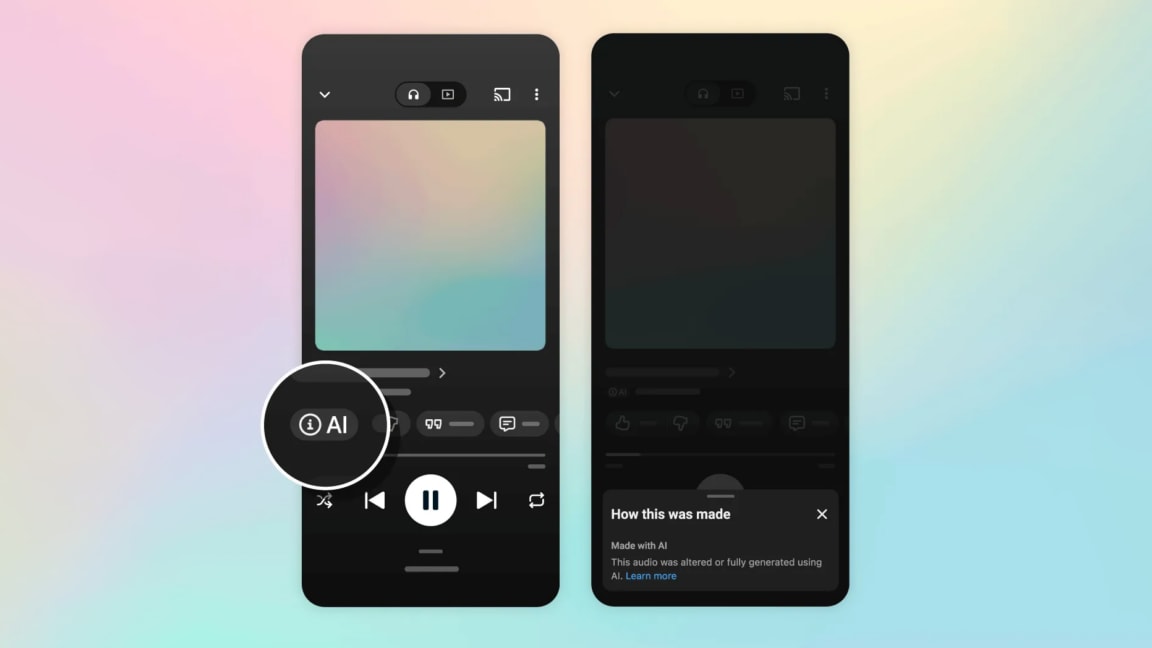
YouTube Music is introducing new generative AI labels to clarify when tracks are created or altered by artificial intelligence. This initiative aims to increase transparency for listeners while acknowledging the evolving role of AI in musical creativity.
Enhancing Transparency in the Streaming Era
YouTube Music has officially begun rolling out a new labeling system designed to identify content generated or significantly assisted by artificial intelligence. This move represents a pivotal shift in how major streaming platforms manage the intersection of human artistry and machine-generated content. By implementing these disclosures, Google aims to bridge the information gap for listeners who may otherwise be unable to distinguish between traditional studio recordings and tracks synthesized by AI models.
The Rise of AI-Generated Audio
The proliferation of generative AI models has democratized music production, allowing users to create sophisticated audio tracks with minimal effort. While this innovation offers new avenues for creative experimentation, it has also introduced a flood of content often referred to as "AI slop" into streaming ecosystems. Because these tools can mimic the nuances of professional production, the average consumer often consumes AI-generated audio without explicit knowledge of its origin, leading to concerns regarding authenticity and the dilution of human-led creative labor.
Google's Balanced Stance on Innovation
Despite the potential for misinformation or creative displacement, Google has explicitly stated that it is not seeking to ban AI-generated music. Instead, the company frames generative AI as a tool that "opens up new ways for artists to create, experiment, and share music." This nuanced approach suggests that Google views AI as a collaborative partner for musicians rather than a replacement, focusing on disclosure and transparency as the primary mechanisms to maintain trust within the YouTube Music community.
Aligning with Broader Platform Policies
This new labeling initiative for YouTube Music is not an isolated development but rather an extension of broader transparency policies already being implemented across the main YouTube platform. By standardizing these disclosures, Google is creating a consistent user experience that warns viewers and listeners about synthetic or altered content. This alignment reflects the company’s ongoing strategy to address the ethical implications of deepfakes and automated content creation across all its digital media properties.
Implications for the Future of Music
Looking ahead, the implementation of these labels is likely to set a precedent for the entire music industry. As generative AI becomes more deeply embedded in production workflows, listeners will increasingly demand clarity regarding the provenance of their favorite tracks. Future trends suggest that metadata standards for AI participation will become as common as traditional songwriting credits, ensuring that the distinction between human and machine contributions remains visible in an increasingly automated landscape.