Zuckerberg reveals uncertainty behind Meta’s $200 billion AI push as investors await returns
Source Entity
Latest News: Todays Latest News Headlines from India & World | Hindustan Times | Hindustan Times
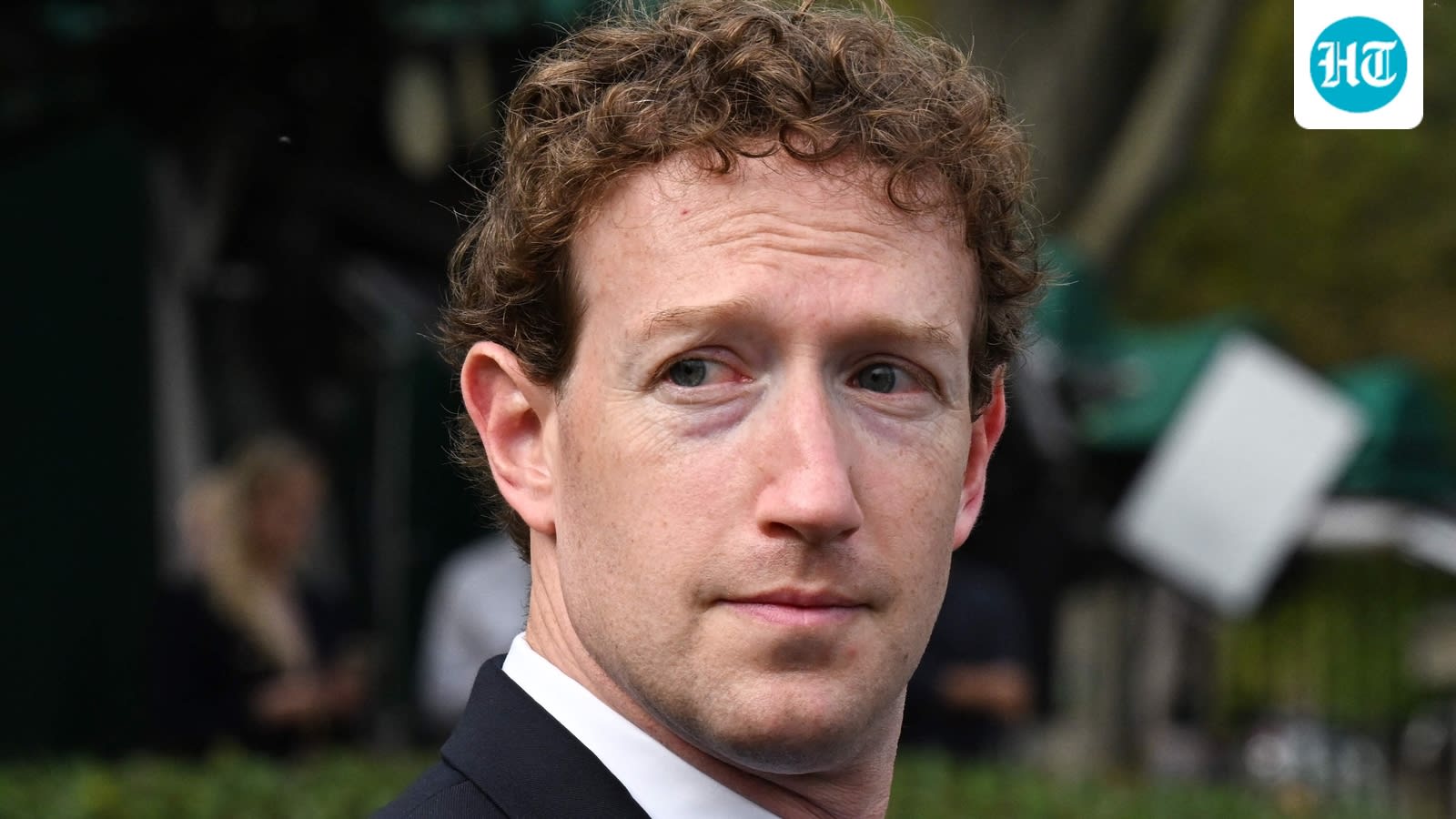
Meta CEO Mark Zuckerberg has acknowledged the significant financial risk behind the company's $200 billion investment in AI infrastructure. Despite the uncertainty of future returns, Meta continues to push forward with new innovations like the Muse personalized AI assistant.
The High-Stakes Gamble: Meta's Strategic Pivot to AI
Meta Platforms, under the leadership of CEO Mark Zuckerberg, has embarked on one of the most ambitious and capital-intensive infrastructure projects in corporate history. By committing between $100 billion and $200 billion toward artificial intelligence, Zuckerberg has signaled a fundamental shift in the company's trajectory. This expenditure, aimed at building the massive computational capacity required to lead in the AI race, represents a departure from traditional tech scaling, where returns are often more predictable and tied to established user bases.
The Reality of Uncertainty
In a candid admission on the Cheeky Pint podcast, Zuckerberg revealed the internal apprehension surrounding these massive capital outlays. By questioning his Chief AI Officer, Alexandr Wang, about the long-term viability of these investments, Zuckerberg highlighted the inherent volatility of the AI sector. This acknowledgment serves as a rare, transparent look into the executive decision-making process at the highest levels of Silicon Valley, where current market dominance is increasingly reliant on winning the generative AI arms race.
Balancing Innovation and Investor Scrutiny
Investors, who have historically demanded steady growth and fiscal discipline, are now watching closely as Meta’s bottom line is temporarily impacted by these massive infrastructure costs. The pressure to justify this $200 billion spend is immense, as the company must prove that its hardware and software investments can translate into viable revenue streams. This tension defines the current state of Big Tech, where the race to build superior foundational models often precedes the development of a concrete monetization strategy.
The Role of Muse in the Ecosystem
Amidst this backdrop of heavy spending, Meta has introduced Muse, its personalized AI assistant. This product serves as a tangible manifestation of the company's research and development efforts. As Meta continues to roll out personalized experiences, the success of tools like Muse will be critical in demonstrating the utility of the company's vast AI infrastructure to both consumers and shareholders alike. It is a testing ground for whether high-end AI can be integrated seamlessly into the daily digital lives of billions of users.
Long-term Implications and Future Trends
Meta’s aggressive posture suggests a belief that the cost of inaction—falling behind competitors in the AI landscape—is far greater than the risk of failure. This strategy mirrors the historical 'bet-the-company' moments seen in the evolution of the internet and mobile computing. Looking ahead, the industry will be watching to see if Meta’s infrastructure advantage creates a moat that competitors cannot cross, or if the sheer cost of maintaining such systems forces a pivot in business strategy.
Conclusion
Ultimately, Mark Zuckerberg’s admission underscores that the future of Meta is tethered to the successful implementation of its AI vision. While the financial commitment is staggering and fraught with uncertainty, it positions the company at the vanguard of a technological revolution. Whether this $200 billion bet will be remembered as a visionary masterstroke or an overextension of resources remains the central question for Meta’s future.
Verification Required?