
Prerequisites for Biomanufacturing
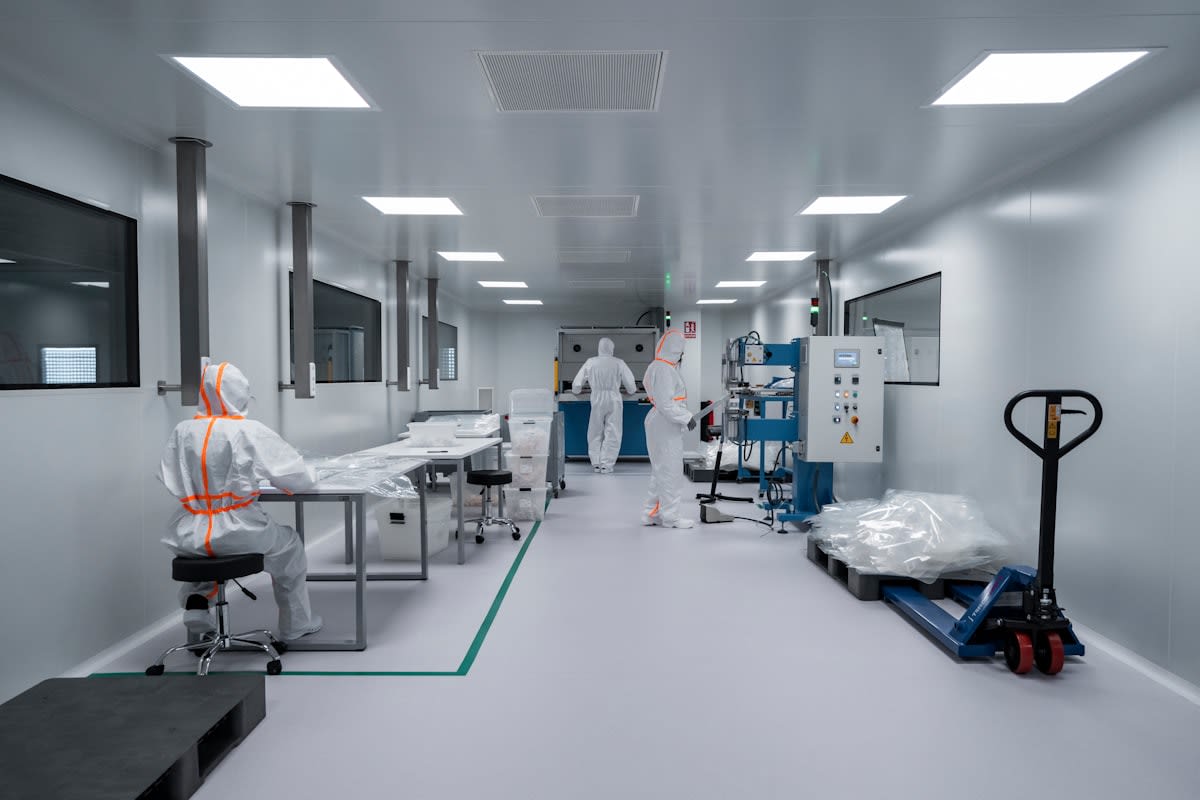
Steel doesn't lie. Biomanufacturing fails when the physics of the plant clash with the dreams of the C-suite. You cannot iterate your way out of a bad floor plan or a leaky valve.
- GMP-certified drug substance manufacturing site
- Sterile fill-finish capacity (cartridge-specific)
- A workforce capable of fermentation and downstream purification
- Digital data capture systems that replace physical binders
- Cold-chain logistics hubs (e.g., Frederick warehouse capabilities)
The Field-Tested Reality of Scaling
Ownership is often a liability. MacroGenics proved this on July 2, 2026, by selling its GMP manufacturing operations to Bora Pharmaceuticals for $122.5 million. This transaction offloaded 140 employees and the Rockville manufacturing site to a partner better equipped for the grind.
| Entity | Strategic Action | Asset/Value | Date |
|---|---|---|---|
| MacroGenics | Divested GMP Ops | $122.5 Million | July 2, 2026 |
| Shantha Biologics | Outsourced Fill-Finish | Novo Nordisk Partnership | June 30, 2026 |
Local geography dictates the strategy. Hyderabad offers a different play where Shantha Biologics utilizes purpose-built sterile capacity to serve global giants like Novo Nordisk. Contrast this with the Rockville divestment; one focuses on specialized service hubs, while the other removes the friction of internal ownership.
The Physics of Loss
The cost of failure in biologics is not a software bug; it is a contaminated batch that costs millions and months of delay.
Killing the Paper Trail
"Everybody wants to have AI. But where do you have your data? If it’s in binders, there’s not much you can do."— Alexander Seyf, CEO of Autolomous
Paper is the enemy. Information trapped in spreadsheets and binders kills scientific progress. Real digitization starts at the earliest research stages to ensure knowledge stays with the company rather than vanishing with a departing employee.

Data integrity is the bridge between a lab curiosity and a commercial product.
Building the Human Machine
Talent cannot be hired overnight. Manus and BioMADE are tackling the shortfall with an experiential apprenticeship model. This approach acknowledges that running a fermenter is a trade, not just a degree.
- Audit existing fermentation and downstream purification gaps.
- Establish a 18-month hands-on curriculum focusing on equipment sterilization.
- Implement rigorous contamination control and process monitoring drills.
- Rotate apprentices through analytics and safety protocols to ensure operational redundancy.
- Scale the training blueprint across pilot facilities to reduce reliance on external hiring.
India Agricultural Biologicals Market Potential
Executive Insight
+18.4%
YTD Growth
Market opportunities reflect this capacity. India's agricultural biologicals sector, valued between $700-900 million, grows at 12-15% annually because the structural gaps in manufacturing are actually investment opportunities.
Common Pitfalls
Overestimating AI is a common trap. Software cannot fix a facility that relies on paper binders. Ignore the human element and you face a talent gap that no amount of venture capital can fill. Underestimating the 18-month lead time for trained operators creates an operational friction that halts production.