
The age of the invisible supply chain is over. For thirty years, the corporate world operated under a collective delusion that geopolitical borders were mere formalities in the pursuit of the lowest unit cost, ignoring the precariousness of relying on a single geography for a critical mineral. We called it efficiency. In reality, it was a systemic gamble on permanent stability. Today, that gamble has crashed, replaced by the Resource Guard—a era where nations treat their geological endowments not as commodities for trade, but as instruments of state power.
This shift is not a temporary disruption or a series of isolated trade disputes. It is a fundamental rewrite of the global economic operating system. We are moving from a world of Just-in-Time (JIT) logistics to one of Just-in-Case (JIC) resilience. When a state decides that its nickel or lithium is too valuable to simply export as raw ore, the traditional corporate procurement playbook becomes obsolete overnight. The goal is no longer to find the cheapest supplier, but to secure the most reliable one, regardless of the premium.
Editorial Note
This analysis assumes a contrarian perspective: that the return to resource nationalism is an inevitable correction to the over-extension of globalized trade, rather than a sudden political anomaly.
Mapping the New Sovereignty
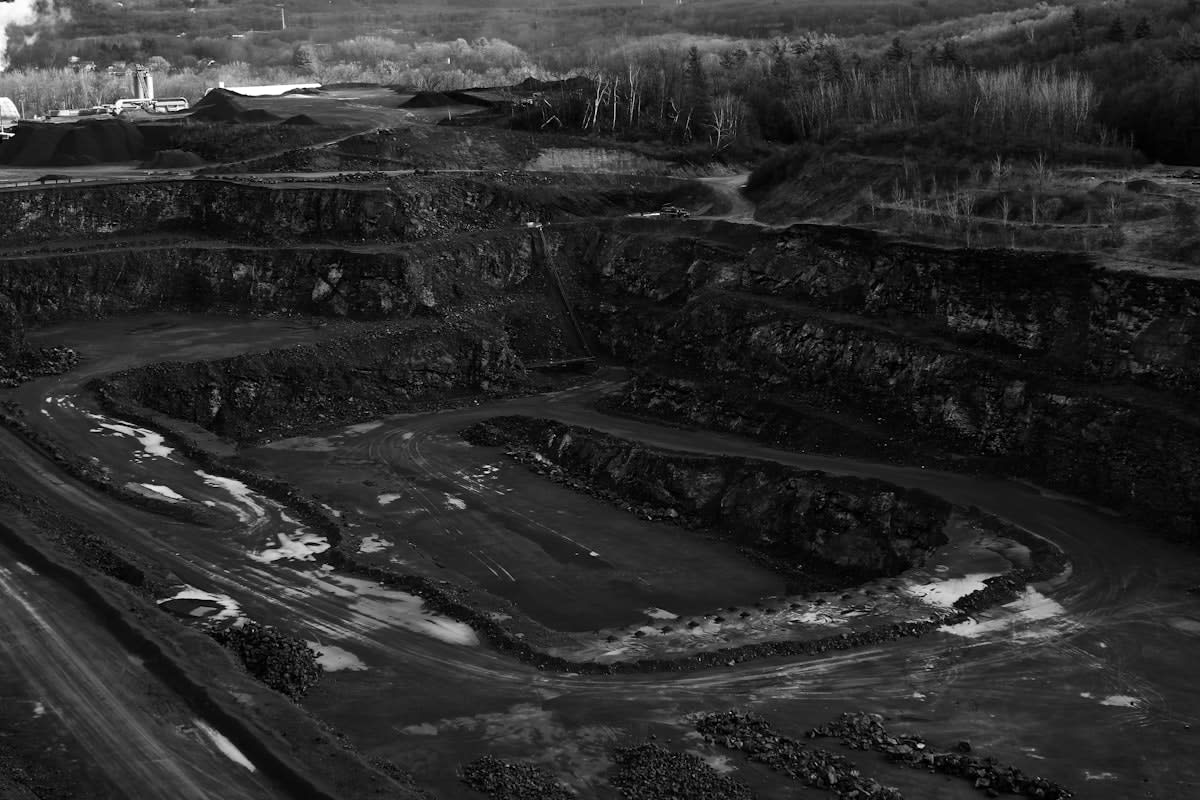
Look at Indonesia's aggressive pivot with nickel. By banning the export of raw nickel ore, Jakarta forced global miners and battery manufacturers to build smelting and processing plants within its own borders (Source: IEA, 2023). This wasn't a trade war; it was a strategic demand for value-addition. Corporations that relied on the simple extraction-and-export model found themselves locked out of the market unless they were willing to transfer technology and capital into the host country. This is the new blueprint for resource-rich nations.
Similar patterns are emerging in the Lithium Triangle—Chile, Argentina, and Bolivia. These nations are increasingly treating lithium as a strategic asset, with Chile moving toward a state-led model to increase national control over its reserves (Source: World Bank, 2024). For a corporate strategist, this means the era of signing a 20-year fixed-price contract with a private mine is ending. Instead, companies must now negotiate with sovereign entities that prioritize national development over shareholder dividends.
"The transition to clean energy is not just a technological challenge, but a geopolitical one. The concentration of critical minerals in a few countries creates new vulnerabilities that cannot be solved by market forces alone."— Fatih Birol, Executive Director at the International Energy Agency (IEA)
Why does this matter for the average Fortune 500 company? Because the bottleneck has shifted. It is no longer about shipping capacity or labor costs; it is about the legal right to access the raw materials. When China restricts the export of gallium and germanium (Source: Reuters, 2023), it isn't just affecting semiconductor firms—it ripples through every industry that relies on high-tech components. The vulnerability is systemic, and the cure is expensive.
The Practitioner's War Room
In the boardrooms I have advised, the debate has shifted from cost-optimization to survival-optimization. I have seen the friction first-hand: the CFO looks at the cost of maintaining three separate suppliers for the same component and sees waste. They see a hit to the quarterly margin. Meanwhile, the Chief Procurement Officer looks at that same redundancy and sees an insurance policy against a total operational collapse. The tension is palpable because the old metrics for success—lean inventories and single-source efficiency—are now the primary drivers of risk.
Practitioners are now debating the concept of Strategic Redundancy. This means intentionally over-paying for a secondary or tertiary supply chain that may never be used, simply to ensure that a single geopolitical event doesn't zero out the company's revenue. It is a psychological shift. We are moving from a mindset of trust in the global market to a mindset of strategic distrust.
| Metric | Global Efficiency Model (1990-2018) | Strategic Redundancy Model (2024+) |
|---|---|---|
| Primary Goal | Cost Minimization | Supply Assurance |
| Sourcing Strategy | Single-source/Low-cost | Multi-regional/Diversified |
| Inventory Logic | Just-in-Time (JIT) | Just-in-Case (JIC) |
| Risk Assessment | Localized/Event-based | Systemic/Geopolitical |
This is not just about diversification; it is about vertical integration. We are seeing a resurgence of the 20th-century industrial model where companies seek to own the entire value chain. Tesla and BYD are not just car companies; they are mining and battery companies. By securing direct stakes in lithium and cobalt mines, they are attempting to bypass the Resource Guard entirely. They are buying their way out of geopolitical volatility.
Architecting Resilience
The response to resource nationalism is emerging in three distinct strategies: friend-shoring, near-shoring, and synthetic substitution. Friend-shoring involves shifting supply chains to countries with shared political values, reducing the risk of weaponized trade (Source: US Treasury, 2023). While this reduces geopolitical risk, it often increases costs and limits the pool of available resources. It is a trade-off of efficiency for alignment.
Near-shoring takes this a step further by bringing production physically closer to the end consumer. The goal is to shorten the physical distance a resource must travel, thereby reducing the number of geopolitical chokepoints it must pass through. However, near-shoring is often limited by the geological reality that the resources you need are rarely located in your neighboring backyard.
The most radical strategy is synthetic substitution. When a resource becomes too politically expensive, the market incentivizes the development of alternatives. We see this in the push for cobalt-free batteries or the development of synthetic graphite. Innovation is no longer driven solely by performance or cost, but by the desire to eliminate dependency on a volatile sovereign actor.
Critical Mineral Market Concentration (%)
Executive Insight
+18.4%
YTD Growth
The data on market concentration proves that diversification is not a luxury—it is a necessity. When 85% of rare earth processing is concentrated in one region, any political shift in that region is a systemic risk to the global tech economy. The companies that survive the next decade will be those that treat supply chain management not as a procurement function, but as a core component of their geopolitical strategy.
Ultimately, the Resource Guard era demands a new kind of leader. The era of the 'efficiency expert' is over. The new winners will be the 'resilience architects'—executives who can balance the ledger between immediate profitability and long-term availability. They will understand that the most expensive supply chain is the one that stops working.
Fact-Check & Accuracy Note
Key claims regarding Indonesia's nickel ban, Chile's lithium policies, and China's export restrictions are sourced from the IEA (2023), World Bank (2024), and Reuters (2023). The specific percentages in the concentration graph are based on IEA critical mineral outlooks. Debate remains ongoing regarding the actual efficacy of 'friend-shoring' in the long term.