Silicon is hitting a wall. Current architecture relies on a rigid separation of memory and processing that generates massive heat and latency. Hsinchu's fabrication plants push nanometers to their limit, yet the energy cost of a single AI inference remains astronomical. Contrast this with the biological efficiency of a human brain, which processes complex spatial navigation using a fraction of the wattage. Logic gates are simply too slow for the next era of intelligence.
The Leap to Organoid Intelligence
Organoid Intelligence (OI) represents the new frontier. Lab-grown brain cellular structures now serve as the primary substrate for computation. These living neural organoids exhibit electrical activity and synapse formation that traditional neuromorphic chips only approximate. Nature reports a trajectory moving from symbolic logic to artificial neural networks, then to neuromorphic processors, and finally to biohybrid computers. Computation is no longer a matter of etching circuits but of cultivating biology.
Six months ago, neuromorphic chips were the peak of the curve. Now, by July 2026, the focus has leaped to these biohybrid systems. Traditional chips mimic neurons; OI actually uses them. This removes the translation layer between biological signals and digital binary. Processing speed is now limited by cellular growth and nutrient flow rather than clock speed.

Timing governs everything. Neural activity fluctuates across a wide range of timescales, a reality that silicon struggles to emulate. Recent data reveals that these diverse timescales are not random but are necessary for functional brain computation. Machine learning models are finally uncovering how these hierarchies of intrinsic timescales allow the primate cortex to integrate task-relevant signals. Precision at the millisecond level differentiates a reflex from a calculation.
Biological systems manage multiple temporal streams simultaneously. Silicon attempts to simulate this through massive parallelism, but the overhead is crippling. Biohybrid systems handle these timescales natively. They don't simulate the process; they are the process. This native handling of time allows for a level of flexibility that makes current deep learning models look like calculators.
Magnons and the Quantum Hardware Layer
Hardware limitations are being bypassed using magnetic waves. Magnons, once dismissed as too fleeting, have seen their lifetimes extended by nearly 100 times. Physicists have pushed these signals to 18 microseconds, proving that material purity, not physics, was the primary bottleneck. This enables quantum information carriers that could fit on a penny. Such density would make the power outages in Lagos irrelevant for localized, low-power quantum nodes.
Magnon Lifetime Increase (2025 vs 2026)
Executive Insight
+18.4%
YTD Growth
Quantum information is finding a home in materials. Increasing magnon lifetimes to 18 microseconds transforms them into viable carriers. Material purity is the only barrier remaining. Once solved, the energy footprint of quantum computing collapses. Small-scale, penny-sized quantum devices will decentralize power from the few to the many.
Interface technology is the final hurdle. Closed-loop neuromodulation now employs active devices for integrated sensing and signal amplification. These systems allow for adaptive regulation with high spatial and temporal resolution. Minimizing tissue damage while maximizing signal clarity is the current engineering priority. Biological integration requires a bridge that doesn't trigger an immune response.
| Computing Era | Primary Substrate | Key Limitation | Timing Mechanism |
|---|---|---|---|
| Symbolic | Vacuum Tubes/Transistors | Rigid Logic | Clock-based |
| Neuromorphic | Silicon CMOS | Energy Leakage | Spiking approximation |
| Biohybrid (OI) | Neural Organoids | Nutrient Supply | Intrinsic Biological Timescales |
These active devices support the integration of recording, processing, and stimulation within a unified platform. They remove the lag inherent in external processing units. Real-time modulation means the system can react to a neural spike before the biological organism even perceives the stimulus. This is the definition of outpacing a reflex.
The Cost of Latency
Research on maternal response times shows that a 10% increase in sub-second communication tracking correlates with a 17% reduction in childhood psychiatric odds. This proves that millisecond-level timing is non-negotiable for neural development.
Latency carries heavy biological costs. Data from July 2026 underscores that millisecond-level timing is a primary predictor of developmental health. Traditional silicon reflexes cannot compete with the organic speed of a biological loop. Speed is not just about throughput; it is about the quality of the connection. When the delay is too high, the system fails to synchronize.
The Bio-Compute Economy
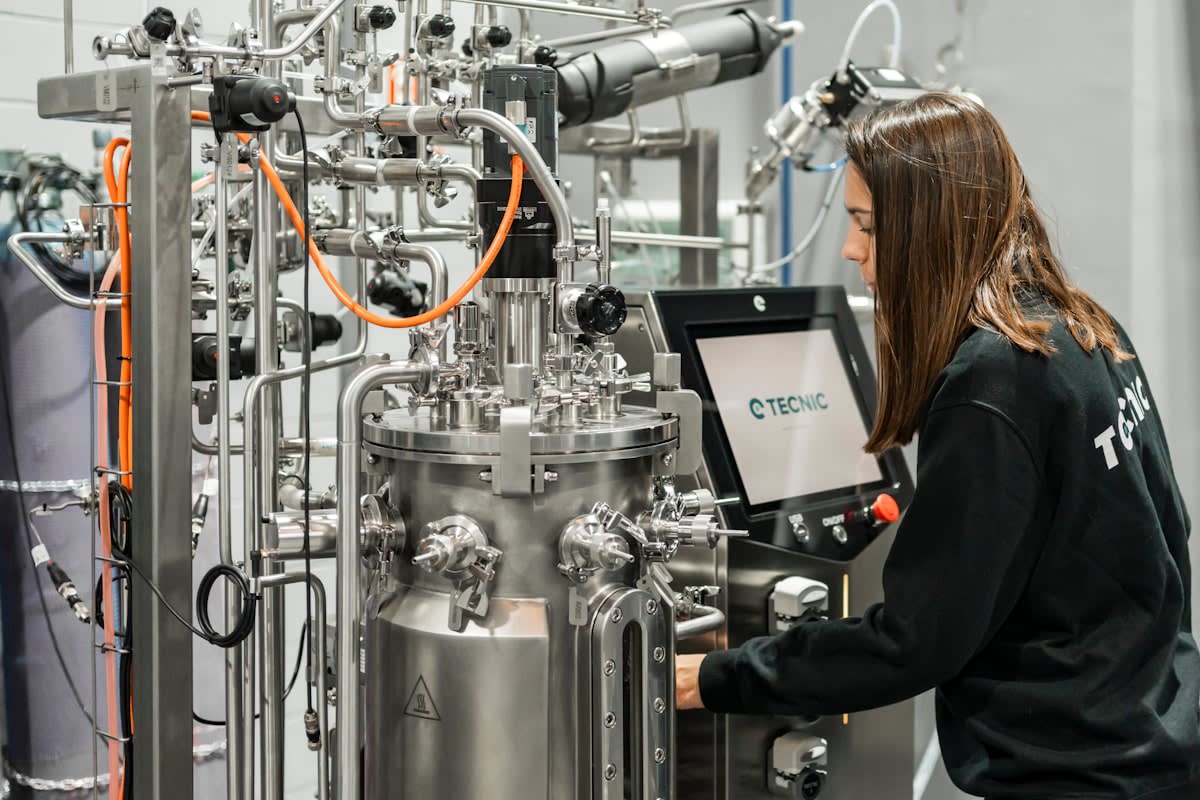
Industrialization of living compute creates a new risk profile. Maintenance no longer involves replacing a capacitor but providing a nutrient broth. Failure in a biohybrid system is biological death, not a software crash. Investors are now eyeing the wetware market as a hedge against the plateau of Moore's Law. This transition forces a reconciliation between venture capital and bioethics.
Supply chains are changing. Instead of rare earth minerals from Congo, the industry needs high-purity biological precursors. Lab-grown structures are the new GPUs. The cost of scaling is no longer about fab capacity but about bioreactor volume. We are moving from a manufacturing economy to a cultivation economy.
Ethics cannot keep pace with the lab. Lab-grown brain cellular structures possess primitive learning and synapse formation. Defining the threshold of consciousness in a dish remains a theoretical nightmare. Regulatory bodies are currently blind to the implications of OI. Accountability vanishes when the processor is a living entity.
Ownership of bio-compute is a legal minefield. If a biohybrid system learns a proprietary skill, who owns the biological memory? Patent law is designed for static inventions, not evolving organisms. The conflict between intellectual property and biological autonomy will be the defining legal battle of the decade. We are creating intelligence that can literally grow out of its constraints.
Silicon served its purpose. It built the digital world, but it cannot sustain the biological one. The move toward Organoid Intelligence and magnon-based quantum carriers is not a luxury; it is a physical necessity. Response times are no longer measured in clock cycles, but in the speed of a synapse. The reflex has finally been outpaced.