The Compute Debt Crisis
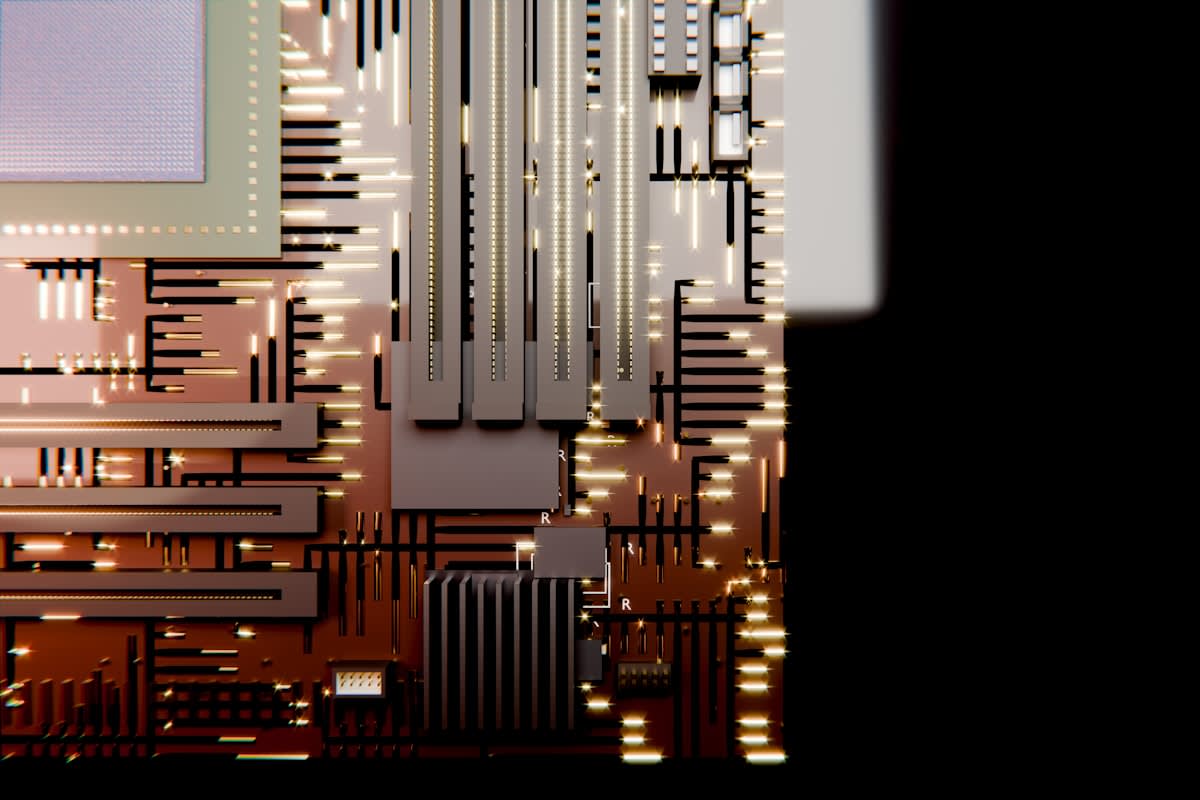
Silicon is suffocating. Current GPU clusters demand power levels that threaten national grids. In Batam, Indonesia, Firmus Technologies is erecting a 360-megawatt facility to house 170,000 Nvidia GPUs. This scale of energy consumption is a dead end. We are witnessing the terminal phase of the brute-force computing era where raw wattage is the only lever for intelligence.
Scarcity has turned hardware into a financial instrument. Nvidia is now offering revenue-sharing deals to startups, allowing them to swap future profits for compute credits. Australia-based Sharon AI is deploying 40,000 GPUs under this model, treating processing power like oil futures. Such desperation highlights a critical failure in traditional architecture. While Hsinchu struggles with chip yields, the real bottleneck is the thermal limit of the electron.
The Energy Wall
By 2030, traditional AI data centers are projected to consume approximately 10% of all energy produced in the United States, creating a sustainability gap that incremental efficiency cannot bridge.
The Probabilistic Breakthrough
Energy efficiency is no longer a goal; it is a survival requirement. A new all-transistor probabilistic computer now implements denoising models directly at the hardware level. Nature reports that this architecture achieves performance parity with GPUs on image benchmarks while using 10,000 times less energy per generated sample. This leap dwarfs the modest gains found in Intel’s Panther Lake processors. We are moving from deterministic gates to stochastic physics.
Probabilistic hardware replaces the rigid 0-and-1 logic with random-bit sources. These chips mimic the inherent noise of biological systems to solve diffusion-like models. Traditional GPUs waste massive energy simulating this randomness through software. Hardware-level probability eliminates that overhead entirely. The result is a device that produces high-fidelity generative output without the need for a dedicated power plant.
| Architecture | Energy Profile | Primary Mechanism | Scaling Limit |
|---|---|---|---|
| Traditional GPU | High (Megawatts) | Deterministic Silicon Gates | Thermal Throttling |
| Probabilistic Chip | Ultra-Low (10k x less) | All-Transistor Random Bits | Noise Calibration |
| Optical Spiking | Negligible (Photonic) | Free-Space Diffraction | Phase Mask Precision |
| Organoid Intelligence | Biological (milliwatts) | Living Neural Synapses | Biological Viability |
This transition fundamentally alters the cost of intelligence. Imagine a world where a model that previously required a 360-megawatt center in Indonesia can run on a handheld device in Lagos. Localized, low-power hardware removes the dependency on centralized cloud monopolies. The economic moat protecting GPU giants is evaporating as the physics of computation change.
Light-Speed Computation
Light is faster than electricity. Optical spiking neural networks are now utilizing rogue-wave statistics to define programmable firing mechanisms. Synaptic integration happens via free-space diffraction rather than electron flow through copper traces. Phase-engineered caustics allow sparse spatial spikes to emerge only when specific intensity thresholds are met. This removes the heat bottleneck that plagues every modern data center.
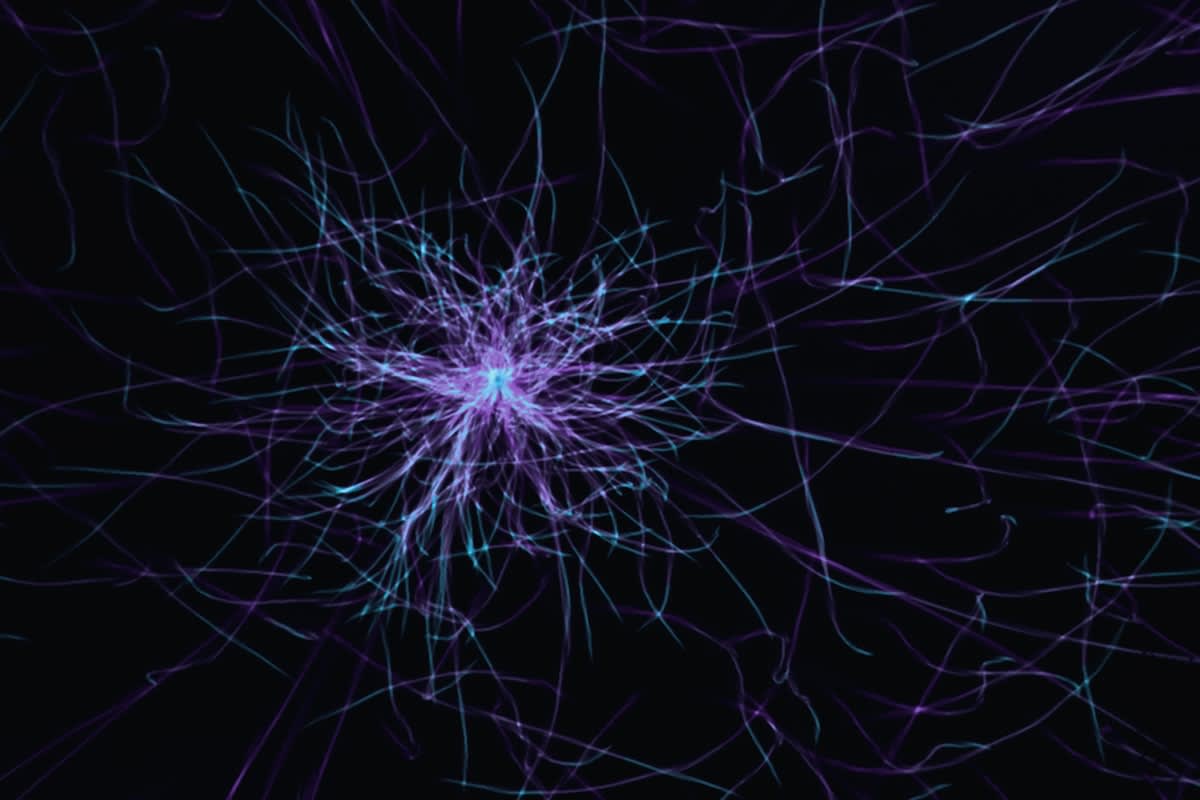
Information is encoded into the amplitude of a coherent optical field. Weights are physically realized as programmable phase masks on a Spatial Light Modulator. This approach allows for end-to-end co-design of the optical transformation and a lightweight electronic readout. Computation occurs at the speed of light. The energy cost is limited primarily to the light source and the detector, not the computation itself.
Intelligence in a Dish
Biology outperformed silicon eons ago. Organoid Intelligence (OI) represents the current frontier, using lab-grown brain cellular structures as a substrate for computation. These biohybrid computers incorporate living neural organoids capable of synapse formation and primitive learning. Research published July 3, 2026, identifies this as a migration from algorithms to living cellular structures. Ethical hurdles remain, but the energy cost of a living neuron is negligible compared to an H100 cluster.
"OI uses lab-grown brain cellular structures, such as living neural organoids with electrical activity, synapse formation and primitive learning, as a substrate for computation."— Nature, July 2026
Living tissue does not require cooling fans or liquid nitrogen. It processes information through chemical and electrical gradients that are orders of magnitude more efficient than silicon. These organoids can exhibit learning and flexibility that traditional neural networks can only simulate. We are no longer building models of the brain; we are using the brain as the hardware. The biological substrate is the ultimate energy-efficient processor.

The Second-Order Economic Collapse
Market dynamics are reacting to these hardware leaps. The so-called iron triangle of AI—computing power, transport power, and storage power—is being disrupted by the arrival of electrical power efficiency. In Asia, the split between AI winners and losers is currently defined by access to GPUs. This balance is unsustainable. Once probabilistic and optical hardware scale, the advantage of owning a massive GPU farm becomes a liability.
Legacy data centers will become stranded assets. A 360-megawatt facility in Batam is a monument to an obsolete era if a probabilistic chip can match its performance at 0.01% of the cost. Investment is already migrating toward Edge AI solutions. Avalue is expanding energy-efficient platforms powered by Intel Panther Lake, but even these are mere stopgaps compared to biohybrid systems. The value is moving from the silicon to the substrate.
Power grids will breathe again. We are seeing a transition where intelligence is decoupled from the power plant. The ability to run advanced generative models on all-transistor probabilistic hardware means AI can finally leave the warehouse. This democratization of compute will crash the current revenue-sharing models. When compute is no longer scarce, it is no longer a currency.
Physics always wins. The era of burning coal to generate tokens is ending. Biological and optical hardware provide the only viable path forward for a civilization that wants intelligence without ecological collapse. The GPU was a necessary bridge, but the bridge is now burning.