
We were taught a convenient lie in biology class: that the oxygen we breathe is the exclusive byproduct of photosynthesis. The narrative was simple—sunlight hits a leaf or a plankton, water splits, and the atmosphere fills with life-sustaining gas. It is a tidy, elegant loop that places biology at the center of the planetary breathing cycle. But nature rarely cares for our tidiness. Recent findings from the Clarion-Clipperton Zone (CCZ) in the Pacific Ocean have shattered this monopoly, revealing that oxygen is being produced four kilometers below the surface, in total darkness, by nothing more than rocks.
This isn't a minor correction to a textbook; it is a systemic shift. The discovery of 'dark oxygen' suggests that the deep ocean is not merely a consumer of oxygen drifting down from the surface, but a producer in its own right. This challenges the very foundation of how we believe aerobic life began and evolved. If oxygen can be generated geochemically without a single photon of light, the 'habitable zone' for complex life expands exponentially, not just on Earth, but across the frozen moons of our solar system.
The Geologic Battery: How Rocks Breathe
The engine behind this phenomenon is the polymetallic nodule—potato-sized mineral deposits rich in manganese, nickel, cobalt, and copper. For years, these were viewed as passive geological curiosities or lucrative targets for mining. However, research led by Professor Andrew Sweetman indicates these nodules act as natural batteries. Through a process of seawater electrolysis, these nodules carry an electrical charge high enough to split seawater molecules into hydrogen and oxygen (Source: Nature Geoscience, 2024). This is a geochemical powerhouse operating in a vacuum of light, effectively turning the seafloor into a massive, distributed power plant.
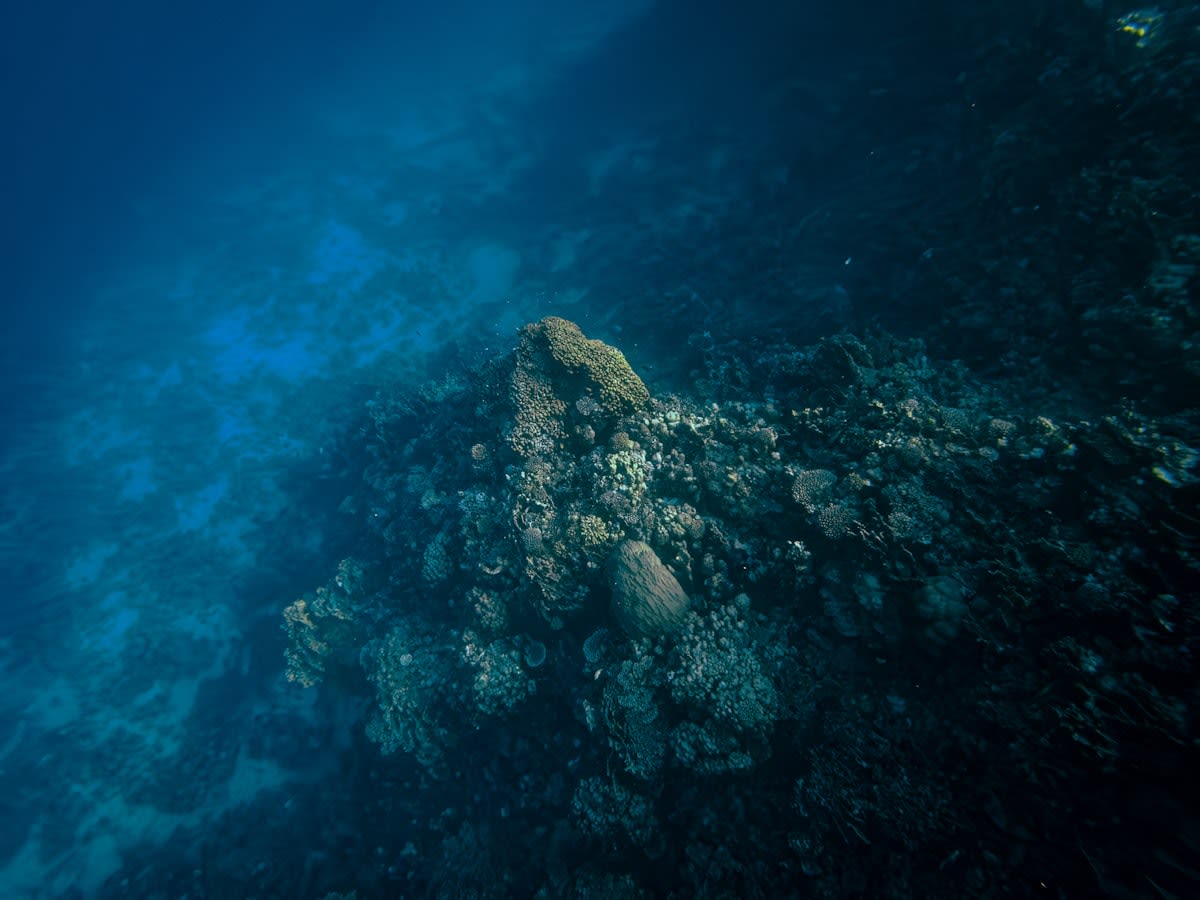
Why does this matter to anyone not wearing a scuba suit? Because it decouples oxygen production from the sun. In the traditional model, the deep ocean is a 'sink'—a place where oxygen is used up and depleted. The data now shows that in certain regions of the CCZ, oxygen levels actually increase over time in the absence of light (Source: Nature Geoscience, 2024). This suggests that the abyss is not just surviving on the scraps of the surface world; it is generating its own life-support system.
"For a long time, we believed that oxygen was only produced by organisms that use sunlight. This discovery shows that there is another source of oxygen, one that is purely geochemical. It forces us to rethink where life could have started and how it survives in the most extreme environments on Earth."— Professor Andrew Sweetman, Chief Scientist at the Scottish Association for Marine Science (SAMS)
The implications for the origin of life are staggering. The prevailing theory suggests that the Great Oxidation Event, roughly 2.4 billion years ago, was driven by cyanobacteria. But if geological batteries were splitting water before biological life even existed, did the 'dark oxygen' provide the necessary chemical spark for the first aerobic organisms? We are looking at a potential rewrite of the evolutionary timeline, where geology didn't just provide the stage for life, but the very breath that allowed it to complexify.
The Practitioner's Friction: Science vs. Extraction
On the ground—or rather, four thousand meters below it—this discovery has ignited a fierce internal debate among deep-sea researchers and policymakers. For those of us who have tracked the movement of the International Seabed Authority (ISA), the tension is palpable. The very nodules that produce this oxygen are the same ones the mining industry wants to vacuum up for battery production. This creates a profound irony: we may destroy a primary oxygen source for the deep ocean in order to build 'green' batteries for electric vehicles on the surface.
In the corridors of marine institutes, the argument isn't about whether the oxygen exists, but about its scale. Skeptics in the field argue over whether this 'dark oxygen' is a localized anomaly or a global phenomenon. There is significant friction regarding 'baseline data.' Mining companies argue that the impact is localized, while ecologists argue that removing the nodules removes the power source for an entire ecosystem. We are seeing a clash between the immediate economic drive for critical minerals and the slow, methodical pace of geochemical discovery.
| Feature | Photosynthetic Oxygen | Dark Oxygen |
|---|---|---|
| Energy Source | Solar Radiation | Geochemical Potential (Electrolysis) |
| Primary Catalyst | Chlorophyll/Cyanobacteria | Polymetallic Nodules (Mn, Ni, Co) |
| Location | Euphotic Zone (Surface) | Abyssal Zone (4,000m+) |
| Biological Dependency | Obligate (Requires Life) | Independent (Purely Geological) |
| Scale of Impact | Global Atmospheric Balance | Benthic Ecosystem Support |
Does the deep sea really need this oxygen to survive, or is it a luxury? That is the question currently dominating the discourse. If the benthic fauna—the strange, translucent creatures of the abyss—depend on these geological batteries for respiration, then mining these nodules isn't just habitat destruction; it's atmospheric deprivation. We are effectively talking about removing the 'lungs' of the deep ocean.
A Global Shift in Planetary Logic
This discovery forces a global reappraisal of how we define 'habitable.' For years, astrobiologists have looked for 'biosignatures'—oxygen in an atmosphere as a sign of life. But the dark oxygen paradox proves that oxygen can be a 'geosignature.' If a planet has the right mineral composition and seawater, it could have an oxygen-rich environment without a single cell of life. This means our current search for extraterrestrial life might be chasing a false positive.
Beyond the Pacific, the question now is whether similar processes occur in the Atlantic or Indian Oceans. The CCZ is uniquely rich in nodules, but the systemic shift here is the realization that the Earth's crust is electronically active in ways we ignored. We have treated the seafloor as a graveyard of sediment, when it is actually a circuit board.
- Redefinition of the 'Habitable Zone' to include lightless, high-pressure environments.
- Shift in astrobiology: Oxygen no longer serves as a definitive proxy for biological life.
- Urgent need for updated environmental impact assessments (EIAs) for deep-sea mining.
- Potential discovery of new anaerobic-to-aerobic transition pathways in early Earth history.
We must stop viewing the ocean as a series of isolated layers. The surface produces, the deep consumes. This is a linear, outdated model. The dark oxygen discovery introduces a feedback loop where the geology of the abyss supports the biology of the abyss, independent of the surface. It is a lesson in resilience and the sheer creativity of planetary chemistry.
The path forward requires a humbling admission: we have spent centuries mapping the stars while remaining blind to the chemistry of our own basement. The 'Oxygen Paradox' is not a crisis of science, but an opportunity for expansion. It invites us to imagine a world where life is not a fragile accident dependent on a distant star, but a robust inevitability supported by the very rocks beneath our feet.
Fact-Check & Accuracy Note
The key claims regarding the production of oxygen via polymetallic nodules and the involvement of Professor Andrew Sweetman are sourced from the peer-reviewed study published in Nature Geoscience (2024). While the mechanism of seawater electrolysis is supported by the data, the global scale of this phenomenon and its precise impact on the origin of life remain subjects of active scientific debate and ongoing research.