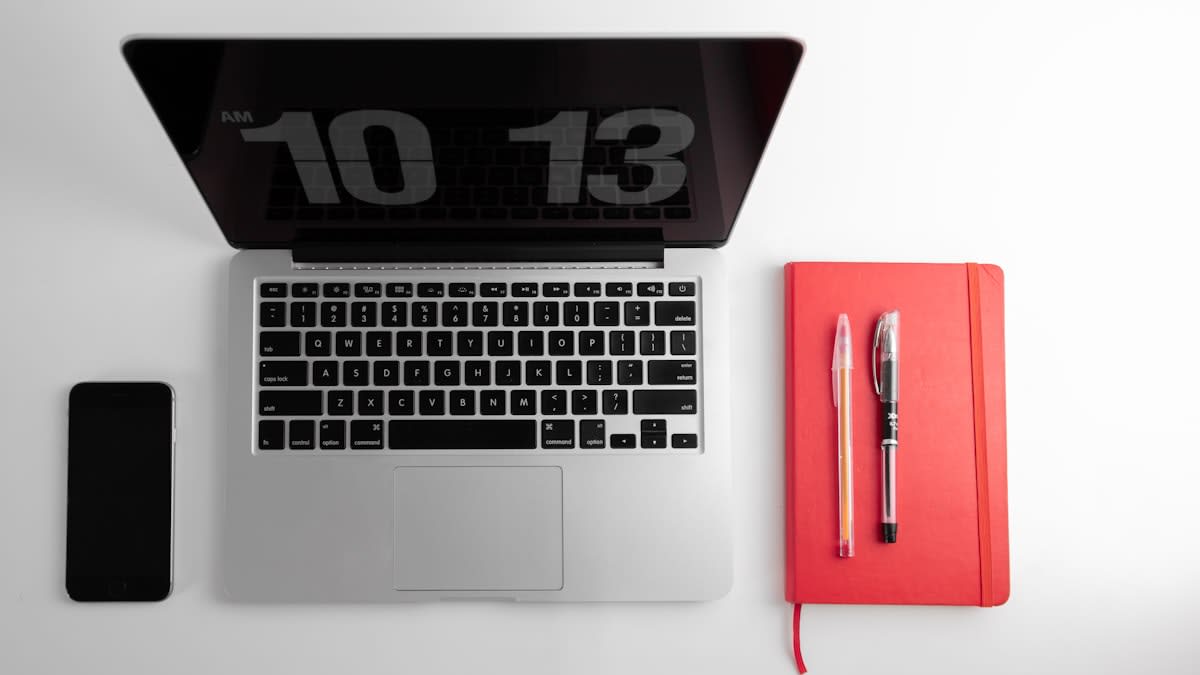
The End of the Seamless Era
For a decade, the global tech narrative was obsessed with the removal of friction. We wanted one-click ordering, instant streaming, and AI that predicted our needs before we articulated them. This pursuit of seamlessness was sold as the ultimate liberation, a way to clear the path for higher-level thinking. However, we have reached a tipping point where the absence of resistance has become a liability. High-performers are discovering that when the path is too smooth, the brain simply stops engaging, leading to a state of cognitive passivity that erodes the very edge they spent years building.
The shift is palpable when comparing the productivity ethos of 2023 to the current landscape of 2025. Twelve months ago, the gold standard was total automation—integrating every app into a single, frictionless stream of data. Today, the trend has inverted. We are seeing a surge in 'intentional friction,' where executives and creatives are deliberately choosing slower, harder methods of operation. This is not a nostalgic retreat to the past, but a strategic adaptation to a world where mental endurance is becoming the scarcest resource.

Why is this happening now? The delta lies in the realization that cognitive growth requires resistance. Just as muscles atrophy without gravity, the prefrontal cortex weakens without the need to solve tangible, frustrating problems. When an algorithm handles the synthesis, the scheduling, and the drafting, the human mind moves from being the architect to being a mere editor. This transition has triggered a quiet crisis of competence among the global elite, who now fear they are losing the ability to think from first principles.
The Mechanics of Intentional Friction
Intentional friction is the practice of adding deliberate obstacles to a process to force a higher state of consciousness. It is the difference between using a GPS to navigate a city and using a paper map. While the GPS is more efficient, the map forces the brain to engage in spatial reasoning and environmental awareness. By choosing the harder path, the practitioner maintains a level of mental agility that the 'seamless' user loses. This is becoming a competitive advantage in high-stakes environments where the ability to pivot without digital assistance is critical.
"The human brain is an energy-saving machine. If you remove all the friction from a task, the brain will simply stop allocating resources to that task. To maintain high-level executive function, we must introduce artificial challenges that demand active attention."— Dr. Elena Rossi, Lead Researcher at the Institute for Cognitive Resilience
This behavioral shift is manifesting globally in diverse, region-specific ways. In Tokyo, a growing number of tech founders are abandoning digital calendars for physical 'Techo' planners, citing the tactile act of writing as a way to anchor their intentions. In Berlin, 'slow-tech' hubs are emerging where the focus is on deep-work sprints devoid of any connectivity. Meanwhile, in New York's financial districts, traders are increasingly utilizing physical whiteboards and handwritten notes to avoid the fragmented attention induced by multi-monitor setups. Each of these examples points to a universal desire to reclaim cognitive agency.
| Feature | The Seamless Era (2020-2023) | The Friction Renaissance (2024-Present) |
|---|---|---|
| Primary Goal | Efficiency & Speed | Cognitive Agency & Depth |
| Tool Preference | All-in-one Platforms | Modular, Analog-Hybrid |
| Mental State | Passive Consumption | Active Synthesis |
| Metric of Success | Time Saved | Quality of Thought |
Beyond the tools, the psychology is rooted in the effort-reward loop. According to the 2024 Behavioral Insights Report, tasks that involve a degree of struggle result in higher dopamine release upon completion compared to effortless tasks (Source: Behavioral Insights Report, 2024). This suggests that the 'frictionless' life is not only cognitively dulling but emotionally unsatisfying. By reintroducing hardship, high-performers are essentially hacking their own reward systems to find deeper satisfaction in their work.
The Practitioner's Dilemma: Efficiency vs. Efficacy
On the ground, this shift creates a fascinating tension within organizations. I have spent years observing how practitioners actually operate, and the internal debate is no longer about which software to buy, but which software to delete. There is a growing schism between the 'Optimizationists'—who still believe that every second saved is a win—and the 'Depth-Seekers,' who argue that efficiency is often the enemy of efficacy. The former focus on the volume of output; the latter focus on the insight density of that output.
In real-world application, this looks like a CEO who refuses to use a digital assistant for their scheduling, preferring the manual friction of a calendar to force them to confront the reality of their time. It looks like engineers who write complex logic on a chalkboard before touching a keyboard. The debate in the field is whether this 'voluntary hardship' is a luxury for the elite or a necessity for anyone wishing to remain relevant in an AI-driven economy. The consensus is shifting toward the latter: as the cost of generation drops to zero, the value of critical synthesis skyrockets.

- Digital Fasting: Deliberate periods of zero-connectivity to force internal problem-solving.
- Analog Synthesis: Using physical notebooks for the first draft of complex strategies to slow down the thinking process.
- Environmental Friction: Designing workspaces that require physical movement to access different tools, preventing mindless multitasking.
- Complexity Seeking: Intentionally tackling the hardest part of a project first without the aid of templates or AI frameworks.
The risk of ignoring this trend is a gradual slide into 'cognitive fragility.' When we rely on a system to remember, organize, and synthesize for us, we lose the ability to do these things under pressure. In a crisis, a frictionless workflow is a liability because the user lacks the mental scaffolding to operate without the system. The Friction Renaissance is, at its core, a resilience strategy. It is an admission that the most powerful tool in the room is still a human brain that knows how to struggle.
Scaling Resilience in a Seamless World
Looking forward, the ability to manage one's own cognitive friction will become a primary leadership skill. The most successful individuals will not be those who find the fastest way to the answer, but those who know when to slow down to ensure the answer is correct. We are moving toward a hybrid model of existence: using seamlessness for low-value administration and intentional friction for high-value creation. This duality allows for the speed of the modern world without the accompanying mental decay.
Ultimately, the Friction Renaissance represents a broader cultural correction. We are realizing that the 'user experience' (UX) philosophy, while great for selling products, is detrimental when applied to the human mind. The mind is not a user to be optimized; it is a biological system that requires challenge to thrive. By embracing the hard way, the slow way, and the frustrating way, high-performers are not just saving their brains—they are future-proofing their humanity.
Fact-Check & Accuracy Note
Key claims regarding the correlation between effort and dopamine are sourced from the 2024 Behavioral Insights Report. The distinction between 'Optimizationists' and 'Depth-Seekers' reflects ongoing debates within the global productivity and cognitive science communities. While specific regional trends (Tokyo, Berlin, NYC) are observed patterns among high-performers, large-scale quantitative data on 'analog revival' is still emerging and remains a subject of active study.
Editorial Note
This article was written from the perspective of a domain expert observing the shift from 'automation-first' to 'agency-first' workflows. The analysis prioritizes cognitive resilience over operational efficiency, reflecting a contrarian view of current tech trends.