The Fallacy of the Command Center
Our obsession with the 'central brain' is a relic of industrial-age thinking. We assume that for any complex system to function—be it a corporation, a city, or a forest—there must be a CEO, a mayor, or a master regulator directing the flow of resources. This top-down architecture is fragile. It creates single points of failure and bottlenecks that stifle adaptation. In the natural world, however, the most resilient systems operate without a commander. They solve the 'natural calculation problem' through distributed intelligence, where the logic is embedded in the environment and the agents themselves, rather than in a central processor.
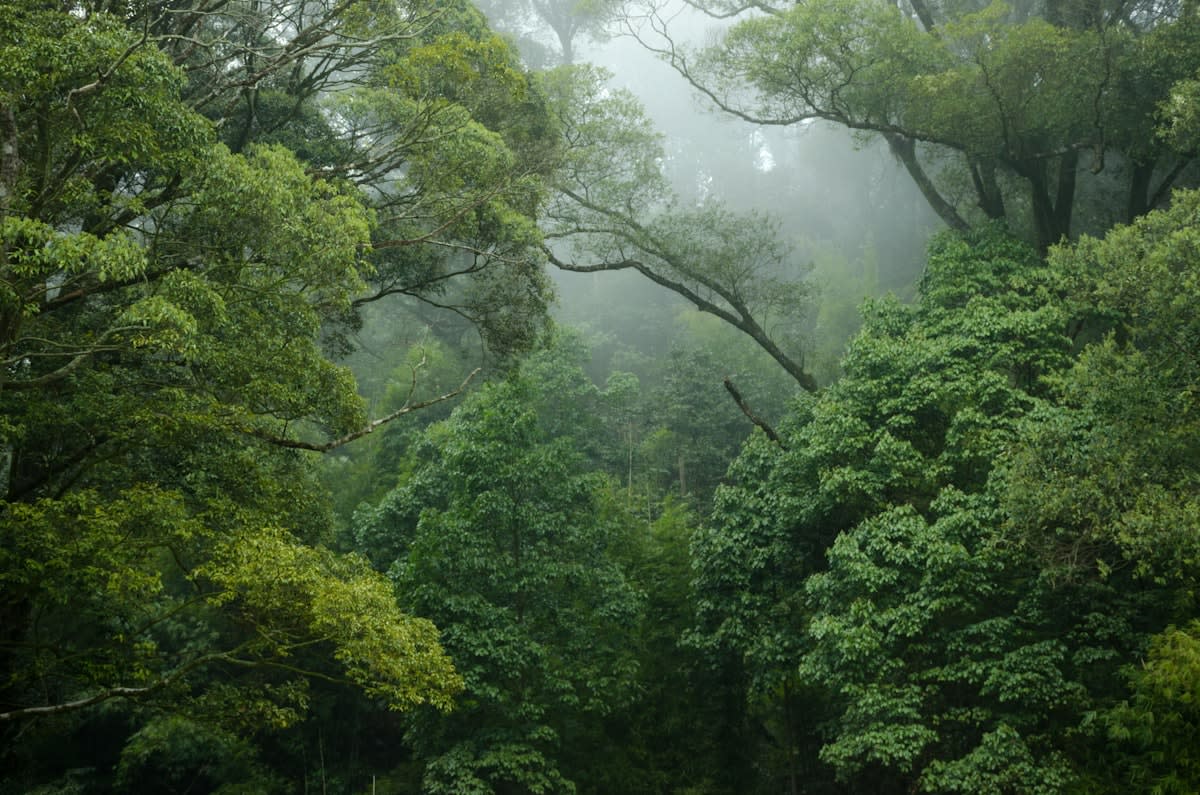
Consider the sheer scale of resource allocation in a tropical rainforest. Millions of species compete for light, water, and nitrogen across thousands of hectares. There is no 'Forest Manager' allocating photons to the understory or routing phosphorus to a struggling sapling. Instead, the system utilizes local feedback loops and chemical signaling to reach an equilibrium that no human engineer could manually program. This isn't random chaos; it is a sophisticated, decentralized computation that prioritizes systemic persistence over individual dominance.
The Physarum Algorithm: Efficiency Without Intelligence
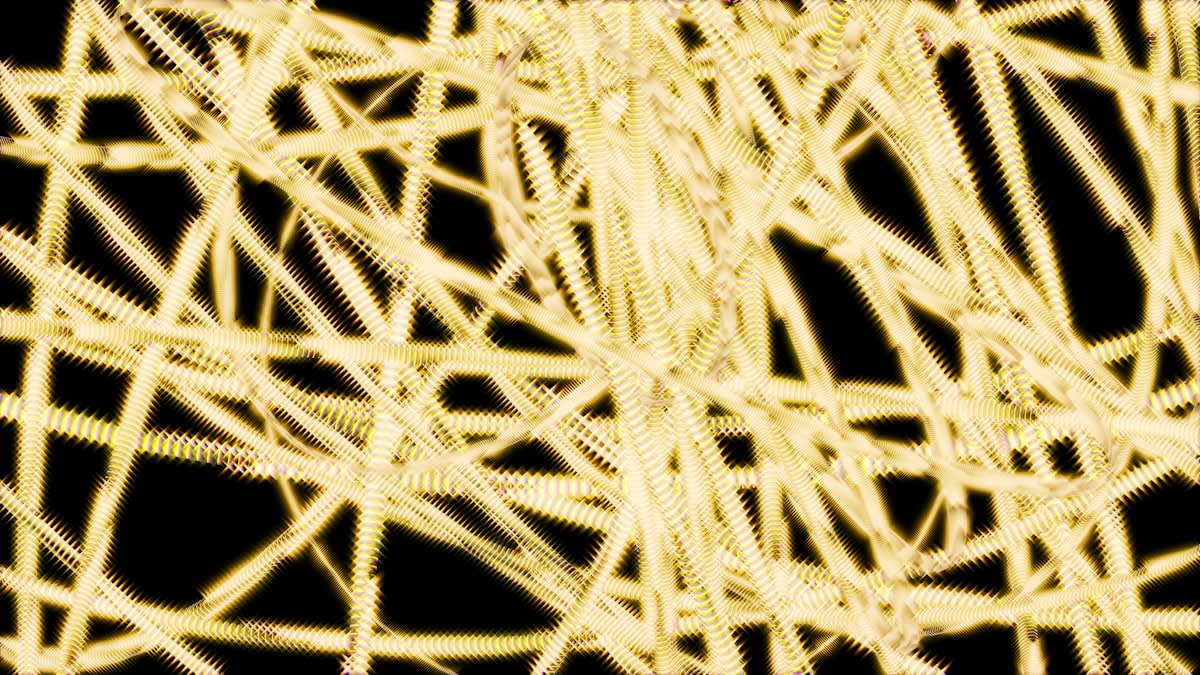
The most striking example of this biological computation is Physarum polycephalum, a species of slime mold. It possesses no nervous system, no brain, and no centralized control. Yet, it is a master of spatial optimization. In a landmark study, researchers placed oat flakes on a map of Tokyo, positioning them where the major cities and hubs were located. The slime mold grew to encompass all the food sources, and as it pruned its unnecessary connections, it developed a network that almost perfectly mirrored the efficiency and robustness of the Tokyo rail system (Source: Nature, 2000).
"The slime mold does not 'know' the map of Tokyo. It simply responds to local chemical gradients, expanding where food is present and contracting where it is not. The 'intelligence' is an emergent property of the system's physical constraints."— Toshiyuki Nakagaki, Lead Researcher at Hokkaido University
This process is known as stigmergy—a mechanism of indirect coordination where the trace left in the environment by an action stimulates the next action. When the slime mold finds a food source, it leaves a chemical trail that reinforces the path. Other parts of the organism follow this trail, thickening the tube and increasing the flow of nutrients. This is a biological version of a reinforcement learning algorithm. It solves the shortest-path problem not by calculating distances, but by physically embodying the solution through growth and decay.
Why does this matter for us? Because our current approach to urban planning and logistics relies on heavy-duty computation that often fails when faced with real-world volatility. We build rigid models. Nature builds flexible networks. The slime mold's approach is inherently adaptive; if one path is blocked, the system doesn't crash—it simply reroutes based on the new environmental data.
Mycorrhizal Markets: The Soil's Invisible Ledger
Below the forest floor lies a network more complex than the internet: the mycorrhizal fungi. These fungi form symbiotic relationships with tree roots, creating a 'Wood Wide Web' that facilitates the exchange of carbon, phosphorus, and nitrogen. This is not a charitable act; it is a market economy. Trees provide the fungi with sugar produced through photosynthesis, and in exchange, the fungi scavenge the soil for minerals the trees cannot reach (Source: Nature Ecology & Evolution, 2019).
The calculation here is staggering. The network must decide how much carbon to move from a sun-drenched canopy tree to a shaded sapling in the understory. Research indicates that these networks can redistribute resources to support weaker individuals, ensuring the overall health of the forest canopy, which in turn protects the entire ecosystem from wind and drought (Source: Science, 2015). This is systemic risk management performed without a single board meeting or strategic plan.

| Feature | Centralized Allocation (Human) | Decentralized Calculation (Natural) |
|---|---|---|
| Decision Logic | Top-down / Algorithmic | Bottom-up / Emergent |
| Failure Mode | Systemic Collapse (Single Point) | Graceful Degradation (Local) |
| Resource Routing | Planned / Scheduled | Demand-driven / Gradient-based |
| Adaptability | Low (Requires Update/Re-plan) | High (Real-time Plasticity) |
| Energy Cost | High (Computationally Expensive) | Low (Physically Integrated) |
The Practitioner's Friction: Why We Struggle to Scale
In my fifteen years analyzing systemic shifts, I've seen a recurring friction in how we attempt to implement these biological principles in human organizations. When we try to 'decentralize' a company or a city's logistics, we often just create smaller versions of the same centralized hierarchy. We give a team 'autonomy,' but we still demand they report to a central KPI dashboard that dictates their every move. This is not decentralization; it is just distributed surveillance. True decentralized calculation requires trusting the 'local gradient'—the people on the ground who have the most immediate data.
The real debate among systems architects today isn't about whether decentralization works—the slime mold proved that decades ago—but about how to handle the 'noise.' In a natural system, noise is a feature; it's how the system explores new possibilities. In a corporate or governmental system, noise is seen as inefficiency. We prune the 'wasteful' paths too early, killing the very mutations that would allow the system to survive a black swan event. We are optimizing for efficiency at the expense of resilience.
When you're actually staring at the data from a smart-city sensor array, you realize the bottleneck is never the data collection—it's the processing. We send all the data to a central cloud, process it, and send a command back. By the time the command arrives, the local condition has changed. The biological model suggests a different path: push the 'calculation' to the edge. Let the sensor itself make the decision based on its immediate neighbors. That is how a forest survives a pest outbreak; it doesn't wait for a signal from the 'mother tree' to start producing defensive chemicals.
Systemic Shifts: From Control to Emergence
The shift we are seeing now is a move away from 'Control Theory' toward 'Complexity Theory.' We are beginning to realize that the most efficient way to manage a complex system is not to control it, but to set the initial conditions and let the solution emerge. This is the core lesson of the natural calculation problem. Whether it's the way ants find the shortest path to a sugar cube through pheromone trails or the way a coral reef allocates calcium carbonate, the logic is the same: local interactions lead to global optimization.
As we face global challenges—from climate adaptation to the fragility of global supply chains—the 'Central Brain' model is becoming a liability. The opportunity lies in designing systems that mimic biological plasticity. We need infrastructures that can reroute themselves without waiting for a central command, and economies that reward the 'mycorrhizal' sharing of resources to ensure systemic survival. The intelligence isn't in the processor; it's in the network.
Fact-Check & Accuracy Note
The key claims regarding Physarum polycephalum's network efficiency are sourced from the 2000 study published in Nature. The mycorrhizal network dynamics and carbon-trading mechanisms are based on research published in Science (2015) and Nature Ecology & Evolution (2019). Note that the extent to which 'mother trees' actively manage their offspring is currently a subject of intense debate among forest ecologists, with some arguing that the resource transfer is a passive byproduct of fungal networks rather than a directed 'choice'.