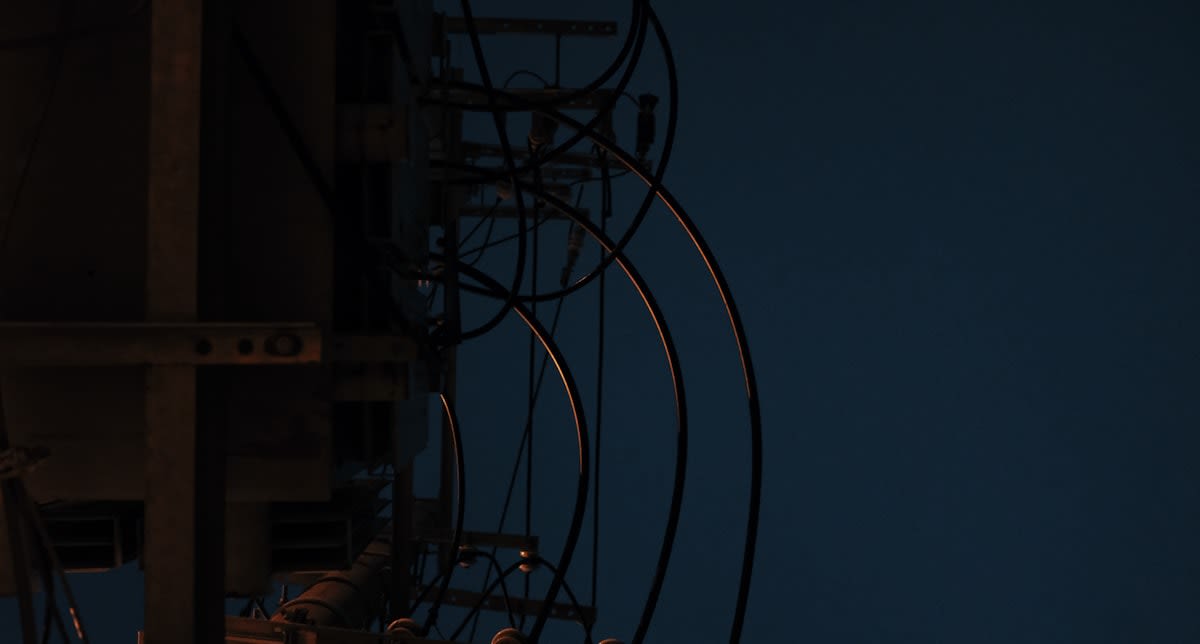
We treat our global power grids as static achievements of engineering, yet they are actually dynamic sensors tuned to the whims of the sun. Most analysts view solar storms as rare, catastrophic anomalies, but this perspective misses the systemic reality. Our infrastructure doesn't just face a risk of failure; it is fundamentally designed in a way that makes it an antenna for geomagnetically induced currents (GICs). When the sun exhales, the earth's magnetic field shudders, and that shudder translates directly into raw electricity flowing where it should never go.
Why do we continue to rely on a model of resilience that favors reactive repair over proactive architectural shifts? The vulnerability isn't a glitch; it is a feature of high-voltage transmission networks. These networks, stretching across continents, provide the perfect conduit for GICs to enter the system. Once inside, these currents don't follow the rules of standard AC power. They saturate transformer cores, create voltage instability, and can trigger a cascade of failures that transcend national borders.
The Anatomy of a Solar Strike
Consider the events of May 10, 2024. This wasn't a single, isolated hit, but a sustained assault. The storm resulted from five successive coronal mass ejections (CMEs) striking the Earth one after another over a 48-hour window. This cumulative effect created a geomagnetic event estimated as a one-in-13-year occurrence, the largest seen in over two decades. It served as a live-fire exercise for grids globally, demonstrating how repeated plasma strikes can compound stress on aging infrastructure.
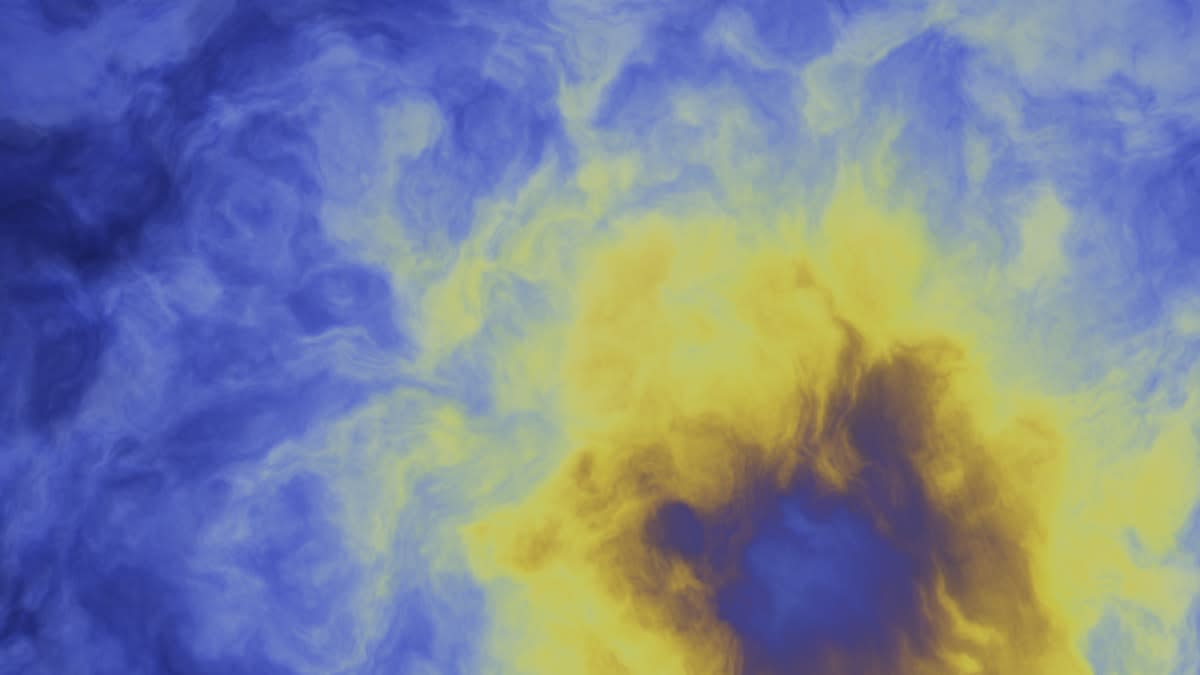
In Mexico, the May 10 event provided critical numerical modeling data. Research published in Geophysical Research Letters highlights how these GICs interact specifically with the Mexican power grid, revealing a vulnerability that is often overlooked in North American studies. The data shows that the interaction between solar activity and local geology can amplify the currents entering the grid. It proves that a solar storm is not a uniform blanket of risk, but a localized series of crises determined by the intersection of space weather and terrestrial geography.
The Danger Zone
The critical threshold for grid stability often hinges on the 50A per phase mark. When geomagnetically induced currents exceed this limit, or remain moderately high for sustained periods, the operational stability of the electricity supply is compromised, leading to direct transformer damage.
This leads us to a critical realization: the hardware is the symptom, not the disease. While we obsess over transformer replacements, the real systemic failure is the lack of real-time visibility. The Great Britain (GB) grid has recognized this gap, issuing calls for space weather current monitors to detect GICs as they happen. Without these monitors, operators are flying blind, reacting to voltage drops rather than the currents causing them.
The Economic Mirage: Beyond Broken Hardware
Conventional wisdom suggests that the cost of a solar storm is the cost of replacing a few hundred million-dollar transformers. This is a dangerous simplification. A review in Frontiers in Astronomy and Space Sciences argues that the primary economic devastation stems not from direct infrastructure damage, but from the resulting interruptions to production and supply chain disruptions. We are talking about a systemic seizure of commerce, not a repair bill for hardware.
| Impact Category | Direct Infrastructure View | Systemic Analyst View |
|---|---|---|
| Primary Cost Driver | Transformer replacement and repair | Production loss and supply chain collapse |
| Recovery Timeline | Weeks to months for hardware lead times | Months to years for market stabilization |
| Risk Focus | Localized equipment failure | Global economic interdependence |
| Mitigation Strategy | Hardened hardware/spares | Diversified energy sources and AI-driven agility |
If a major grid fails, the ripple effect is instantaneous. A factory in one region stops producing a critical component, which halts an assembly line in another continent. The market response to such a blackout is often more volatile than the blackout itself. When production stops, the economic vacuum creates a shockwave that can destabilize regional currencies and trade agreements. The physical blackout is merely the trigger for a financial blackout.
"The true vulnerability of the modern state is not the fragility of its wires, but the rigidity of its economic dependencies on a single, uninterrupted flow of electrons."— Strategic Analysis of Space Weather Impacts
Can we actually build a grid that doesn't act as a solar antenna? The answer lies in moving away from static defense. Instead of just adding more capacitors or buying spare transformers, we need to integrate intelligence into the very fabric of the transmission network. This is where the shift from engineering to orchestration happens.
The Path to Adaptive Resilience
We are seeing the first signs of a new paradigm. Horizon Networks is already employing AI to boost climate grid resilience, moving beyond traditional weather forecasting into the realm of predictive adaptation. By using AI to anticipate how a grid will react to specific geomagnetic signatures, operators can preemptively shift loads or isolate vulnerable segments before the GICs reach the 50A threshold. This transforms the grid from a passive victim into an active participant in its own survival.
The strategic opportunity here is immense. The transition to a space-weather-resilient grid forces us to solve other problems simultaneously: decentralization, micro-grid integration, and smarter load balancing. By preparing for the one-in-13-year solar event, we inadvertently build a grid that is more stable for every other type of disruption, from cyberattacks to extreme weather.
- Deployment of real-time GIC monitors across all major transmission hubs to eliminate operational blindness.
- Implementation of AI-driven predictive modeling to manage voltage instability before it reaches critical thresholds.
- Strategic diversification of transformer specifications to reduce the impact of standardized hardware failure.
- Shift in national policy to prioritize economic continuity planning over simple infrastructure repair.
Ultimately, the solar storm vulnerability is a mirror reflecting our broader systemic fragility. We have built a world of extreme efficiency but zero redundancy. The May 2024 events were a warning, not a catastrophe. They provided the data necessary to realize that the 'total reset' isn't an inevitability, but a choice. We can continue to patch the holes in a 20th-century design, or we can architect a 21st-century system that views the sun's volatility as a known variable rather than an existential threat.
The transition will not be easy. It requires a global coordination of standards and a willingness to invest in invisible infrastructure that may not show a return for a decade. But the alternative is a gamble with the global economy. When the next series of CMEs arrives, the winners will not be those with the biggest transformers, but those with the smartest networks.