
The Illusion of the Linear Scale
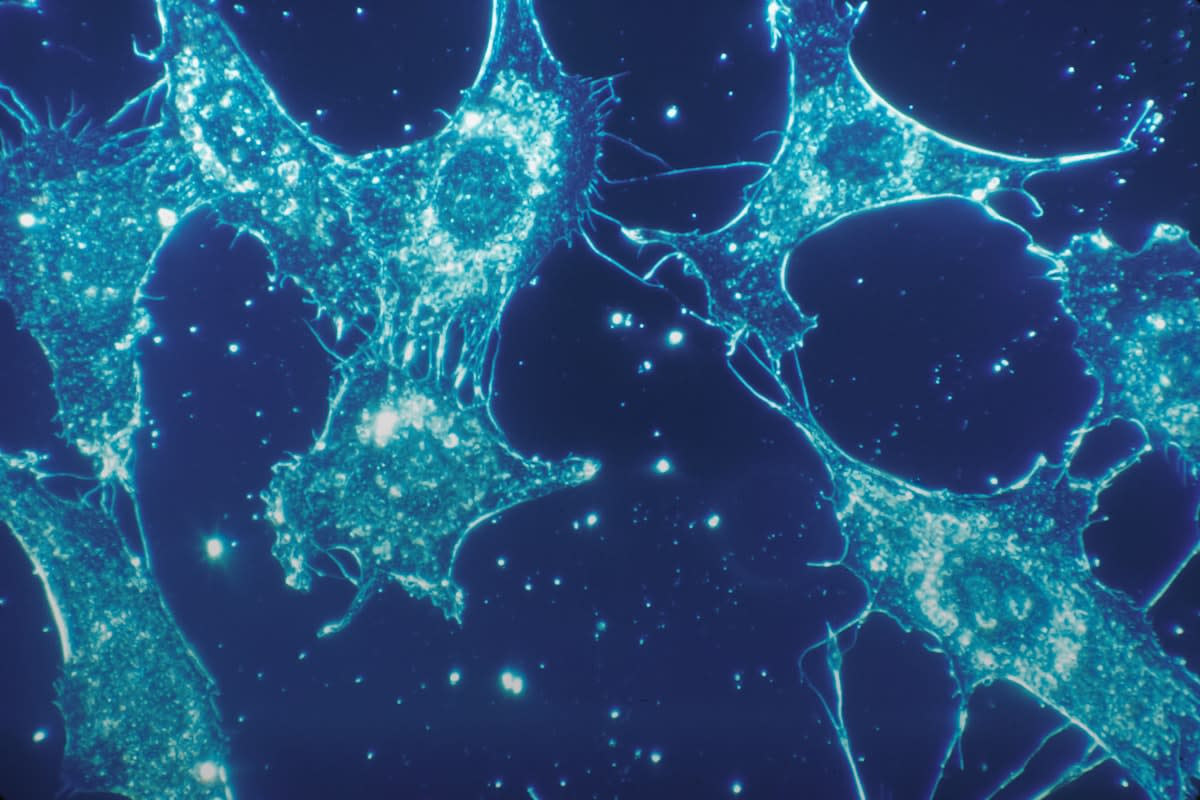
The venture capital narrative for synthetic biology has always been dangerously linear. The logic goes: if we can grow a gram of cultivated leather or a milliliter of synthetic silk in a lab, we simply need larger tanks to feed the world. This assumption ignores the fundamental physics of fluid dynamics and cellular stress. In a small petri dish, nutrients and oxygen reach every cell with ease. In a 20,000-liter bioreactor, the environment becomes a chaotic storm of shear stress and nutrient gradients. Cells at the bottom are crushed by the weight of the medium, while those at the top starve for oxygen.
Why does a process that works in a sterile flask fail in a vat? The answer lies in the scaling of surface-area-to-volume ratios. As the volume increases, the ability to dissipate heat and remove metabolic waste drops precipitously. We are seeing a global trend where companies in Singapore, the US, and Israel have perfected the 'proof of concept' but are now hitting a hard ceiling. They have discovered that biological systems do not scale like software. You cannot simply add more server capacity to a living organism that requires a precise, homogenous environment to thrive.
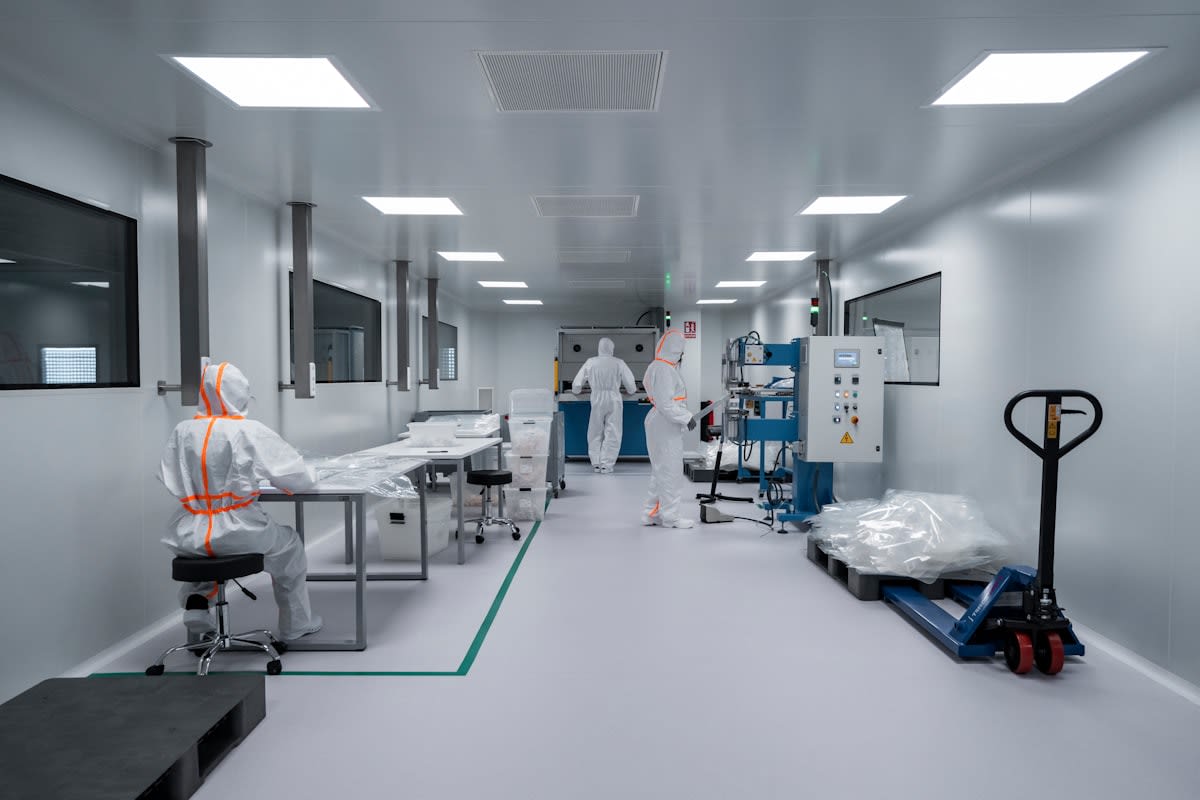
This is the 'Scaling Wall.' It is the point where the biological elegance of a material meets the brutal reality of mechanical engineering. The industry is currently obsessed with the 'bigger is better' approach, building monolithic tanks that are nearly impossible to sterilize and even harder to regulate. When a single contamination event occurs in a 10,000-liter tank, the loss is not just a few samples, but millions of dollars in feedstock and weeks of production time. The risk profile shifts from scientific exploration to industrial gambling.
But the physical constraints of the tank are only half the battle; the chemistry fueling the growth is where the economic model truly fractures.
The Feedstock Trap
For years, the industry relied on Fetal Bovine Serum (FBS) to provide the growth factors necessary for cellular proliferation. It worked perfectly in the lab. However, FBS is ethically problematic, wildly expensive, and impossible to source at the scale required for global commodity markets. The shift toward serum-free, chemically defined media was supposed to be the solution. Instead, it revealed a new dependency: the high cost of recombinant proteins. These growth factors are essentially pharmaceuticals, and using them to grow 'leather' or 'meat' is like using gold leaf to paint a fence.
| Material | Lab Cost (per kg) | Projected Industrial Cost | Primary Scaling Barrier |
|---|---|---|---|
| Cultivated Meat | $20,000 | $15 | Growth Factor Cost |
| Synthetic Spider Silk | $500 | $25 | Protein Folding Efficiency |
| Mycelium Leather | $100 | $10 | Density & Texture Control |
Look at the delta between lab costs and projected industrial costs. The gap is a chasm. To bridge it, companies are attempting to engineer 'cheaper' cells that require fewer nutrients. This is a strategic pivot from material science to genetic engineering. In regions like the European Union, where regulatory scrutiny on GMOs is intense, this pivot creates a secondary wall. You can solve the cost problem with genetic modification, but you may then find yourself locked out of the world's most lucrative luxury markets due to legislative friction.
"We are trying to build a 21st-century material economy using 20th-century fermentation logic. The hardware cannot keep up with the biology."— Lead Engineer, Synthetic Bio-Materials Consortium
The feedstock crisis isn't just about price; it's about supply chain resilience. If the world shifted to lab-grown materials tomorrow, the demand for specific amino acids and glucose would destabilize existing agricultural markets. We are trading a dependency on livestock for a dependency on highly processed chemical precursors. This is not a sustainability win; it is a shift in the nature of the dependency.
While the chemistry fails the balance sheet, the energy requirements fail the environmental promise.
The Energy Paradox
The most seductive promise of lab-grown materials is the reduction of environmental impact. But the thermodynamics of a bioreactor tell a different story. Maintaining a sterile environment at 37 degrees Celsius for thousands of liters of liquid requires an immense amount of energy. When you factor in the energy needed to produce the purified growth media, the carbon footprint of a 'sustainable' lab-grown material can actually exceed that of its traditional counterpart in the short term. We are essentially replacing biological energy (grazing animals) with electrical energy (heating and stirring vats).
Production Cost vs. Volume (Relative Scale)
Executive Insight
+18.4%
YTD Growth
Notice the plateau in the cost-to-volume graph. In traditional manufacturing, we expect a steep decline in unit cost as volume increases. In synthetic biology, we hit a floor. This floor is determined by the metabolic limits of the cell and the energy cost of sterility. You cannot 'optimize' your way out of the second law of thermodynamics. The current industrial strategy of building massive, centralized factories is a legacy of the oil age. It is the wrong architecture for a biological age.
To survive, the industry must stop chasing the 'mega-factory' dream. The opportunity lies in decentralized, modular production. Instead of one 100,000-liter tank, imagine a thousand 100-liter modules that can be swapped, sterilized, and upgraded independently. This reduces the risk of total batch failure and allows for more precise control over the cellular environment. It is a shift from monolithic industrialism to a distributed biological network.
Even if the engineering is solved, the final wall is not made of steel or cells, but of ink and stamps.
Regulatory Fragmentation
The global regulatory landscape for lab-grown materials is a patchwork of confusion. Singapore has emerged as a pioneer, granting early approvals for cultivated meat to secure its food security. The United States follows a complex dance between the FDA and the USDA, where jurisdiction is often contested. Meanwhile, the European Union remains bogged down in the precautionary principle, where any synthetic biological product is viewed with inherent suspicion. This fragmentation forces companies to build different versions of their product for different markets, killing the dream of a globalized scale.
The Regulatory Chasm
The 'Valley of Death' in biotech isn't just a lack of funding; it's the gap between a successful lab pilot and a regulatory-approved industrial process. Most startups run out of cash while waiting for a government agency to decide if their synthetic silk is a 'textile' or a 'chemical product'.
This creates a phenomenon of regulatory arbitrage. Companies are moving their R&D to jurisdictions with the least friction, not the best infrastructure. This is a dangerous game. When you prioritize speed of approval over the rigor of the scaling process, you end up with products that cannot be reproduced consistently. The result is a 'luxury' product that remains a niche curiosity because it can never achieve the consistency required for mass-market adoption.
Can we overcome this? Yes, but it requires a global standardization of 'bio-equivalence.' We need a shared framework to determine when a lab-grown material is functionally identical to its natural counterpart. Without this, every company is fighting a separate war against every single national regulator. The friction is not in the science; it is in the bureaucracy.
The Strategic Pivot
The winners of the next decade will not be the companies with the most impressive lab results, but those who master the 'boring' parts of the process. The focus must shift from the cells to the plumbing. We need a new generation of engineers who specialize in bio-fluidics and modular sterility. The goal should not be to replace nature, but to build an industrial system that mimics nature's efficiency rather than trying to overpower it with brute force.
We are seeing the first signs of this shift. A few firms are moving away from 'pure' lab-grown materials toward hybrids—combining traditional plant-based scaffolds with synthetic cellular growth. This approach reduces the energy load and the feedstock requirement while maintaining the performance benefits of the lab-grown component. It is a pragmatic admission that the 'pure' petri-dish dream was an oversimplification.
Ultimately, the Scaling Wall is a necessary correction. It is stripping away the hype and forcing the industry to confront the physical limits of its ambition. The transition from a scientific curiosity to a global industry requires more than just venture capital; it requires a fundamental redesign of how we conceive of manufacturing. The petri dish was a start, but the future is modular, distributed, and thermodynamically honest.