
The geopolitical map of drug production is being rewritten not by policy, but by the sudden convergence of generative molecular design and distributed regulatory frameworks. For decades, the pharmaceutical industry operated on a centralized model where a few Western hubs controlled the intellectual property and the physical means of production. This week, the evidence of a structural break became undeniable. The FDA's proposal on July 10 to streamline requirements for hub-and-spoke manufacturing models signals a regulatory surrender to the reality of distributed systems. By allowing a central hub to oversee multiple spoke units in different locations, the agency is effectively legitimizing a decentralized production network that bypasses the need for monolithic, single-site factories.
This regulatory opening coincides with a massive capital injection into the software that makes such distribution possible. Chai Discovery recently secured a 400 million dollar Series C funding round, pushing its valuation to 3.8 billion dollars just two years after its inception. Their flagship model, Chai-3, represents a departure from legacy computational screening. Instead of searching through existing libraries, it engineers de novo molecular designs from scratch. When drug discovery moves from transactional trial-and-error to a predictable engineering discipline, the physical location of the lab becomes secondary to the quality of the model. This software-native architecture is already serving as the R&D engine for giants like Eli Lilly and Pfizer, targeting diseases once labeled undruggable.
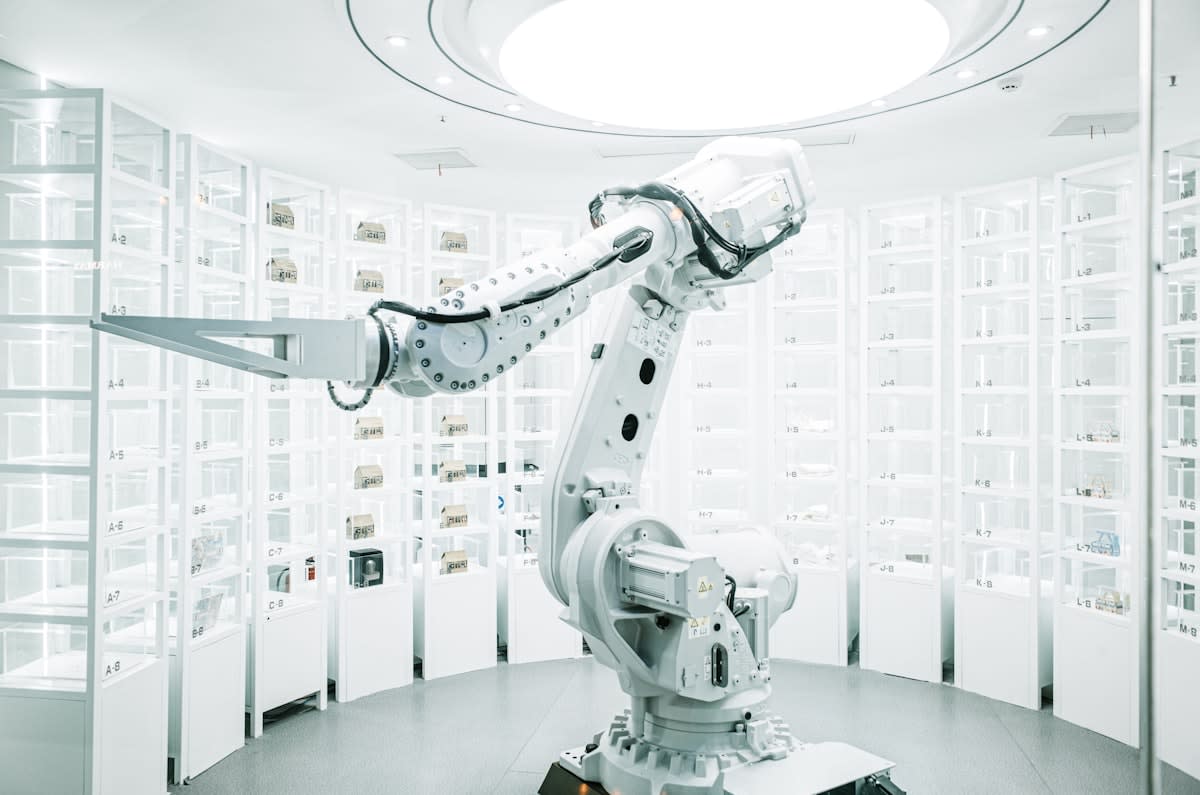
The delta between the industry's state twelve months ago and today is most visible in the transition from reactive to predictive manufacturing. At Northeastern University, researchers are demonstrating how AI can manage the inherent variability of cell and gene therapy (CGT) production. Historically, CGT has been plagued by inconsistency, with manufacturers reacting to problems after they occur. The current trajectory moves the sector toward predictive control, where AI anticipates production failures before they manifest. This capability is the prerequisite for distributed manufacturing; you cannot run a hub-and-spoke model if you cannot guarantee identical quality across geographically dispersed sites without constant physical supervision.
"AI has the potential to transform cell and gene therapy manufacturing by moving from reactive to predictive manufacturing."— Auclair, Northeastern University
While the US and Europe scramble to adapt, East Asia is integrating these AI capabilities into the very fabric of industrial chemistry. A KAIST research team in South Korea announced on July 14 a strategy to accelerate the commercialization of bio-based chemical manufacturing. Their focus on polyhydroxyalkanoates (PHA) highlights the precise application of AI to solve material science bottlenecks. PHA has long been hampered by high production costs and poor material properties, such as the brittleness of P(3HB). By using AI to simplify production and target high-value fields like medical applications and food packaging, KAIST is creating a roadmap for industrialization that doesn't rely on Western chemical templates.
| Metric | Legacy Pharma Model | AI-Driven Distributed Model |
|---|---|---|
| R&D Methodology | Transactional Trial-and-Error | Predictive De Novo Engineering |
| Production Logic | Reactive Quality Control | Predictive Manufacturing |
| Site Architecture | Centralized Western Hubs | Distributed Hub-and-Spoke |
| Molecular Design | Library Screening | Generative AI (e.g., Chai-3) |
The physical infrastructure supporting this shift is also diversifying. In Taiwan, the AI infrastructure boom is pushing suppliers like Nightfood and Jiun Jiang Enterprise Co., Ltd. to expand their manufacturing footprints. While their primary focus is semiconductor and robotics equipment, the underlying technology—specialty automation and advanced packaging—is the same layer required to scale biomanufacturing. The global semiconductor industry is projected to reach 975 billion dollars in sales by 2026, and the robotics platforms being developed to support this growth are the exact tools needed to automate the spoke units in a distributed pharma network.
Strategic Sequencing
KAIST's strategy emphasizes a phased approach: first applying AI-driven biomanufacturing to high-value medical and food packaging sectors before attempting to penetrate general-purpose markets.
Even established players are reacting to this fragmentation by balancing their asset footprints. Evonik recently invested 100 million dollars to upgrade its drug substance contract manufacturing site in Tippecanoe, USA. This move is not about centralization, but about resilience. By creating a more globally balanced footprint, companies are insulating themselves against the volatility of relying on a single region. When combined with the FDA's new streamlined registration pathways for distributed manufacturing, these investments suggest that the era of the mega-factory is being superseded by a network of agile, AI-optimized nodes.
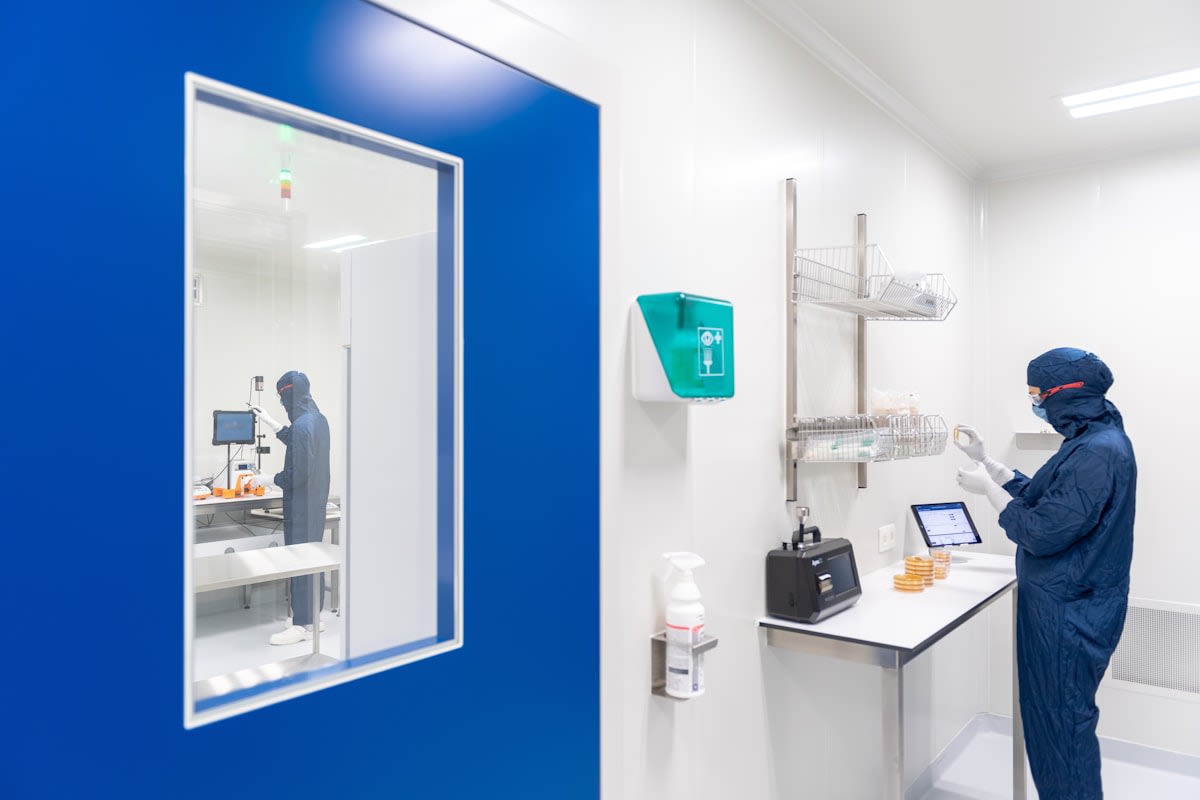
Does this mean the end of Western dominance in pharma? Not exactly, but it ends the monopoly on the means of production. The power is shifting from those who own the factories to those who own the models. If a company in Seoul or Taipei can use a model like Chai-3 to design a molecule and a hub-and-spoke FDA-approved network to produce it, the strategic advantage of being located in a traditional pharma cluster vanishes. The competition is no longer about who has the largest facility, but who has the most accurate predictive engine.
The speed of this transition is staggering. Within a single week in July 2026, we have seen a major regulatory shift from the FDA, a massive valuation jump for generative AI design, and a strategic roadmap for bio-based chemicals from KAIST. These are not isolated events; they are the components of a new industrial logic. The reliance on Western hubs was a byproduct of the trial-and-error era. In the era of predictive engineering, the hub is wherever the data is most refined and the automation is most precise.