
The Scalability Paradox
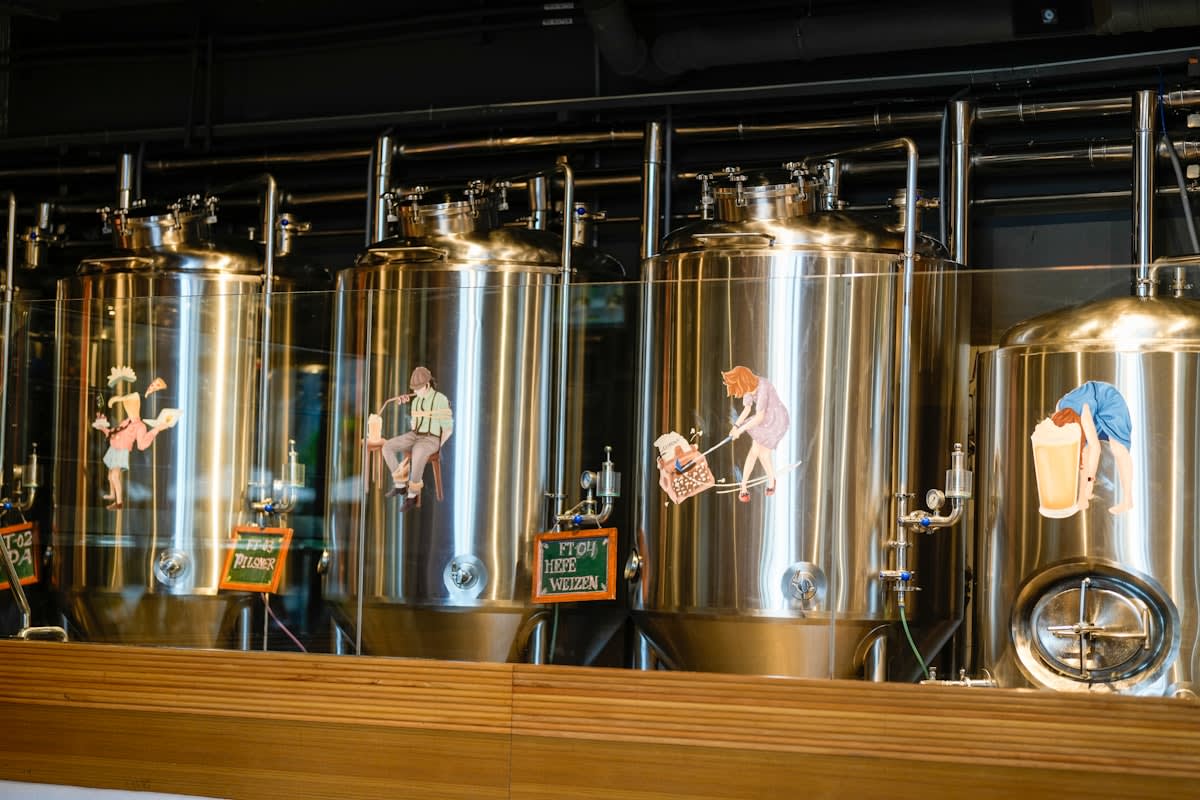
Most bioprocesses fail not because the biology is flawed, but because the physics change. A cell in a 5-liter benchtop reactor experiences a homogenous environment where nutrients and oxygen are nearly instantaneous. When that same process moves to a 10,000-liter stainless steel vessel in a facility in Singapore or Ireland, the environment becomes fragmented. Gradients emerge. The cell at the bottom of the tank experiences higher hydrostatic pressure and different shear forces than the cell at the surface. This environmental heterogeneity triggers stress responses that force cells to deviate from their intended phenotype, leading to a loss of potency that often only becomes apparent during final quality control.
Why does potency drop during scale-up? The answer lies in the relationship between mixing time and biological reaction rates. In large volumes, the time it takes for a nutrient bolus or a pH adjuster to disperse can exceed the time it takes for a cell to react to the local deficiency. These micro-environments create pockets of hypoxia or acidification. For sensitive cell lines, such as mesenchymal stem cells or complex CHO lines, these fluctuations act as unintended differentiation signals. The result is a population that may still be viable and growing, but no longer produces the therapeutic protein or maintains the surface markers required for clinical efficacy.
Prerequisites for Industrial Scaling
Before attempting to scale, the process must be stripped of all empirical guesswork. You cannot scale a process that is not fully characterized at the micro-scale. The goal is to identify the 'Critical Process Parameters' (CPPs) that directly correlate to the 'Critical Quality Attributes' (CQAs) of the cell. If you do not know the exact oxygen uptake rate (OUR) of your cell line at peak density, any attempt to scale is a gamble.
- Computational Fluid Dynamics (CFD) software for mapping shear stress and dead zones.
- Mass flow controllers capable of maintaining dissolved oxygen (DO) within 5% of the set point.
- Process Analytical Technology (PAT) tools, specifically Raman spectroscopy for real-time metabolite monitoring.
- A validated kLa (oxygen transfer coefficient) map for the target vessel geometry.
- High-fidelity metabolic flux analysis data from the seed train.
Precision requires hardware that can handle the inertia of large volumes. Standard PID controllers often struggle with the lag time of a 10kL tank, leading to 'hunting' where the system overcorrects pH or DO, creating a seesaw effect that stresses the cells. Transitioning to model-predictive control (MPC) allows the system to anticipate the lag and apply corrections more smoothly, preserving the cellular state.
Executing the Scale-Up Protocol
- Establish Constant kLa: Do not scale by RPM. Instead, maintain a constant oxygen transfer coefficient (kLa). As volume increases, the surface-area-to-volume ratio drops. You must increase sparging efficiency or oxygen enrichment to ensure the cells at the center of the vortex are not suffocating. Target a kLa range of 10 to 100 h-1 depending on cell density.
- Map the Shear Stress Profile: Use CFD to identify zones of high turbulence near the impeller tips. Sensitive cells can be physically sheared or biologically triggered by mechanical stress. If shear stress exceeds 1 Pa, consider switching to low-shear impellers, such as elephant-ear or hydrofoil designs, which move more fluid with less turbulence.
- Implement Perfusion for Metabolite Washout: Fed-batch systems often accumulate lactate and ammonia, which inhibit potency. Move to a perfusion strategy where fresh media is continuously added and spent media is removed via a cell retention device. Maintaining a perfusion rate of 1-2 vessel volumes per day (VVD) keeps the metabolic environment stable and prevents the 'toxicity dip' seen in late-stage batch cultures.
- Synchronize Nutrient Feeding with Metabolic Demand: Replace bolus feeding with continuous micro-feeding. Large additions of concentrated glucose can cause local osmotic shocks, triggering apoptosis or phenotypic drift. By using Raman spectroscopy to monitor glucose in real-time, you can maintain concentrations within a tight window (e.g., 2-5 g/L), avoiding the feast-famine cycle.
- Validate Phenotype via Multi-Omics: At every scale-up step, perform RNA-seq or proteomics on samples taken from different heights of the reactor. If cells from the bottom show higher expression of stress-response genes than those from the top, your mixing is insufficient. Adjust the agitation-aeration balance until the transcriptomic profile is uniform across the vessel.
The transition from a 50L pilot to a 2,000L production tank is where most potency losses occur. This is because the mixing time increases non-linearly. In a pilot tank, mixing might take 20 seconds; in a production tank, it could take 2 minutes. If your cells have a metabolic response time faster than 2 minutes, they will perceive the environment as unstable. This is why maintaining a constant power input per volume (P/V) is often a more reliable scaling metric than simply keeping RPM constant.
The CO2 Trap
When scaling, the 'Dead Zone' is your primary enemy. These are regions where fluid velocity is near zero, leading to localized nutrient depletion and CO2 accumulation. If the CO2 partial pressure (pCO2) exceeds 150 mmHg, you will see an immediate drop in protein glycosylation quality.
Consider the impact of gas stripping. In small reactors, CO2 escapes easily. In industrial volumes, the hydrostatic pressure at the bottom of the tank increases the solubility of CO2, leading to hypercapnia. This acidification of the intracellular environment alters enzyme kinetics and can shut down the production of high-potency variants of the target molecule. Solving this requires aggressive sparging with larger bubbles to 'sweep' the CO2 out of the liquid phase without causing excessive foam.
The financial stakes of potency loss are massive. In the biologics sector, a 30% drop in expression levels during scale-up can translate to millions of dollars in lost revenue per batch. In Switzerland's high-end biopharma clusters, the focus has shifted from maximizing raw yield to maximizing 'potency-per-cell.' This requires a shift in mindset: stop treating the bioreactor as a tank and start treating it as a precision-engineered organ.
| Parameter | Benchtop (5L) | Industrial (10kL) | Scaling Strategy |
|---|---|---|---|
| Mixing Time | <10 seconds | 120+ seconds | Increase P/V or optimize impeller geometry |
| Oxygen Transfer | High (Easy) | Low (Difficult) | Maintain constant kLa; O2 enrichment |
| CO2 Removal | Passive | Active/Forced | Increase sparge rate; adjust bubble size |
| Shear Stress | Negligible | Significant | Low-shear impellers; CFD mapping |
Common Pitfalls in Industrial Scaling
The most frequent error is the 'Linearity Fallacy.' Engineers often assume that if 100 RPM works for 10L, then 100 RPM will work for 10,000L. This is mathematically incorrect. The tip speed of the impeller increases with the diameter of the blade, meaning the cells at the edge of a large impeller are subjected to vastly higher shear forces than those in a small tank at the same RPM. This leads to mechanical lysis and the release of intracellular proteases that degrade the product.
Another critical failure is ignoring the seed train. Potency is often lost before the cells even hit the production bioreactor. If cells are pushed through too many doublings in the expansion phase, they accumulate epigenetic marks of senescence. By the time they reach the 10kL tank, their capacity for high-potency production is already compromised. Strict limits on population doublings (PDL) must be enforced across the entire scale-up chain.
Finally, over-reliance on offline sampling leads to 'blind spots.' By the time a sample is taken, sent to the lab, and analyzed for lactate, the bioreactor has already drifted. The cells have already responded to the stress. Only through the integration of in-line sensors can a practitioner maintain the razor-thin margins of stability required for industrial potency.