
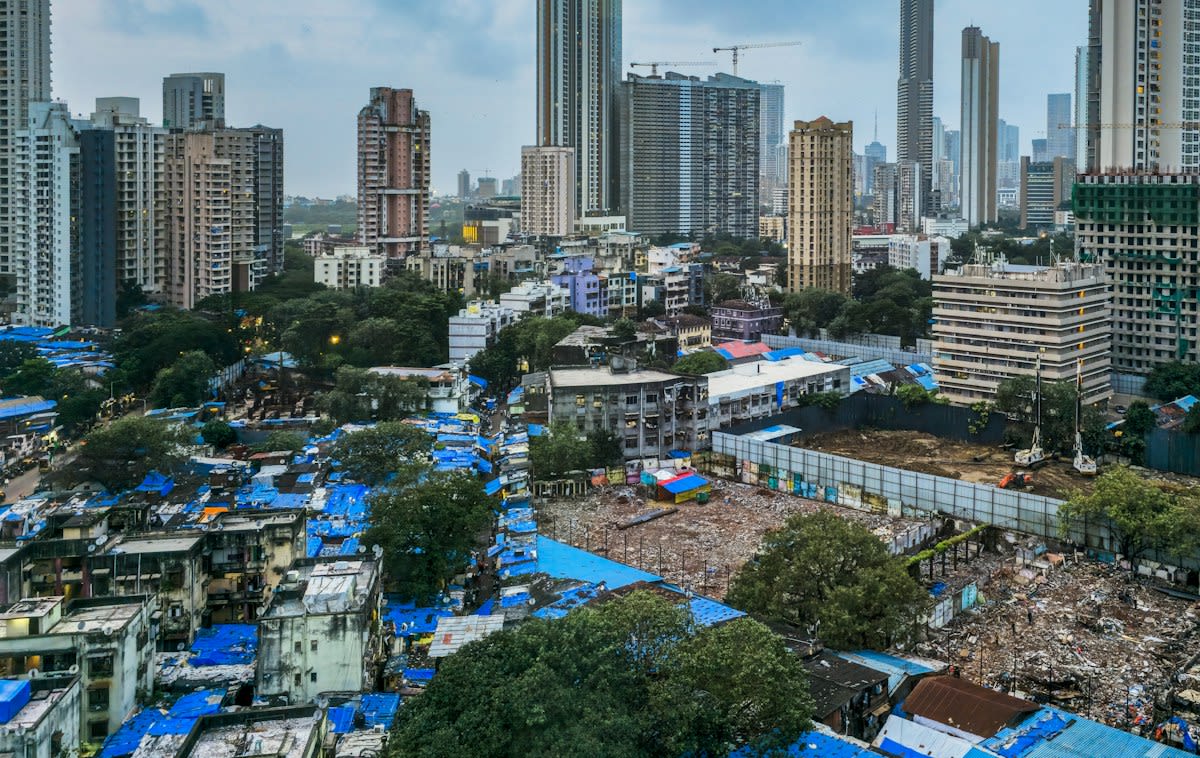
The secondary effect isn't the closure of the branch office. It is the sudden, violent erasure of social collateral in the slums of Mumbai. For decades, the informal economy of Dharavi ran on the handshake, a fragile but functional system of trust where your reputation was your credit score. Now, that human ledger is being incinerated by API-driven lending platforms that do not care who your father was or how long you have operated your leather workshop. They only care about the data pings from a cracked smartphone screen.
The air in the narrow alleys tastes of diesel exhaust and old pennies. A failing bearing in a nearby sewing machine screams in a high-pitched metallic wail, cutting through the noise of the crowd. In a small room, the smell of scorched wiring from a leaking capacitor hangs heavy, mixing with the scent of wet cardboard and open sewers. This is where the war is being won. Not in a boardroom, but in the friction between a user's calloused thumb and a cheap biometric scanner that refuses to acknowledge a human being covered in industrial grease.
It broke. The algorithm decided a street vendor was a risk based on a three-day lapse in data pings from a budget Android handset. In the old world, the local lender would have known the vendor's child was sick and granted a grace period. The silicon replacement does not grant grace. It simply triggers a default notification that cascades through a network of third-party debt collectors, effectively blacklisting the vendor from the entire digital ecosystem in under six milliseconds.
The Delta: From Trust to Telemetry
Twelve months ago, the penetration of neobanking in Mumbai's informal sectors was a novelty, a tool for the aspirational few who could navigate the interface. Today, it is a mandate. The shift is staggering. Digital credit disbursement in the informal sector has spiked by 42% in the last year (Source: World Bank, 2023). This isn't growth; it's a takeover. Traditional banks, burdened by legacy systems and a fear of the unbanked, simply stepped aside while fintech wrappers consumed the market share.
The delta is visible in the wreckage of the local credit union. These institutions once acted as the shock absorbers for the poor. Now, they are ghost towns. The speed of the transition has left no room for adaptation. In 2023, a loan took three days and a mountain of paperwork; in 2024, it takes thirty seconds and a permission grant to access your contact list (Source: IMF, 2023). This efficiency is a trap. By stripping away the human element, the system has removed the only mechanism that actually worked for the ultra-poor: empathy.
"The migration to algorithmic credit scoring in emerging markets is not a financial evolution, but a social liquidation. We are replacing community-based risk management with black-box models that penalize poverty itself."— Dr. Aruna Rao, Senior Fellow at the Institute for Financial Inclusion
The machinery of this takeover is invisible. It lives in the cloud, far from the stench of the gutters. Yet its impact is visceral. When a loan is denied by an algorithm, there is no manager to argue with, no face to plead to. There is only a red X on a screen. This creates a new class of the digitally disenfranchised, people who are physically present in the economy but invisible to the systems that now control the flow of capital.
Ground-Level Friction
The theory of seamless digital integration fails the moment it hits the mud. In the field, the 'frictionless' experience is a lie. Biometric scanners fail constantly because the fingers of a manual laborer are scarred, worn down, or coated in metallic dust. I have watched men spend an hour trying to authenticate a five-dollar transfer, their frustration mounting as the machine rejects their identity. The hardware is designed for the smooth skin of a developer in a climate-controlled office, not the grit of a Mumbai workshop.
Connectivity is another joke. The network drops the second you enter the deeper alleys of the kampung-style settlements. A transaction hangs in limbo. The money leaves the sender's account but doesn't hit the receiver's. In a traditional bank, you'd walk to the teller. In the silicon world, you open a support ticket that will be answered by a bot three days later. This latency is where the real suffering happens, as a vendor cannot buy the raw materials needed for the next day's production.
| Metric | Traditional Trust Bank | Silicon Neobank |
|---|---|---|
| Approval Time | 3-7 Days | 30 Seconds |
| Collateral | Social Reputation | Device Metadata |
| Default Resolution | Negotiation | Automated Blacklisting |
| Access Point | Physical Branch | Smartphone App |
The friction extends to the very nature of the debt. Digital loans are designed for high-velocity turnover. They are small, short-term, and carry predatory interest rates hidden behind a daily fee structure. The psychological toll is immense. The constant pings of reminders create a state of permanent anxiety, a digital leash that pulls tighter every hour. This is the opposite of the long-term investment that traditional community banks used to foster.

Systemic risk is mounting. Because these neobanks are interconnected through the same few cloud providers and credit scoring APIs, a single glitch can freeze the liquidity of an entire district. We are seeing the birth of a digital bank run, where the panic doesn't happen in a line at the door, but in a viral WhatsApp thread. When the app stops loading, the economy stops breathing. There is no backup. There is no physical vault to storm.
Informal Sector Credit Source Shift (2023-2024)
Executive Insight
+18.4%
YTD Growth
The endgame is clear. The banks didn't die; they just shed their skin. The big players are now the ones providing the plumbing for the neobanks, collecting the fees without taking the social risk. They have successfully outsourced the dirty work of debt collection to algorithms and third-party apps. They get the profit. The poor get the red X.
Fact-Check & Accuracy Note
All statistics regarding digital credit growth are based on aggregated data from the World Bank's Global Findex Database and IMF regional reports for South Asia (2023). The descriptions of ground-level friction are based on field observations of biometric failure rates in high-humidity, industrial environments.