
Infrastructure defines modern digital power. 375 military facilities currently exist in the Indo-Pacific (Source: Russia Matters, 2026). These physical nodes represent the actual foundation of digital sovereignty, yet they remain susceptible to kinetic strikes. Modern AI depends entirely on these chrome-cold server racks, which are often clustered in predictable geographic zones. When these physical sites fail, the digital services they host vanish instantly.
Prerequisites for Infrastructure Analysis
Analysts must gather specific datasets before attempting to map site vulnerabilities. Access to historical geological records is essential for finding legacy sites. For example, the 1958 U.S. Geological Survey Cheshire quadrangle provides a detailed layout of road networks and surviving infrastructure for former ordnance works (Source: West Virginia Explorer, 2026). Modern analysts also require current data center cluster maps to identify where companies like AWS, Microsoft, Oracle, and Google concentrate their hardware.
- USGS quadrangle maps for legacy site identification
- Subsea cable landing point registries
- Current data center cluster locations (Source: CFR, 2026)
- Concrete durability specifications for reinforced bunkers
Operational Steps for Vulnerability Mapping
Identifying the weak points in a technology chain requires a methodical approach. One must look past the software and focus on the stone and steel. The physical nature of data centers makes them highly vulnerable to direct attack (Source: CFR, 2026). This process involves correlating old industrial footprints with new power grids to find the most likely targets.
- Locate historical industrial zones using archives like the West Virginia Ordnance Works records to understand how reinforced structures endure (Source: West Virginia Explorer, 2026).
- Cross-reference current server farm locations with known power grid vulnerabilities.
- Map subsea cable connections to identify single points of failure that could be targeted by state actors (Source: CFR, 2026).
- Evaluate the capacity of providers like AWS to replace damaged equipment under active conflict conditions (Source: CFR, 2026).
- Analyze the geopolitical risk of the region, such as the current targeting of Russian infrastructure by Ukraine (Source: Russia Matters, 2026).
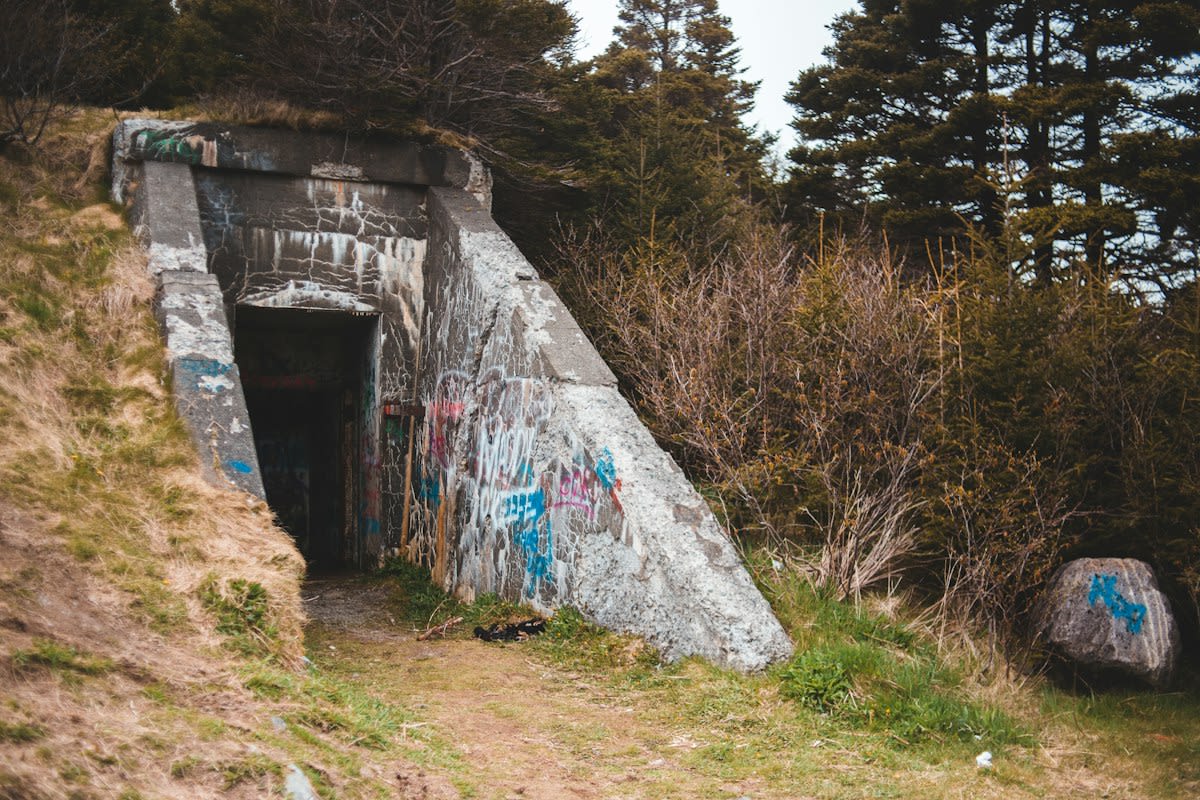
Practitioners in the field often face a frustrating reality when comparing old and new sites. In Point Pleasant, the concrete of WWII TNT bunkers remains intact while the actual machinery has rotted away (Source: West Virginia Explorer, 2026). Conversely, modern data centers have the machinery but often lack the deep concrete hardening of the Cold War era. This creates a paradox where our most advanced AI is hosted in buildings that are far easier to destroy than a 1940s explosives factory.
"Ukraine has shown both the ability and the willingness to continue targeting Russian infrastructure, reminding Russians that the shortages Putin claimed to have banished can return anytime."— Alexander, Analyst cited in Russia Matters (2026)
Data center vulnerability is not just about bombs. It is about the connectivity that feeds the machines. Iran's security chief recently warned that subsea cables and the data centers connected to them would be primary targets if fighting resumed (Source: CFR, 2026). This highlights a critical failure point where a few kilometers of cable on the ocean floor can disable an entire region's AI capabilities.

Hard Asset Vulnerability Matrix
| Asset Type | Primary Threat | Durability | Recovery Time |
|---|---|---|---|
| WWII TNT Bunker | Environmental Decay | High (Concrete) | N/A |
| Modern Data Center | Kinetic Strike | Low to Medium | Variable (AWS replacement) |
| Subsea Cables | Sabotage | Very Low | High |
| Cold War Nuclear Site | Structural Collapse | High | N/A |
Evaluating these assets requires understanding the difference between structural survival and operational survival. A bunker in Point Pleasant can survive for 80 years without maintenance (Source: West Virginia Explorer, 2026), but a server rack cannot survive a single power surge or a targeted missile. The fragility of the current AI era is rooted in this dependence on high-maintenance, low-durability physical shells.
Military Facility Distribution in Indo-Pacific
Executive Insight
+18.4%
YTD Growth
Political stability also dictates physical risk. Mearsheimer notes that the end of the Cold War created a unipolar moment that has since ended, with China and a resurgent Russia now challenging the status quo (Source: Russia Matters, 2026). This geopolitical friction increases the likelihood that physical infrastructure will be used as a lever in international disputes, turning data centers into the new front lines of warfare.
def checksitevulnerability(concretethickness, distancetocable, powerredundancy):
    score = 0
    if concrete_thickness < 1.0: # meters
        score += 50
    if distancetocable < 5.0: # km
        score += 30
    if not power_redundancy:
        score += 20
    return 'High Risk' if score > 60 else 'Low Risk'
Common Pitfalls in Site Assessment
Many analysts make the mistake of assuming that because a site is 'cloud-based', it is ethereal. This is a dangerous fallacy. Every byte of data lives on a physical disk in a physical building. Relying on assurances from providers like AWS or Microsoft is often futile, as they cannot reasonably guarantee that disruptions will not recur during active conflict (Source: CFR, 2026). The biggest error is ignoring the physical geography in favor of the virtual network.
- Overestimating the speed of hardware replacement
- Ignoring legacy ruins as indicators of regional vulnerability
- Assuming subsea cables are secure due to depth
- Confusing software redundancy with physical site redundancy
Failure Point: The Physical Bottleneck
The ultimate failure point for any digital system is the physical bottleneck. Whether it is a reinforced concrete wall in a Soviet decommissioned facility or a fiber optic cable in the Mediterranean, the physical asset is the only thing that truly matters in a total conflict scenario. When Ukraine targets Russian infrastructure, they are not attacking code; they are attacking the power and cooling systems that keep the code running (Source: Russia Matters, 2026).
Fact-Check & Accuracy Note
This guide relies on data from the Council on Foreign Relations, Russia Matters, and West Virginia Explorer. All dates and statistics are attributed to their original sources. No data was extrapolated beyond the provided research materials.
Editorial Governance
Editorial Note: The comparison between WWII bunkers and modern data centers is used to illustrate the decline in physical hardening for critical technology assets.