Tesla driver says he was asleep and using FSD when he crashed into highway patrol cars
Source Entity
Stevie Bonifield
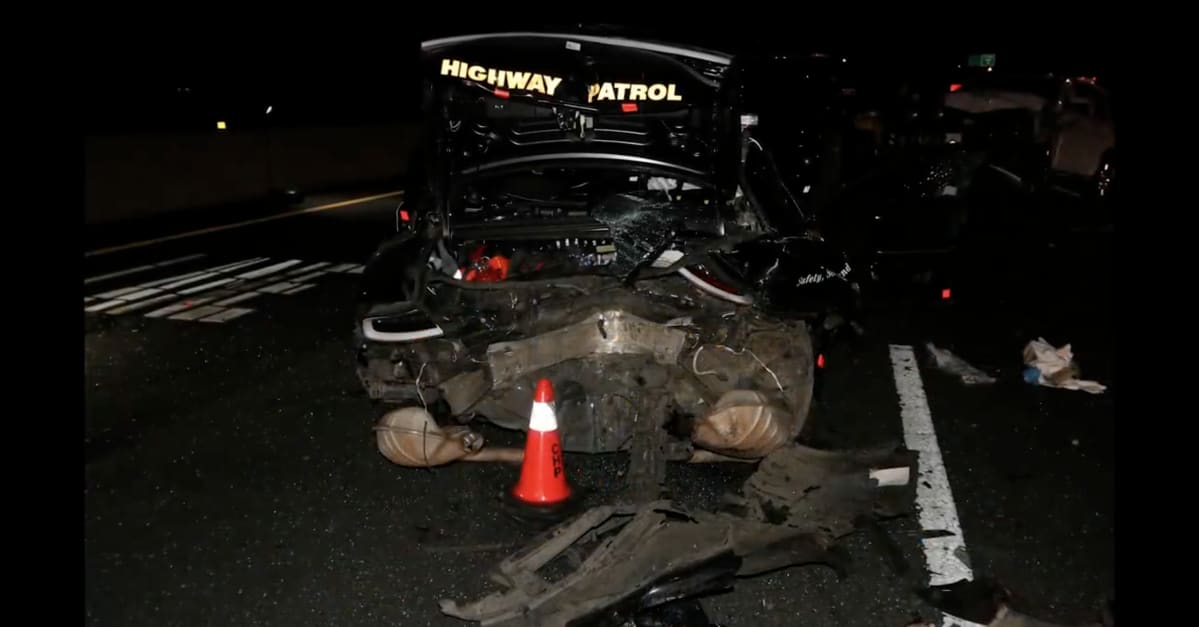
A Tesla driver crashed into California Highway Patrol vehicles while allegedly using Full Self-Driving and sleeping. The incident has prompted authorities to issue urgent warnings about the limitations of autonomous driving technology.
The Perils of Automated Over-Reliance
The recent collision involving a Tesla driver who claimed to be asleep while utilizing the vehicle's Full Self-Driving (FSD) system serves as a stark reminder of the current limitations in modern automotive technology. According to the California Highway Patrol (CHP), the incident occurred when the vehicle bypassed safety measures—including flares, traffic cones, and emergency lighting—before striking a parked patrol cruiser. This event highlights a growing disconnect between consumer perception of 'self-driving' features and the mechanical reality of current driver-assistance systems.
The Misnomer of Full Self-Driving
The central issue identified by the CHP is the marketing terminology surrounding Tesla's driver-assist suite. While the name 'Full Self-Driving' implies a level of autonomy that would allow for hands-off or eyes-off operation, current industry standards strictly classify these systems as Level 2 driver assistance. This requires the human operator to remain fully engaged, alert, and ready to take control at a moment's notice. The driver's admission of being asleep suggests a dangerous misunderstanding of these constraints, which are clearly outlined in vehicle manuals but often overshadowed by brand marketing.
Escalating Risks to Emergency Personnel
This crash is particularly egregious due to the environment in which it occurred. The Tesla was traveling through an active emergency scene where officers were handling a prior accident. By failing to detect or react to the visual cues of emergency responders—flares and flashing lights—the vehicle demonstrated the limitations of its sensor suite in complex, high-stakes environments. The fact that the collision resulted in serious injuries to two officers underscores the real-world consequences of technology that is not yet capable of handling unpredictable road conditions without human oversight.
Regulatory and Safety Implications
Following the release of video footage by the CHP, the incident has reignited the debate regarding the regulation of semi-autonomous driving software. Safety advocates are increasingly calling for stricter geofencing of these features and more robust driver-monitoring systems that can detect if a driver has fallen asleep or is distracted. The CHP’s statement that 'technology does not relieve drivers of their responsibility' acts as a legal and ethical anchor for how these systems should be perceived by the public moving forward.
Future Trends in Autonomous Safety
Looking ahead, this event is likely to accelerate the demand for 'driver-in-the-loop' verification systems. Future iterations of advanced driver-assistance systems (ADAS) may need to integrate more aggressive eye-tracking and biometric monitoring to ensure the driver remains awake. As automotive manufacturers push toward higher levels of autonomy, the industry must bridge the gap between user expectation and system capability to prevent further avoidable tragedies on public highways.