Air yields water. 2 billion people live in water-stressed regions (Source: United Nations, 2026). This number is expected to hit 3.5 billion by 2025 (Source: IJERT, 2026). The pressure to find water in the sky is now a matter of survival. These figures drive the rush toward atmospheric water generators. The desperation is palpable in every water-scarce zone.
Jakarta observers see the trend as a gamble. The move from observing nature to extracting from it is risky. Many believe the energy cost outweighs the liquid gain. They watch as cities try to bypass pipes for air. This gamble ignores the volatility of the atmosphere. The result is often a waste of capital.
The Tourism Mirage
Shillong recently installed a drinking-water facility at Ward's Lake (Source: Outlook Traveller, 2026). This setup harvests atmospheric moisture to support tourism infrastructure. It serves as a proof of concept for the region. However, tourism needs are different from survival needs. A tourist drinking a glass of water is not a solved drought. The installation highlights the gap between novelty and utility.
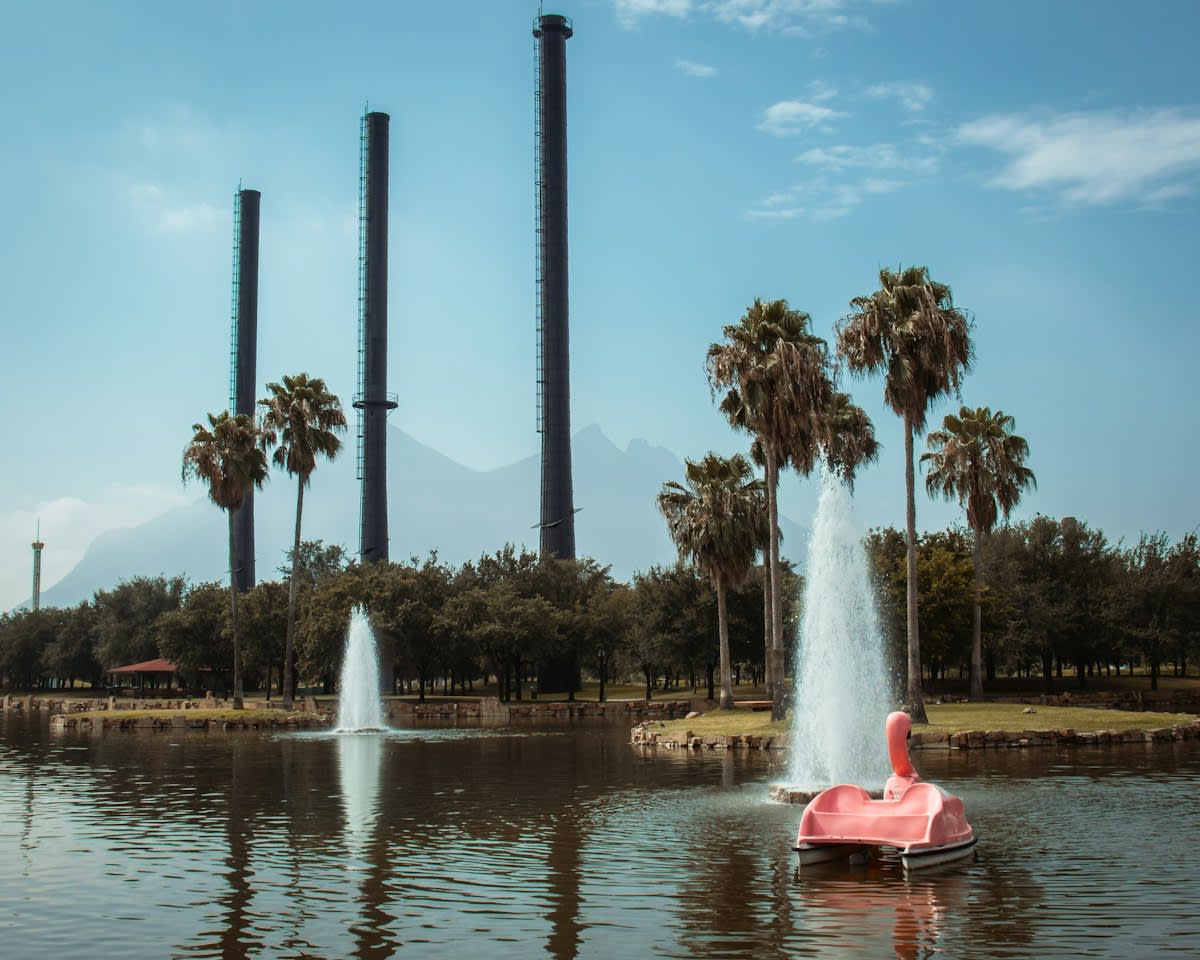
The Shillong facility is a luxury, not a lifeline (Source: Outlook Traveller, 2026). Using moisture harvesting for tourism infrastructure is a marketing win. It shows an ecological image to visitors. But the energy cost of this water is hidden. It serves as a trophy of technology. The real need remains in the slums and the farms.
The Monitoring Gap
AWGs often fail in remote areas because of a lack of monitoring (Source: IJERT, 2026). Without real-time data, operators do not know when a unit stops working. A proposed GSM-based monitoring system aims to fix this (Source: IJERT, 2026). This system uses low-cost sensors and SMS alerts to track performance. It targets resource-limited regions where technicians cannot visit daily. The goal is to make extraction reliable rather than accidental.
"Atmospheric water extraction remain inefficient and geographically limited."— IJERT Research Paper, 2026
Field work in remote zones reveals the rot. Engineers fight signal dead zones where GSM modules fail. They argue over sensor drift and battery decay in heat. The tension lies between the promise of the lab and the grit of the dirt. No one mentions the cost of replacing a sensor in a wasteland. The reality is a struggle against dust and silence.
The projection of 3.5 billion water-stressed people by 2025 creates a panic (Source: IJERT, 2026). This panic fuels the investment in AWGs. Investors ignore the inefficiency because the alternative is total thirst. This is a market driven by fear, not physics. The rush to deploy these units is a reaction to a looming catastrophe.
Atmospheric River Volatility
Atmospheric Rivers (ARs) are the heavy lifters of precipitation in Chile (Source: CW3E, 2025). In the Coquimbo region, 1,144 regional ARs were identified between 1980 and 2023 (Source: CW3E, 2025). Yet, these rivers do not always bring rain. Their presence is a hint, not a guarantee. The volatility makes water management a guessing game.
| Region | AR Count (1980-2023) | Frequency Trend |
|---|---|---|
| Coquimbo, Chile | 1,144 | -1.34 ARs/decade |
Data shows a non-significant overall decrease in AR frequency of -1.34 ARs per decade (Source: CW3E, 2025). This decline is driven by fewer Southern-landfalling ARs. The trend suggests a drying pattern in semi-arid regions. This makes the reliance on ARs a dangerous bet. The numbers tell a story of disappearing moisture.
Detection tools for ARs are not standardized (Source: CW3E, 2025). The choice of an Atmospheric River Detection Tool (ARDT) changes the conclusion. One tool might see a river where another sees a cloud. This discrepancy creates a crisis of data. Polar regions need different parameters entirely. Without a standard, the science remains fragmented.
Polar regions are the next frontier for AR detection (Source: CW3E, 2025). The unique atmospheric conditions there break current tools. Scientists need new parameters to find water in the ice. This reveals the blind spots in our global water map. We cannot manage what we cannot detect. The lack of polar data is a hole in the science.
The Adoption Block
Iran is testing unconventional water for tree farming (Source: Frontiers, 2026). Farmers are hesitant to adopt these sources. Competition for limited freshwater threatens the sustainability of wood production. The use of alternative water is currently underutilized. This suggests a mental block among growers. They trust the old ways over the new science.
Iranian farmers face a choice between death and unconventional water (Source: Frontiers, 2026). The resistance to these sources is a social issue. They fear the impact of alternative water on soil health. This fear is not grounded in data but in tradition. Overcoming this requires more than just technology. It requires a change in the culture of farming.
The delta between 2025 and 2026 is clear. In 2025, the focus was on the broad tracking of atmospheric rivers in Chile (Source: CW3E, 2025). By 2026, the focus moved to the granular extraction of water in places like Shillong (Source: Outlook Traveller, 2026). We have moved from mapping the rain to trying to steal it from the air. This transition marks a move from observation to intervention. The scale has shrunk from rivers to generators.
Failure Points
AWGs face a wall of inefficiency (Source: IJERT, 2026). They are geographically limited by humidity and temperature. In many dry zones, the air is too thin to harvest. The energy required to condense water often exceeds the value of the water. This is the failure point of the technology. It works in the lab but dies in the desert.
Fact-Check Note
Fact-Check: The 3.5 billion projection for water-stressed regions by 2025 is cited from UN reports via IJERT (2026). AR frequency data is based on 1,144 identified events in the Coquimbo region (Source: CW3E, 2025).
Editorial Note
Editorial Note: This piece examines the tension between atmospheric theory and field reality. The author maintains a skeptical stance on the scalability of AWGs.