If you’re a good politician, you have to be an actor: Tavleen Singh
Source Entity
Aishwarya Khosla
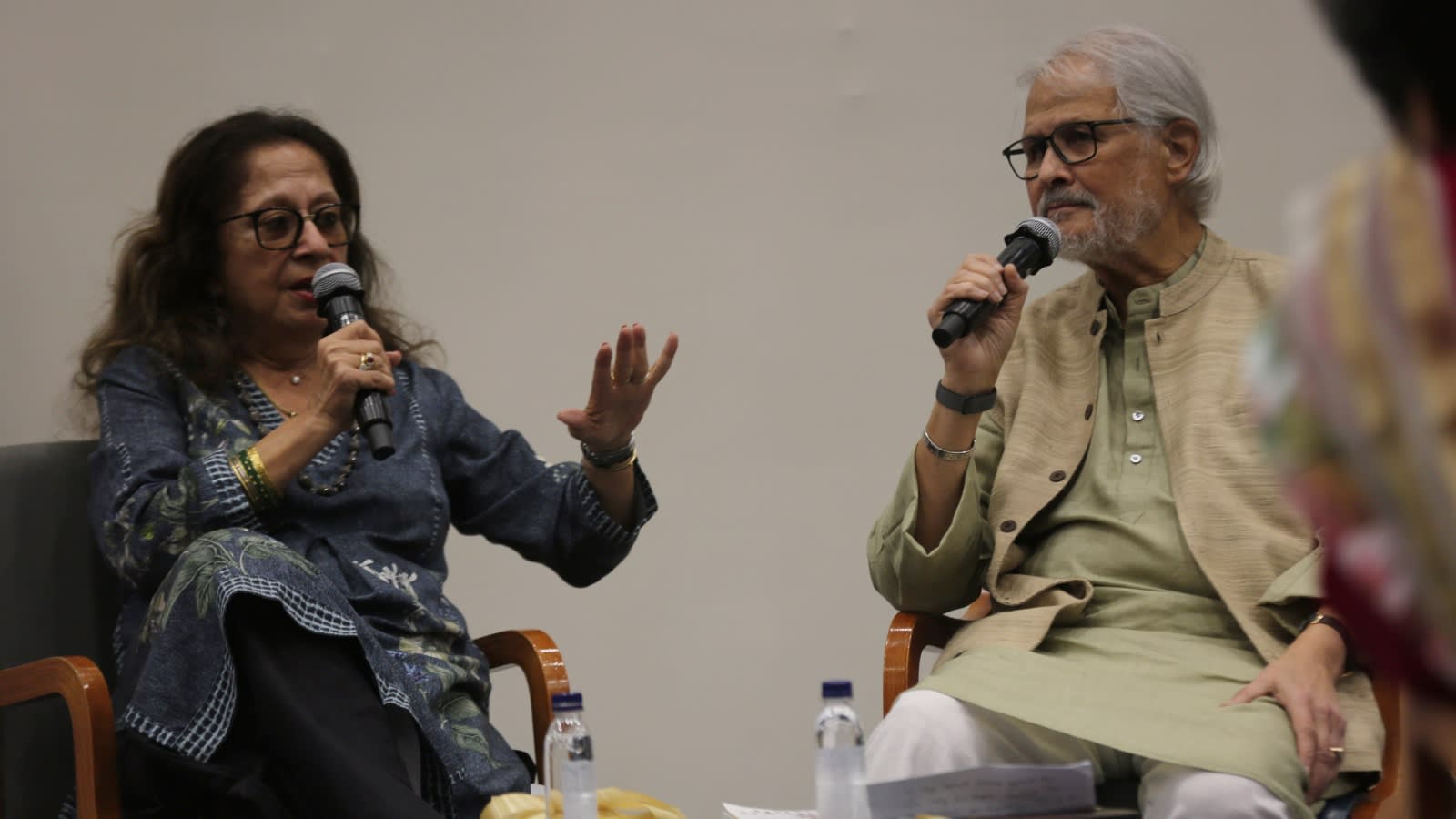
Veteran journalist Tavleen Singh has released her debut novel, 'The Actor,' which explores the rise of a fictional, ruthless theocrat in a near-future India. Singh emphasizes that the character is a cautionary warning regarding the erosion of liberalism and pluralism in society.
The Intersection of Fiction and Political Reality
Veteran journalist and Indian Express columnist Tavleen Singh recently unveiled her debut novel, The Actor, at the India International Centre. The launch, featuring a discussion with former Lieutenant Governor of Delhi, Najeeb Jung, centered on the book’s central antagonist: 'Guruji.' As a four-time Prime Minister presiding over a near-future India, Guruji is depicted as a ruthless theocrat whose governance style challenges the democratic foundations of the nation.
The Anatomy of a Warning
Throughout the launch event, Singh was pressed by attendees regarding the inspiration behind the character of Guruji. Specifically, questions arose concerning whether the figure was modeled after the current Prime Minister, Narendra Modi. Singh consistently sidestepped these direct comparisons, choosing instead to frame the character as a symbolic 'warning.' For Singh, Guruji serves as a literary manifestation of the potential consequences if India continues to retreat from its core values of liberalism and pluralism.
Analyzing the Decline of Pluralism
The narrative tension in The Actor appears to be rooted in the broader socio-political discourse regarding the health of Indian democracy. By creating a 'theocratic' Prime Minister, Singh highlights the dangers of mixing religious authority with statecraft. Her assertion that the book is a warning suggests that the trajectory of a nation is not static; rather, it is shaped by the degree to which a society tolerates or encourages non-liberal ideologies in its political leadership.
The Role of the Journalist-Novelist
It is significant that a seasoned political commentator like Tavleen Singh has chosen the medium of fiction to address these concerns. By moving from journalism to the novel, Singh gains the latitude to explore the psychological and structural decay of a state in a way that traditional reporting may not always capture. The use of fiction allows her to synthesize years of political observation into a cohesive, albeit cautionary, narrative about the fragility of Indian institutional norms.
Future Implications for Indian Discourse
As India navigates an increasingly polarized political landscape, works like The Actor are likely to spark intense debate. The book invites readers to reflect on the relationship between the electorate and the leaders they choose. By refusing to confirm or deny specific real-world inspirations, Singh forces the audience to look beyond individual politicians and focus on the systemic societal shifts that allow such figures to rise to power.
Concluding Thoughts
Ultimately, The Actor stands as a reflection of the current anxieties surrounding the future of democratic governance. Through the lens of a fictionalized, near-future India, Tavleen Singh challenges her readers to consider the long-term impact of ideological shifts. The novel serves as a testament to the power of literature to act as a mirror to society, demanding that citizens remain vigilant in the defense of a pluralistic and liberal democratic identity.