Rosenberg: US diplomatic push offers little hope for imminent Ukraine peace
Source Entity
BBC News
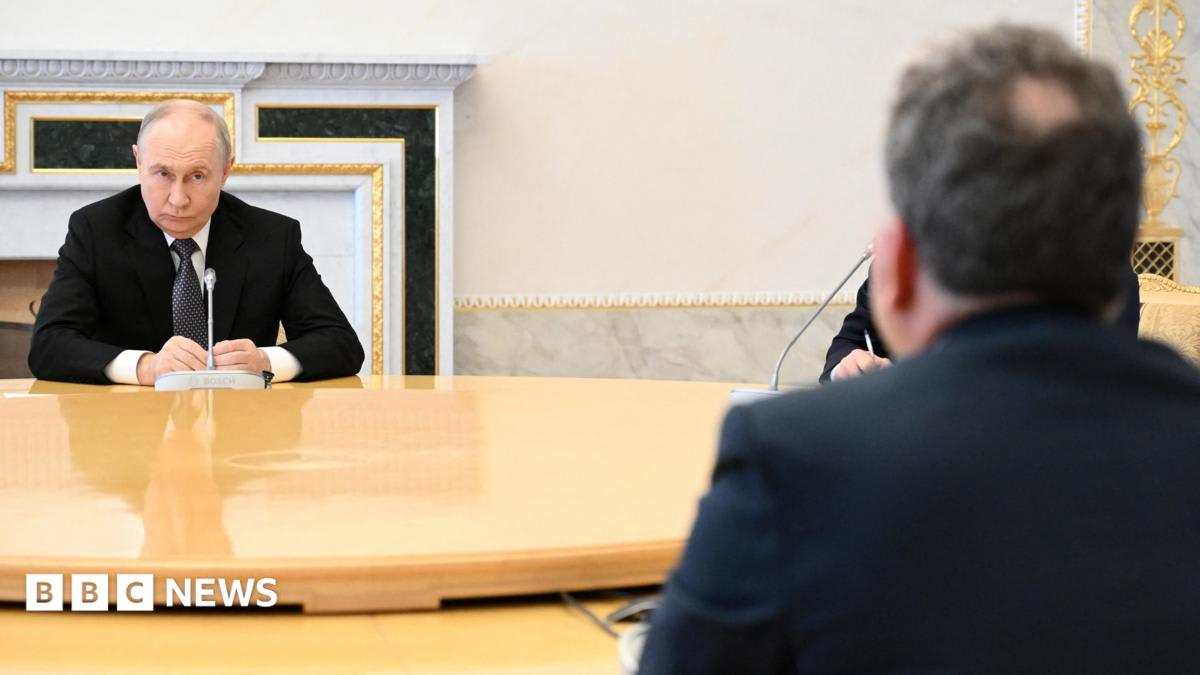
Recent diplomatic efforts in Oslo and St. Petersburg have failed to produce an immediate path toward ending the war in Ukraine. Despite US-led attempts to facilitate high-level trilateral talks, President Putin remains resistant to direct engagement with President Zelensky.
The Stalled Path to Peace: An Analysis of Recent Diplomacy
The Oslo-St. Petersburg Diplomatic Pivot
Recent diplomatic engagements held in Oslo and St. Petersburg have highlighted the profound complexity of ending the conflict in Ukraine. While officials from Norway, the United States, and Ukraine have sought to create a framework for de-escalation, the fundamental reality remains that the opposing sides are far from a consensus. The discussions in Oslo, involving President Zelensky and US special envoy Steve Witkoff, were intended to lay the groundwork for a high-level trilateral summit between Zelensky, Putin, and US President Trump. However, the outcome underscores the persistent gap between Western diplomatic aspirations and the ground reality of the conflict.
Strategic Divergence in Negotiations
At the heart of the current stalemate is a mismatch in strategic objectives. The Western-led initiative aimed to facilitate a leaders-level summit to freeze hostilities. Conversely, the Kremlin has signaled a preference for lower-level technical discussions, specifically mentioning potential talks in Abu Dhabi next month. This divergence suggests that Russia does not yet feel sufficient pressure to negotiate a formal peace settlement, viewing technical-level engagement as a more favorable, controlled environment than a high-stakes summit that would grant Zelensky equal standing.
The Putin Doctrine and Territorial Positioning
President Putin’s refusal to engage with President Zelensky outside of Moscow—or at a level below the heads of state—reflects a calculated geopolitical stance. By insisting on specific terms for engagement, the Kremlin aims to maintain its current momentum on the battlefield while projecting a posture of strength. This behavior indicates that Putin currently views the cost of continuing the war as lower than the perceived cost of a negotiated settlement that might be viewed as a compromise of his initial objectives.
Challenges for the US Special Envoy
Steve Witkoff’s role as the US special envoy is proving to be a litmus test for the new administration’s foreign policy approach. The challenge lies in translating the desire for an 'imminent peace' into actionable leverage. Because the Kremlin remains unmoved by the current diplomatic overtures, the United States faces the difficult task of recalibrating its pressure points. Without a shift in the battlefield dynamics or a change in the Kremlin's internal political calculus, these diplomatic 'constructive' talks risk becoming procedural exercises rather than vehicles for meaningful resolution.
Future Outlook: Technical vs. Political Tracks
Looking ahead, the pivot toward technical-level talks in Abu Dhabi may be the only realistic path forward in the short term. While such meetings are unlikely to produce a comprehensive peace treaty, they serve as a necessary channel for de-confliction. The international community should manage expectations; unless the diplomatic process evolves from technical discussions into a genuine political dialogue between the leaders, the conflict in Ukraine appears set to continue, with Russia showing no urgency to alter its current trajectory.