
The era of the raw image is dead. For a century, a photograph served as a proxy for truth, a chemical or digital footprint of a moment that actually happened. But the arrival of generative AI has broken that contract. We have entered a period of epistemic instability where the cost of creating a convincing lie has dropped to near zero, while the cost of verifying the truth has skyrocketed. This is not a crisis of technology, but a crisis of provenance.
While the public discourse focuses on the terror of deepfakes, industry insiders are building something far more systemic: a cryptographic ledger for reality. This is not a single piece of software, but a coordinated shift toward content provenance. The goal is to move the burden of proof from the consumer—who can no longer trust their eyes—to the asset itself, which carries an immutable record of its own history.
The Shift from Software to Silicon
Twelve months ago, the conversation around 'truth protocols' was largely confined to software plugins and post-production metadata. You could tag a photo as 'authentic' in an editor, but that tag was as easy to strip as a caption. The delta we are seeing today is the migration of this trust layer into the hardware. We are seeing the first generation of cameras and smartphones that sign the image at the moment of capture, using a secure enclave within the processor to create a cryptographic hash of the pixels (Source: C2PA Specification, 2024).
Why does this matter? Because if the signature is generated by the sensor hardware, any subsequent edit—a crop, a color grade, or a generative fill—is recorded as a new layer in the manifest. If a pixel is altered by an AI tool, the cryptographic chain breaks or logs the change. This transforms a digital file from a static image into a living ledger of its own evolution. It is the difference between trusting a witness and trusting a notarized document.
"The objective is not to stop the creation of synthetic content, but to ensure that the provenance of authentic content is undeniable. We are building a world where 'authentic' is a verifiable attribute, not an assumption."— Technical Steering Committee, Coalition for Content Provenance and Authenticity (C2PA)
This transition is being accelerated by a global regulatory push. In the European Union, the AI Act is introducing mandates for the labeling of synthetic content, pushing platforms to adopt standardized provenance markers (Source: EU AI Act, 2024). In the United States, executive orders are nudging federal agencies toward watermarking standards to protect democratic processes. The trend is clear: the market is moving toward a binary state where content is either 'provenanced' or 'untrusted'.
The Practitioner's Friction: Truth vs. Anonymity
On the ground, the implementation of these protocols is sparking a fierce debate among investigative journalists and human rights defenders. In my conversations with field producers in conflict zones, the friction is palpable. A cryptographic ledger provides absolute proof of where and when a photo was taken, which is a dream for a news editor in London or New York. But for a whistleblower in a restrictive regime, that same ledger is a digital death warrant. If the 'Truth Protocol' requires a hardware ID linked to a registered device, anonymity vanishes.
The internal debate among practitioners centers on 'selective disclosure.' How do we prove a photo is real without revealing the identity of the photographer? Some are proposing zero-knowledge proofs—a mathematical way to prove a statement is true without revealing the underlying data. The industry is currently wrestling with how to balance the global need for verifiable truth with the individual need for safety. This isn't a technical bug; it's a fundamental human rights conflict.
| Feature | Legacy Digital Trust | Cryptographic Provenance |
|---|---|---|
| Verification Method | Visual inspection/Reverse search | Cryptographic Hash Verification |
| Point of Origin | Software (Post-capture) | Hardware (At-capture) |
| Edit History | Invisible/Hidden | Immutable Manifest |
| Trust Model | Trust the Publisher | Trust the Math |
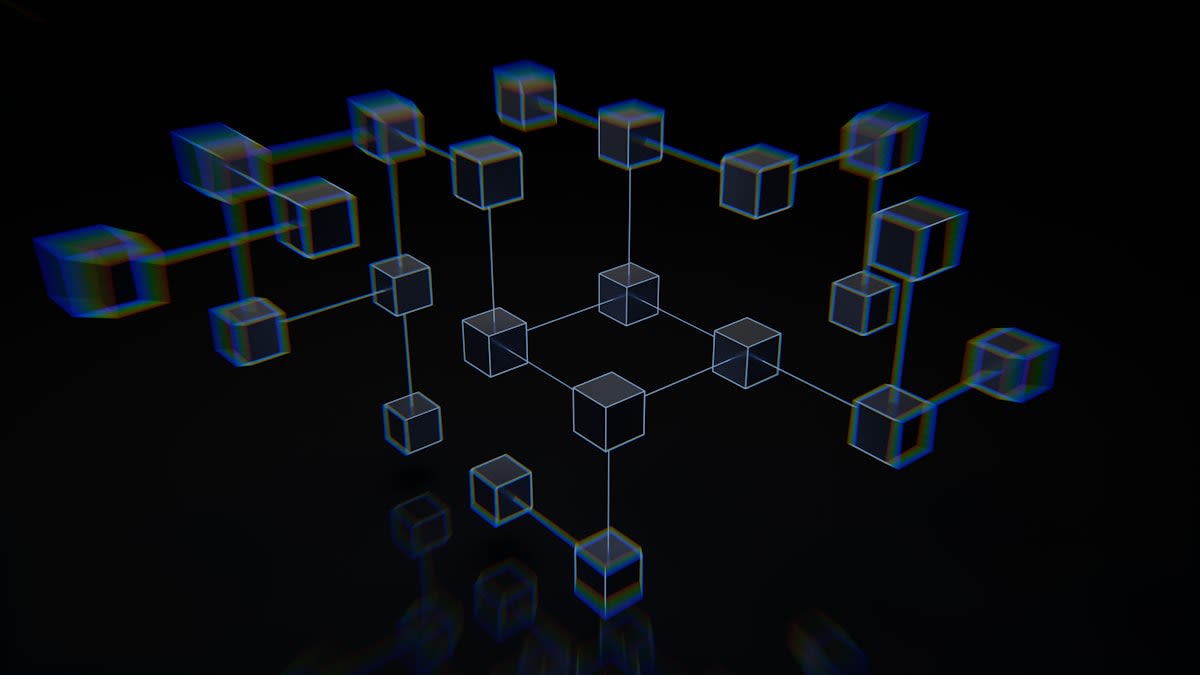
Beyond journalism, this ledger approach is leaking into the corporate world. Supply chain auditors are using similar cryptographic anchors to prove that a 'sustainably sourced' mineral actually came from a specific mine in the DRC or a certified site in Australia. The logic is the same: stop trusting the label and start trusting the ledger. We are seeing a convergence of media provenance and industrial provenance into a single philosophy of existence.
The Road to Ubiquity
The critical question is no longer 'Can we do this?' but 'Who controls the keys?' If a handful of camera manufacturers and software giants define the standards for truth, we risk creating a new form of digital gatekeeping. However, the current trend toward open-source standards like C2PA suggests a desire for a vendor-neutral ecosystem. The goal is for a photo taken on a Leica to be verifiable in a Chrome browser, which is then archived in a decentralized storage system.
Estimated Adoption of Hardware-Level Content Signing (2023-2026)
Executive Insight
+18.4%
YTD Growth
We are moving toward a future where 'unprovenanced' content will be treated as synthetic by default. Imagine a social media feed where every image has a small, clickable icon. Green means 'captured on hardware, no AI edits.' Yellow means 'captured on hardware, edited with AI.' Gray means 'no provenance data available.' In this world, the lack of a cryptographic signature becomes a signal of untrustworthiness. The silence of the ledger becomes the loudest warning.
- Hardware Integration: Moving signatures from software apps to camera sensors.
- Standardization: The rise of C2PA as the global lingua franca for provenance.
- Regulatory Pressure: EU and US mandates forcing platforms to label synthetic media.
- The Privacy Paradox: Balancing absolute verification with the need for whistleblower anonymity.
This is not about fighting AI; it is about adapting to it. The 'Truth Protocol' represents a fundamental shift in how we interact with information. We are trading the naive trust of the analog age for the calculated trust of the cryptographic age. It is a cold transition, perhaps, but it is the only way to preserve a shared reality in a world of infinite, perfect simulations.
Fact-Check & Accuracy Note
The claims regarding C2PA standards and hardware-level signing are based on the public technical specifications released by the Coalition for Content Provenance and Authenticity (2024). References to the EU AI Act align with the 2024 regulatory framework for synthetic content labeling. The tension between provenance and anonymity remains a point of active debate among digital rights organizations and has not yet been solved by a single technical standard.