
The financial world has a funny way of forgetting that math always wins. For a decade, we lived in a dream state of zero-interest rates where the promise of future growth outweighed the necessity of present value. But the anchor has moved. The US 10-Year Treasury yield, the primary benchmark for global asset pricing, recently hit its highest level since 2007. This isn't just a headline for bond traders; it is a systemic shock that alters the risk-reward calculus for every single asset on the planet.
Why does this matter for the average investor or the global institution? Because the mathematical foundation of valuation relies on the discounted present value of future cash flows. When the risk-free rate of return climbs above 5%, the discount rate applied to corporate earnings increases. This effectively compresses price-to-earnings ratios. Suddenly, the speculative growth stories of the digital age look expensive, while the boring, heavy, and tangible assets of the industrial age look like a bargain. We are witnessing a Great Re-Materialization.

The Digital Native's Pivot to Gold
Nowhere is this shift more evident than in the behavior of the digital asset industry's own infrastructure. Tether, the world's leading stablecoin issuer, is no longer just a bridge between fiat and crypto. In the second quarter of 2026, Tether added 14 tonnes of physical gold to its reserves. This move pushed their total bullion holdings to over 146 tonnes, valued at approximately $18.8 billion. When a company built on digital liquidity starts hoarding gold at a pace that rivals global central banks, the signal is clear: digital scarcity is not a substitute for physical scarcity.
Tether's Q2 financial report revealed a net operating profit of $1.5 billion, with reserves exceeding liabilities by $4.11 billion. This massive capital surplus isn't being pumped back into speculative altcoins. Instead, it is being locked into the most ancient form of money. This strategy provides a hedge against global fiscal instability and sovereign debt burdens that threaten the very fiat systems stablecoins are pegged to. It is a sophisticated survival mechanism disguised as a balance sheet adjustment.
"USD₮'s resilience extended its market share to more than 60% of the total stablecoin market."— Tether Q2 Financial Report
This rotation suggests that the smartest money in the room is hedging its digital bets with physical reality. If the digital asset complex is to survive a high-rate environment, it must be anchored by assets that do not rely on a functioning internet or a stable electricity grid to hold value.
The High Cost of Carry: Why Speculation is Dying
While gold captures the headlines, the carnage is visible in the liquidity pools of high-velocity settlement assets. Take XRP, for example. Institutional liquidity is rotating away as the regulatory landscape shifts and the US Dollar Index strengthens. But the real killer is the cost of carry. In a world where Treasury yields are elevated, holding a non-yielding asset is an expensive luxury. Professional investors are no longer willing to absorb the slippage and volatility of speculative tokens when they can earn a guaranteed, high-single-digit return on short-duration government debt.
We see a recurring pattern: institutional risk appetite is shifting toward defensive positioning. The speculative interest that once fueled the rapid ascent of altcoins is migrating toward newly approved ETF products or, more tellingly, back into the 'hard economy.' The market is effectively punishing assets that offer no yield and no physical utility.
The Analyst's View
The shift from 'speculative growth' to 'defensive yield' is a natural reaction to the end of the cheap money era. When capital has a real cost, the luxury of holding 'hope' as an asset disappears.
This transition isn't a crash; it's a repricing. The global financial system is simply remembering how to value things. The result is a massive migration of capital from the screen to the soil.
Mining the Future: From Yukon Silver to Brazilian Iron
If you want to find where the money is going, look at the drill results. In the Yukon, Hecla Mining Co. is aggressively extending high-grade silver trends at its Keno Hill mine. The numbers are staggering: the mine produced 2.8 million oz of silver in 2024 and 3 million oz in 2025, with guidance for 2.9 million to 3.2 million oz in 2026. This isn't just about mining; it's about the strategic accumulation of a metal that serves both as a monetary hedge and an essential industrial component.
Similarly, Geneva-based commodity trader IXM is expanding its portfolio into iron ore through a prepayment deal with the Brazilian miner Itaminas. While some investors are deterred by low price volatility in steelmaking ingredients, the institutional move to lock in supply suggests a long-term play on infrastructure and industrial resilience. The focus has shifted toward metals crucial to the energy transition, such as copper and aluminum, reflecting a global pivot toward the physical requirements of a new energy era.
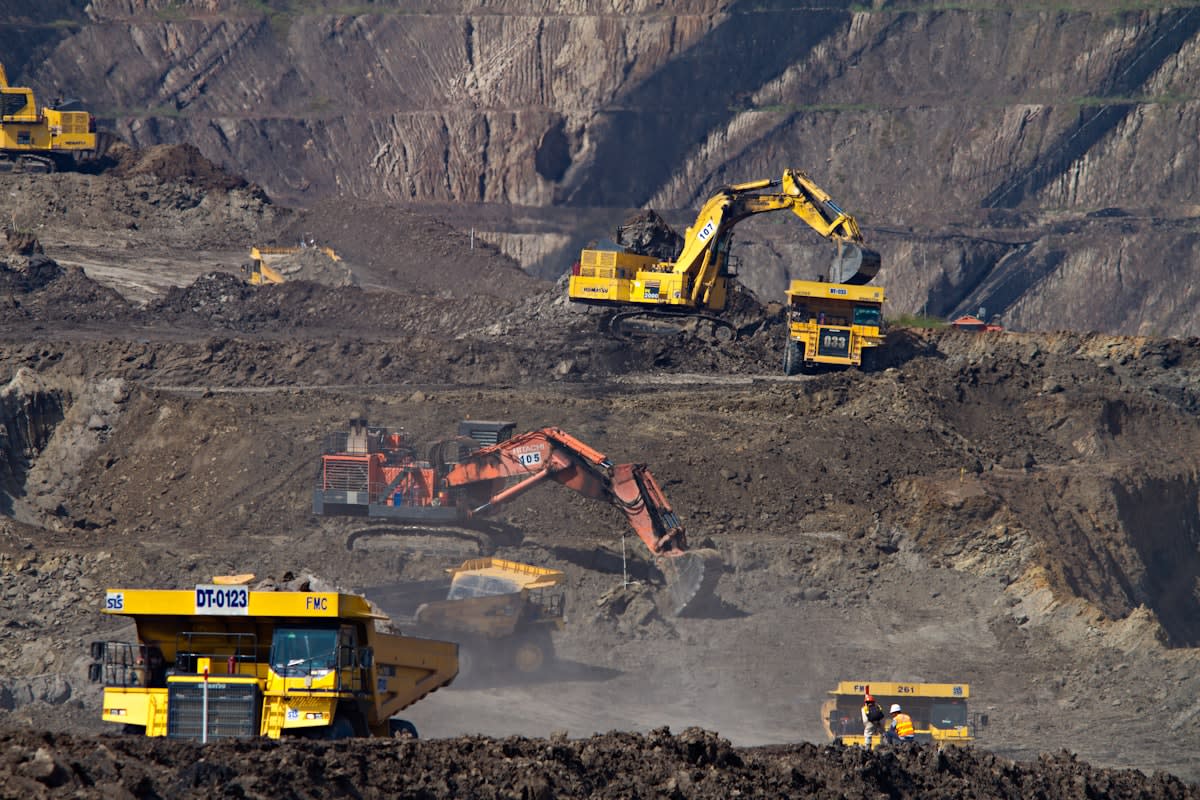
Why take the risk of drilling in the Yukon or signing prepayment deals in Brazil? Because in a world of sovereign debt instability, a ton of iron ore or an ounce of silver is a fact. A digital token is a consensus. When consensus wavers, facts become the only reliable store of value.
| Asset Class | Primary Institutional Driver | Risk Profile (High Rate Era) | Tangibility |
|---|---|---|---|
| Speculative Digital Assets | Liquidity/Speculation | High (Non-yielding) | Zero |
| Physical Bullion (Gold/Silver) | Hedge/Reserves | Low (Store of Value) | Absolute |
| Industrial Metals (Iron/Copper) | Energy Transition/Supply | Moderate (Cyclical) | Absolute |
| Short-Duration Treasuries | Risk-Free Yield | Very Low | Contractual |
The data reveals a clear trajectory. The rotation isn't random; it is a calculated move toward assets that provide either immediate yield (Treasuries) or permanent utility (Hard Commodities). The 'digital gold' narrative is being tested by actual gold.
The New Global Balance Sheet
We are moving toward a bifurcated economy. On one side, we have the high-velocity digital layer used for settlement and rapid exchange. On the other, we have the 'Hard Economy' layer where actual wealth is stored and secured. The mistake many made was thinking the digital layer could replace the hard layer. Instead, the digital layer is now being forced to back itself with the hard layer to maintain legitimacy.
This is an opportunity for those who can see past the noise. The transition from digital liquidity to material assets isn't a sign of failure; it's a sign of maturation. By diversifying into non-sovereign assets—whether through Bitcoin's scarcity or the physical silver of the Yukon—investors are building a portfolio that can survive the volatility of the bond market.
The Great Re-Materialization is the market's way of returning to equilibrium. As the 10-year yield remains the anchor, the gravity of the physical world will continue to pull capital away from the clouds. The question is no longer whether this shift will happen, but who will have secured their piece of the physical world before the door closes.