Minister in CEC-EC selection panel fails ‘perception test’, says Justice Datta in split verdict
Source Entity
India Latest News: Top National Headlines Today & Breaking News | The Hindu
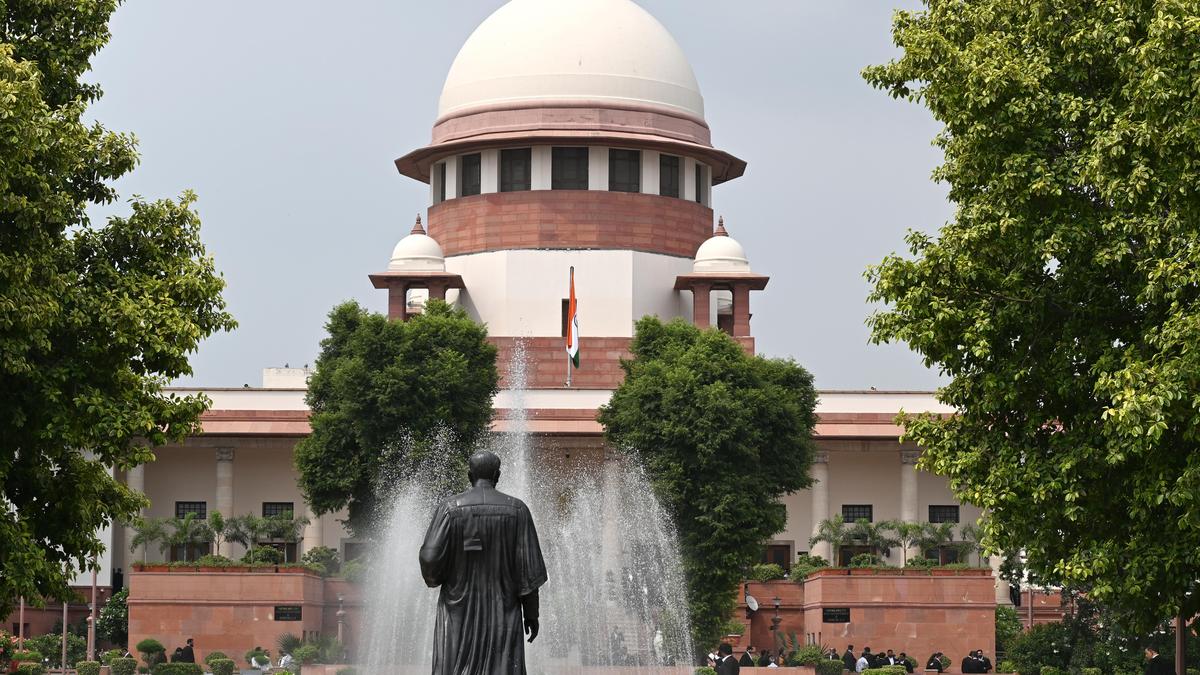
The Supreme Court delivered a split verdict regarding the challenge to the Election Commissioners (Appointment) Act, leading to the case being referred to a five-judge Constitution Bench. Justice Dipankar Datta expressed concerns that the current law grants the executive overwhelming power, rendering the opposition leader's presence on the selection panel merely symbolic.
Judicial Scrutiny of Election Commission Appointments
The Supreme Court of India is currently navigating a significant legal challenge regarding the Election Commissioners (Appointment) Act, which governs how the Chief Election Commissioner (CEC) and other Election Commissioners (ECs) are selected. A bench comprising Justices Dipankar Datta and Satish Chandra Sharma recently delivered a split verdict on whether to refer these petitions to a five-judge Constitution Bench. Ultimately, the matter has been moved to a larger bench to resolve fundamental questions about the independence of the electoral process.
The Core Conflict: Executive vs. Independent Oversight
At the heart of the litigation, brought forward by the Association for Democratic Reforms (ADR) and Congress leader Jaya Thakur, is the structural composition of the high-level appointment committee. The current law includes the Prime Minister, a cabinet minister, and the Leader of the Opposition (LoP). The petitioners argue that the exclusion of the Chief Justice of India (CJI) from this process compromises the impartiality of the Election Commission of India (ECI).
The 'Umpire' Metaphor and Executive Dominance
Justice Dipankar Datta highlighted the systemic risks inherent in the current appointment mechanism. He famously remarked that when an umpire is selected by the captain of one team, the resulting decisions—even if objectively correct—carry a 'patina of suspicion.' By characterizing the presence of the Leader of the Opposition as 'ornamental,' Justice Datta underscored the critique that the executive branch retains 'overwhelming' power, thereby potentially undermining the neutrality required for free and fair elections.
Constitutional Implications and Precedents
The debate over the ECI’s autonomy is deeply rooted in the constitutional mandate to maintain a level playing field in Indian democracy. The exclusion of the judiciary from the selection panel marks a departure from previous judicial expectations, prompting the current legal challenge. The referral to a five-judge Constitution Bench signifies the gravity of these concerns, as the court seeks to determine if the legislative framework adequately protects the independence of the constitutional body tasked with overseeing the democratic process.
Future Trends in Judicial Oversight
The outcome of the proceedings before the Constitution Bench will likely serve as a landmark precedent for the separation of powers in India. As the judiciary continues to examine the balance between executive authority and institutional independence, the final ruling will clarify the extent to which Parliament can dictate the composition of high-level selection committees. This case highlights the ongoing tension between legislative autonomy and the necessity for a non-partisan, credible electoral administration that commands public trust.
Multiple Citing Sources
Verification Required?