Knowledge Nugget | Black Carbon: What makes this tiny particle a climate concern?
Source Entity
Raveena Baneta
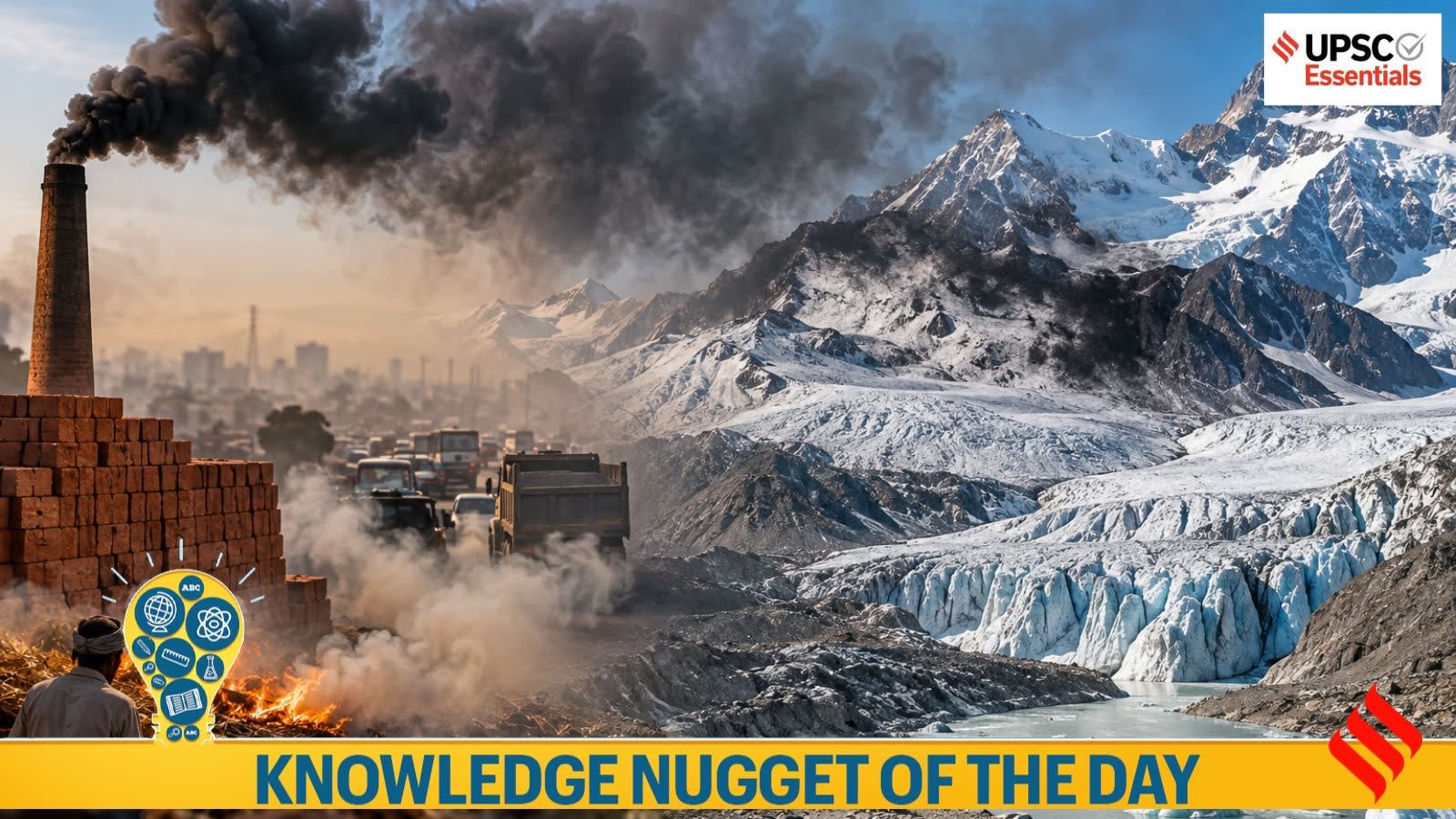
The UPSC Essentials initiative provides targeted answer writing practice on critical economic and climate issues. Recent focus includes the impact of black carbon on Himalayan glaciers and its role in India's climate policy.
Strengthening Civil Service Preparation Through Targeted Practice
The UPSC Essentials initiative has reached a significant milestone, celebrating its third anniversary as a key resource for aspirants navigating the complexities of the Civil Services Mains examination. By focusing on both static syllabus components and dynamic current affairs, the platform serves as a bridge between theoretical knowledge and the analytical rigor required for high-level government service. The recent curriculum focus on GS-3 topics—specifically the intersection of climate change and economic stability, alongside the rise of Agentic AI—highlights the exam's evolving demand for multidimensional understanding.
The Economic and Environmental Nexus
The integration of climate change analysis into General Studies Paper 3 reflects the growing recognition that environmental degradation is not merely a scientific concern but a profound economic one. The UPSC Essentials platform emphasizes this by prompting aspirants to examine how climate-related shifts directly impact India’s economic trajectory. As India strives for sustainable growth, the ability to articulate policy-driven solutions to ecological crises is becoming a prerequisite for future administrators.
Black Carbon: A Critical Climate Variable
A central focus of recent knowledge modules is the impact of black carbon on the Himalayan ecosystem. As noted in the report, A resilient Himalaya: protecting a region at risk and securing future prosperity, black carbon—a byproduct of incomplete combustion—is a primary driver of glacial loss. Modeling data suggests that one-third of the mass loss in the Himalayas is directly attributable to South Asian black carbon, positioning it as a urgent policy target.
Industrial Responsibility and Policy Intervention
The analysis identifies specific industrial sectors as the primary culprits behind this environmental threat. With brick kilns contributing between 32% and 42% of anthropogenic black carbon deposition in the region, the report argues that targeted industrial regulation offers a high-leverage opportunity. By curbing emissions from these specific sources, India has the potential to achieve a dual victory: improving local air quality while simultaneously mitigating the rapid melting of glaciers that serve as the region's water towers.
Future Implications for Governance
Moving forward, the focus on 'Agentic AI' in digital payments and the mitigation of short-lived climate pollutants like black carbon demonstrates the dual-track nature of modern governance. Aspirants are being trained to manage the risks of rapid technological integration while addressing the existential challenges posed by climate change. This pedagogical approach ensures that future policymakers are equipped to balance rapid economic modernization with the necessary environmental safeguards required to secure long-term prosperity.