Show HN: JBR-001 – An open-source 3D printable desktop robot
Source Entity
Hacker News
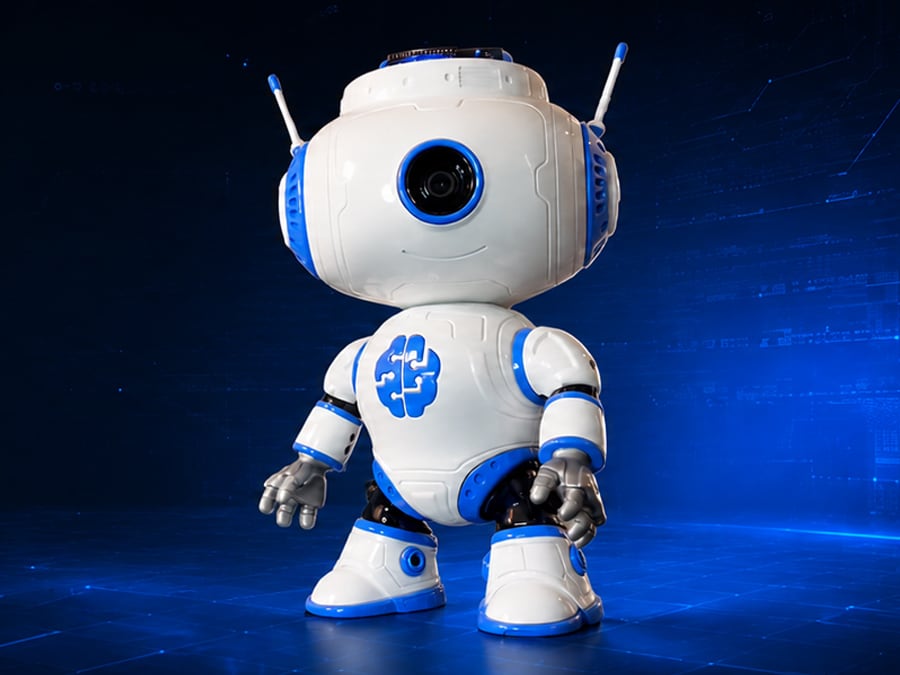
Recent community spotlights on Hacker News feature a functional 3D-printed Enigma machine model and an open-source desktop robot. These projects highlight the growing intersection of additive manufacturing, historical cryptography, and DIY robotics.
The Intersection of Historical Cryptography and Modern Fabrication
Recent activity on Hacker News has highlighted two distinct but thematically resonant projects: a functional 3D-printed Enigma machine and the JBR-001 open-source desktop robot. These projects serve as a testament to the maturation of consumer-grade additive manufacturing, where hobbyists are no longer just printing trinkets but are instead recreating complex mechanical systems that were once the pinnacle of military engineering or industrial automation.
Reconstructing the Enigma
The 3D-printed Enigma machine represents a fascinating bridge between historical computing and modern hobbyist engineering. By reconstructing the rotor-based encryption device, the creator has provided a tangible way to understand the mechanical complexity that once defined mid-20th-century signals intelligence. The project emphasizes the core concept of the Enigma: the use of a telegraph operator to transmit Morse code, which, while broadcast openly over radio, remained indecipherable to those lacking the specific rotor configuration and settings of the machine.
The Rise of Open-Source Robotics
Parallel to the historical recreation is the JBR-001, an open-source 3D printable desktop robot. This project signifies a shift in the robotics landscape, where the barrier to entry for building complex, articulated hardware is being dismantled by open-source documentation and community-driven design. Unlike proprietary systems, the JBR-001 encourages collaborative iteration, allowing users to modify, repair, and upgrade their hardware using the same 3D printing technology that enabled the Enigma project.
Implications of Accessible Hardware
The convergence of these two projects underscores a broader trend in the 'Show HN' community: the democratization of mechanical engineering. When individuals can print functional encryption devices or programmable robots, the focus shifts from the cost of raw hardware to the value of design documentation and software logic. This shift suggests that the future of personal robotics and historical preservation will be increasingly decentralized and community-led.
Historical Context and Future Trends
Historically, the Enigma machine was a tool of state-level power, guarded by immense secrecy. Today, it is an object of educational curiosity that can be fabricated in a home workshop. This irony highlights the rapid pace of technological obsolescence and the power of open-source knowledge. Moving forward, we can expect to see an increase in 'digital archaeology' projects where complex historical hardware is documented and made reproducible through 3D printing and open-source code.
Conclusion
The dual presentation of the Enigma model and the JBR-001 robot illustrates a vibrant community focused on the intersection of past and future. By leveraging 3D printing, developers are proving that complex mechanical and robotic systems are becoming accessible tools for learning, preservation, and innovation. As these open-source platforms continue to evolve, they will likely serve as the foundation for more sophisticated home-built technologies.