The moment Tuesday's powerful earthquake hit Japan
Source Entity
BBC News
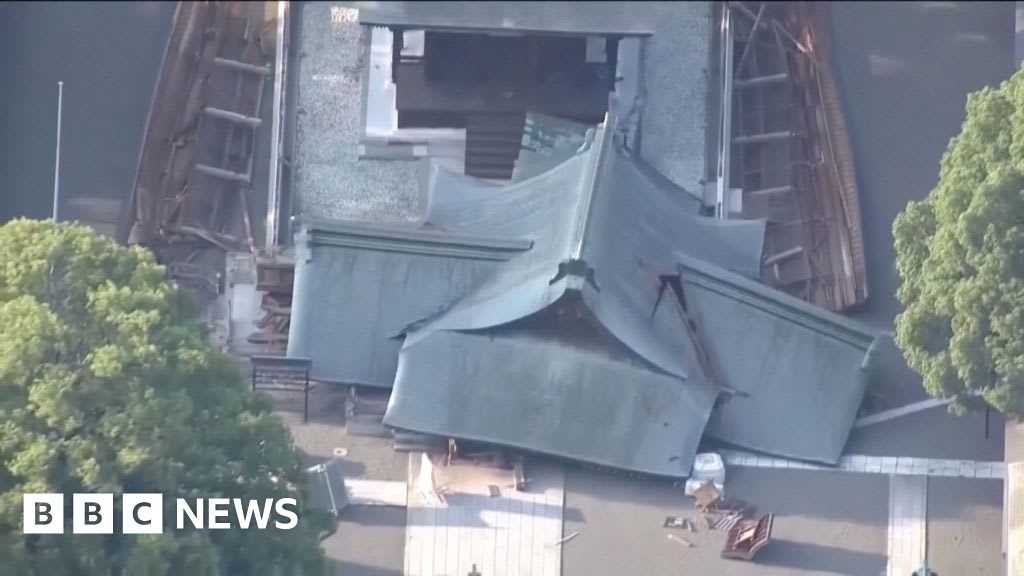
A 7.1 magnitude earthquake struck Japan's Kyushu region, triggering tsunami warnings and emergency alerts across multiple prefectures. Authorities have issued advisories for coastal areas as the situation remains a developing story.
Seismic Activity Strikes Southern Japan
A powerful 7.1 magnitude earthquake hit Japan's southern island of Kyushu on Tuesday, causing significant alarm across the region. According to the Japan Meteorological Agency (JMA), the tremor originated at a depth of 10 kilometers beneath the sea surface, centered near Kumamoto Prefecture. The seismic event prompted immediate government intervention, with emergency earthquake warnings activated across several prefectures, including Nagasaki, Kagoshima, Fukuoka, Saga, Oita, and Miyazaki.
Tsunami Risks and Coastal Safety
Following the initial shock, the JMA issued a tsunami warning and advisory for the coasts of the Ariake Sea and the Yatsushiro Sea. The agency specifically cautioned that waves could reach heights of up to one meter, posing a threat to low-lying coastal communities. These warnings are critical, as Japan’s geography makes it uniquely vulnerable to rapid inundation following undersea seismic activity, necessitating immediate evacuations and high-alert status for residents in the affected zones.
Geological Context of the Kyushu Region
Japan sits at the confluence of several tectonic plates, making it one of the most seismically active nations on Earth. The Kyushu region, specifically, is prone to complex fault movements. The occurrence of a 7.1 magnitude quake at a relatively shallow depth of 10 kilometers explains the intensity of the shaking felt across the southern main island. Shallow-depth earthquakes are often more destructive because the energy reaches the surface with less attenuation compared to deeper events.
Government and Emergency Response
In response to the tremor, the Japanese government mobilized its emergency response infrastructure, utilizing the JMA’s real-time monitoring to disseminate alerts to millions of citizens. The activation of emergency warnings across seven prefectures highlights the systematic approach Japan takes toward disaster preparedness. By prioritizing early warning systems, the government aims to minimize casualties by providing residents with precious seconds to seek higher ground or secure shelter.
Future Implications and Monitoring
As this remains a developing story, the primary concern for geologists and local authorities is the potential for aftershocks. Historically, earthquakes of this magnitude are often followed by smaller tremors that can further destabilize infrastructure already weakened by the primary event. The JMA continues to monitor the situation closely, advising residents to stay alert for updates and to follow instructions from local officials to ensure personal safety while the risk of tsunami waves persists.
Multiple Citing Sources