AI Chip Architectures
Source Entity
Hacker News
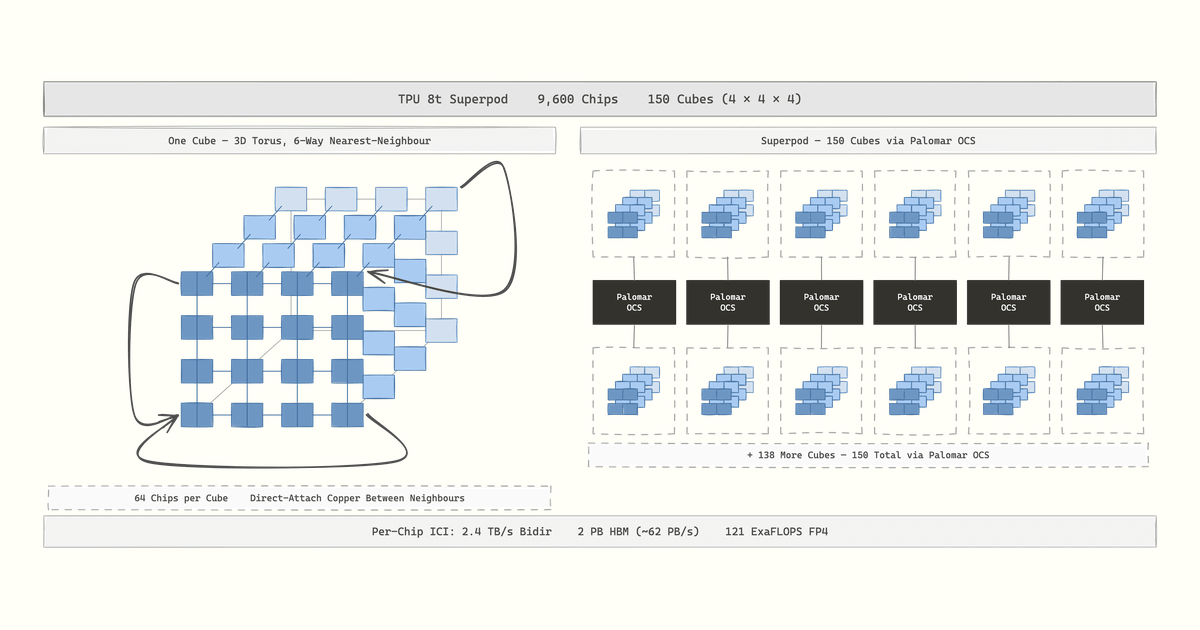
The 2018 Turing Lecture by Hennessy and Patterson correctly predicted a shift toward domain-specific architectures following the decline of traditional CPU performance growth. This transformation has sparked a 'Cambrian explosion' of specialized AI chips designed to overcome the limitations of Moore's Law.
The Architectural Turning Point
In 2018, the International Symposium on Computer Architecture hosted a landmark Turing Lecture delivered by John Hennessy and David Patterson, titled "A New Golden Age for Computer Architecture." This presentation served as a critical diagnostic of the semiconductor industry, identifying a profound deceleration in traditional computing power that necessitated a radical shift in how we design processors.
The Decline of General-Purpose Scaling
The analysis provided by Hennessy and Patterson highlighted a stark contrast between the golden era of the 1980s and the reality of 2018. During their formative research years, single-threaded CPU performance consistently grew at an annual rate of 52%. However, by 2018, the industry faced the dual exhaustion of Moore’s Law—the observation that transistor density doubles roughly every two years—and Dennard Scaling, which allowed for increased clock speeds without proportional power consumption. Consequently, performance growth had plummeted to a mere 3% annually, rendering general-purpose CPUs insufficient for the burgeoning demands of modern computing.
The Rise of Domain-Specific Architectures (DSAs)
To address this stagnation, the lecturers championed the transition toward Domain-Specific Architectures (DSAs). Unlike general-purpose CPUs, which are designed to handle a vast array of tasks with moderate efficiency, DSAs are custom-built to accelerate specific workloads. The speakers utilized Google’s TPU v1 as a primary case study for this paradigm shift. By offloading neural-network inference to this specialized hardware, Google achieved a 29-fold increase in throughput compared to traditional CPUs, coupled with an 80-fold improvement in energy efficiency.
Predicting the Cambrian Explosion
The core thesis of the lecture was that the future of computing lies in diversity rather than uniformity. Hennessy and Patterson concluded their talk with a bold prediction: the coming decade would witness a "Cambrian explosion" of novel computer architectures. This metaphor suggests a rapid diversification of hardware types, as engineers move away from the "one-size-fits-all" CPU model to solve complex problems in machine learning, data processing, and beyond.
Validating the Future of Silicon
History has validated the foresight of the 2018 lecture. We are currently witnessing an era where dozens of distinct architectures are in serious development, each optimized for specific AI and computational tasks. As we move deeper into this decade, the legacy of this Turing Lecture remains the foundational blueprint for understanding why the current AI revolution is as much a hardware phenomenon as it is a software one. The industry has effectively moved from the era of scaling transistors to the era of optimizing instruction sets for specific algorithmic goals.