Trump's space transportation policy calls for new spaceport on federal land
Source Entity
Stephen Clark
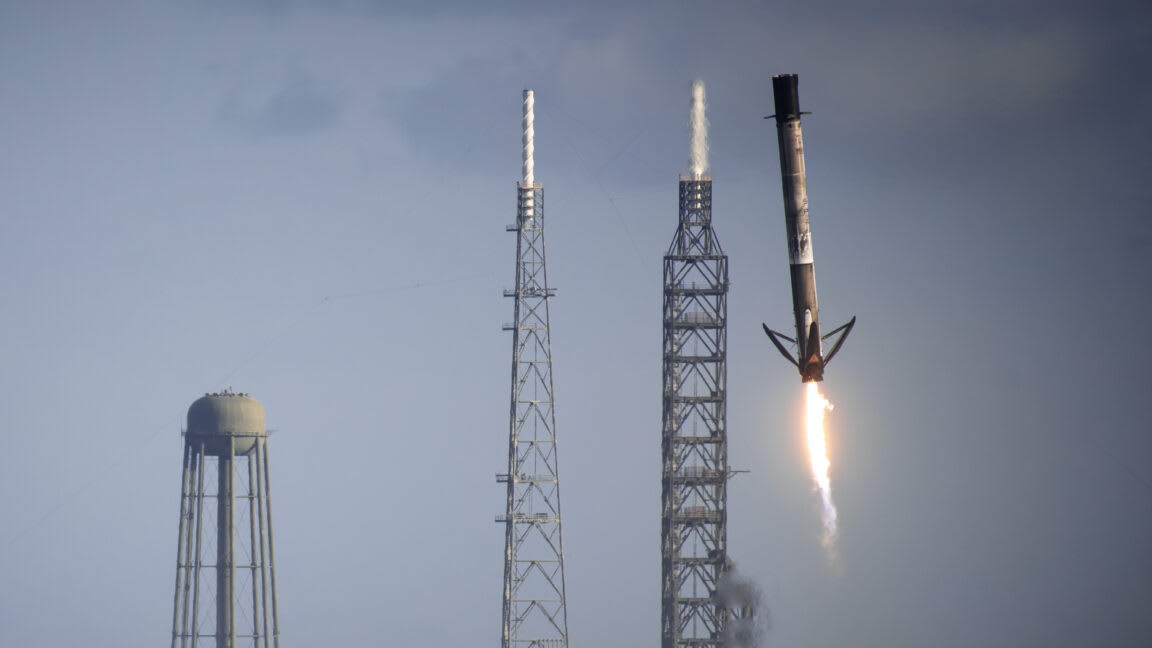
President Trump has issued a new national space transportation policy aimed at expanding U.S. launch capacity to over 1,000 annual missions by 2030. The directive prioritizes the development of new heavy-lift spaceports on federal land to support the rapidly growing commercial space sector.
A New Era for American Space Infrastructure
President Donald Trump has officially signed a new national space transportation policy, signaling a significant shift in how the United States approaches orbital logistics. By replacing the outdated 2013 policy established under the Obama administration, this memorandum explicitly recognizes that the rapid evolution of the commercial launch sector necessitates a modernized approach to federal oversight and infrastructure development.
Scaling for the 2030 Horizon
The core objective of this directive is to establish the capacity to support more than 1,000 launches and reentries annually by 2030. This ambitious goal is a direct response to the exponential growth in space activity. With 176 orbital launch attempts from U.S. soil recorded last year—a nearly tenfold increase from 2013 levels—the existing infrastructure is rapidly approaching its operational ceiling, creating an urgent need for additional launch sites.
The Need for Heavy-Lift Capability
A critical component of the new policy is the call for a new spaceport capable of handling heavy and super-heavy launch vehicles. As companies like SpaceX continue to advance programs such as the Starship, which conducted five suborbital test flights last year in addition to 165 Falcon 9 launches, the demand for specialized ground facilities has shifted. The policy explicitly identifies the need for federal land to be repurposed or developed to accommodate these massive, high-cadence launch requirements.
Competitive Evolution and Commercial Dominance
While the 2013 policy laid the groundwork for commercial space engagement, the landscape has transformed from a government-led model to one dominated by private enterprise. The current policy underscores that maintaining "assured access to space" is now inextricably linked to the success of commercial entities. By streamlining the development of new sites, the administration aims to ensure that the U.S. remains the global leader in launch capacity and technological innovation.
Future Trends and Strategic Implications
The move to expand spaceport infrastructure indicates a long-term commitment to a high-frequency space economy. If the U.S. is to meet the 1,000-launch threshold, it must address the bottleneck of range availability. This policy suggests that the future of the aerospace industry will be defined by how effectively the government can integrate private sector needs with federal resource management, ensuring that infrastructure keeps pace with the rapid innovation of launch providers.
Conclusion
In summary, the new national space transportation policy is a proactive measure designed to secure American dominance in the burgeoning space economy. By prioritizing the development of new spaceports on federal land and setting a clear, quantitative target for 2030, the administration is positioning the United States to handle the unprecedented volume of commercial orbital activity that is expected to define the next decade of space exploration.