Prediction: Taiwan Semiconductor's Market Value Passes $3 Trillion Before 2029
Source Entity
Yahoo Finance
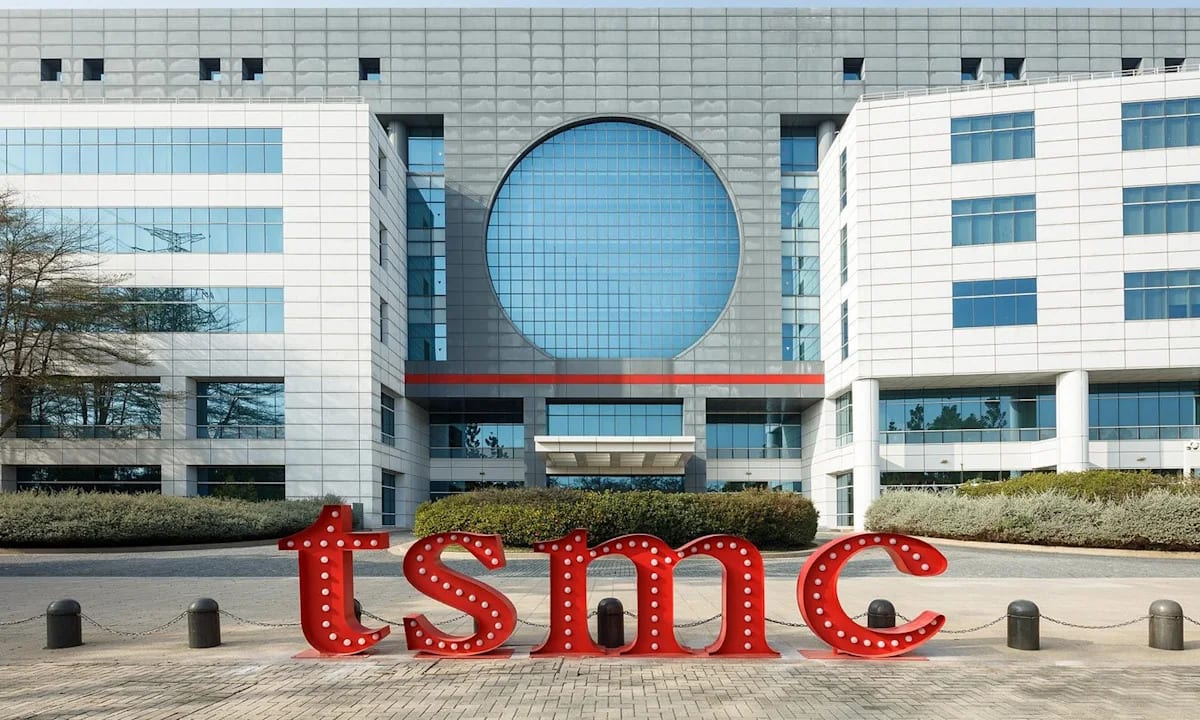
Recent financial reports from Monolithic Power Systems and RingCentral highlight significant growth driven by AI integration. Meanwhile, analysts project Taiwan Semiconductor’s market value will reach $3 trillion by 2029, underscoring the ongoing expansion of the semiconductor sector.
The AI-Driven Semiconductor Surge: A Sector-Wide Analysis
The recent financial disclosures from Monolithic Power Systems (MPWR) and RingCentral (RNG) provide a compelling look at how artificial intelligence is moving from a speculative trend to a tangible, revenue-generating reality. For Monolithic Power Systems, the second-quarter revenue surge of 47.6%—reaching $980.6 million—serves as a primary indicator of the 'picks-and-shovels' strategy in the AI hardware space. By focusing on power-management components, MPWR has positioned itself as an essential partner for high-compute density environments where energy efficiency is not merely a benefit but a operational necessity for expensive AI accelerators.
The Mechanics of Power and Efficiency
The fundamental challenge of modern computing is thermal and energy management. As AI accelerators become increasingly powerful, the need for sophisticated power-management integrated circuits grows exponentially. MPWR’s sequential revenue growth of 21.9% suggests that the market is rapidly scaling its infrastructure to support these complex chips. Because MPWR does not sell the accelerators themselves but rather the components that allow them to function, they occupy a unique niche that hedges against the volatility of the chip-design market while benefiting from the overall rise in compute demand.
Software Adoption and Recurring Revenue
Transitioning from hardware to software, RingCentral’s recent performance offers a different perspective on AI integration. With 13% of its annual recurring revenue (ARR) now derived from paid native AI products—a figure that has effectively doubled year-over-year—the company demonstrates that AI features are becoming a primary driver for customer retention and service adoption. The 5.9% revenue growth to $657 million, coupled with a GAAP operating margin of 7.7%, suggests that RingCentral is successfully monetizing its AI-enhanced subscription offerings.
The Valuation Horizon: TSMC’s Path to $3 Trillion
Looking toward the broader landscape, the projection that Taiwan Semiconductor Manufacturing (TSM) will exceed a $3 trillion market valuation by 2029 is intrinsically linked to the momentum seen in companies like MPWR. Currently valued at approximately $2.2 trillion, TSM serves as the foundational foundry for the global AI ecosystem. A climb to $580 per share, as suggested by market projections, would require sustained demand for advanced node production, a trend supported by the rapid growth rates observed in the broader semiconductor supply chain.
Market Implications and Future Trends
Investors are now tasked with determining if these growth trajectories are already fully priced into current valuations. RingCentral’s trading near a four-year high, following a 141% gain over the previous year, highlights the market's aggressive pricing of its AI turnaround. Simultaneously, the success of hardware suppliers like MPWR indicates that the infrastructure layer of the AI economy is still in an expansionary phase. If the current trajectory holds, the next few years will likely be defined by the ability of these firms to maintain high operating margins while scaling their AI-centric offerings.
Conclusion
In summary, the synergy between hardware efficiency and software utility is driving a significant transformation in tech sector valuations. While MPWR benefits from the physical expansion of compute capacity, RingCentral is capturing value through service-layer AI adoption. These developments, when viewed alongside the massive growth potential of manufacturers like TSMC, paint a picture of a sector that is fundamentally shifting its revenue structure to prioritize AI-ready infrastructure and features.