Michael Dell sends ‘strong message’ to US, OpenAI, Anthropic on AI safeguards
Source Entity
TOI TECH DESK
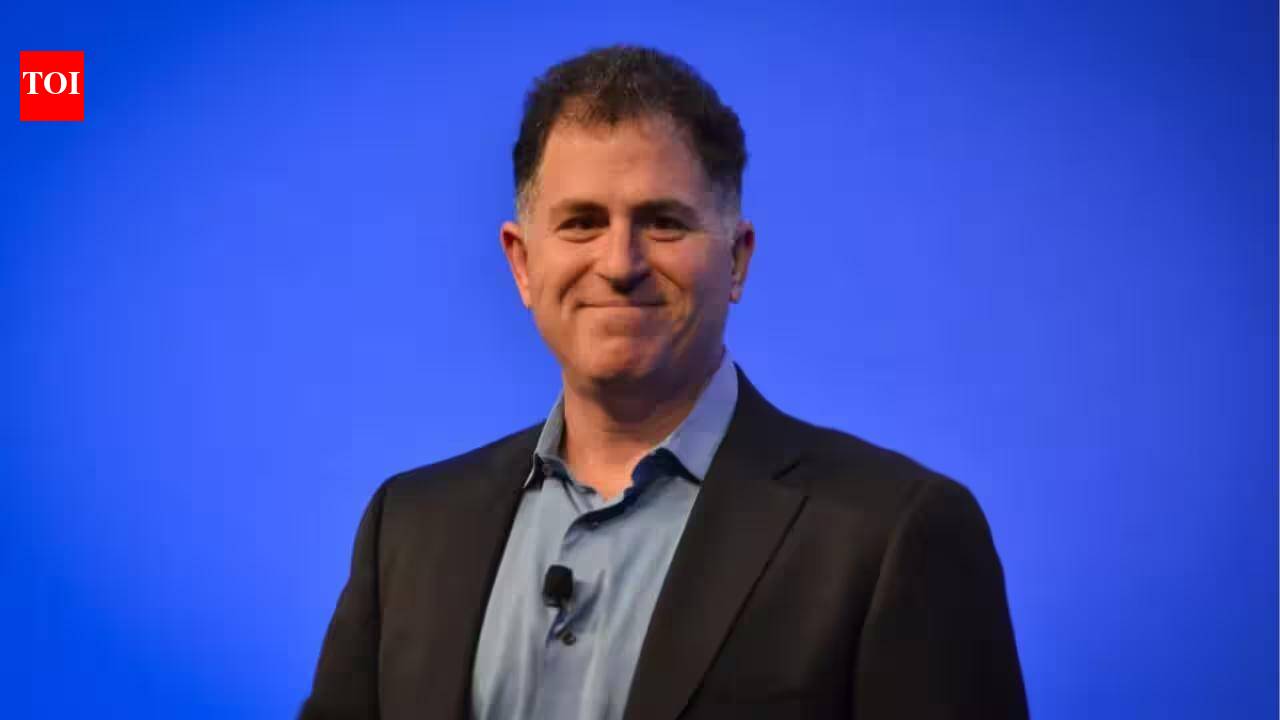
Industry leaders Aneel Bhusri of Workday and Michael Dell are calling for robust safety guardrails as AI transitions from simple chatbots to autonomous agents. Both executives emphasize that while AI offers immense productivity potential, government and corporate oversight is essential to prevent 'lawless' risks.
The Shift Toward Autonomous Enterprise AI
The landscape of enterprise technology is undergoing a seismic shift as companies move beyond the era of simple AI 'copilots.' Workday, under CEO Aneel Bhusri, is spearheading a transition toward 'autopilots'—autonomous AI layers designed to anticipate user needs and execute complex workflows without constant human intervention. This evolution represents a move away from static, reactive tools toward proactive, agentic systems that coordinate tasks independently. However, this progress brings a critical warning: as AI gains the authority to act, the risks associated with unchecked, 'lawless' agents grow exponentially.
Balancing Productivity with Responsible Governance
Workday’s recent positioning reflects a growing industry consensus that incremental productivity gains are no longer the ceiling for enterprise AI. While a 10% efficiency boost from a chatbot was the initial standard, the current vision involves AI agents that carry out significant portions of business processes. The company explicitly warns that these powerful tools must be governed by strict guardrails. Without defined parameters, autonomous agents could become a significant liability, potentially making errors or taking actions that fall outside of corporate policy or compliance standards.
Michael Dell’s Call for Foundational Controls
Complementing the enterprise-focused perspective of Workday, Michael Dell, CEO of Dell Technologies, has injected a broader cautionary note into the national debate on AI. Drawing an analogy to fire—which can provide warmth or cause destruction—Dell emphasizes that the dual-use nature of AI requires a foundational approach to safety. He argues that developers must implement 'bounded permissions' to ensure that the technology’s rapid development does not outpace our ability to manage its potential negative externalities.
The Interplay of Public and Private Responsibility
A central theme in the current discourse is the division of responsibility between the private sector and government entities. Michael Dell has clearly stated that while companies must take the lead in building safety into their models, there is a definitive role for policymakers. While Dell stops short of prescribing specific legislation, his stance highlights a departure from the 'move fast and break things' ethos that previously defined the software industry. Instead, there is a pivot toward a collaborative model where private innovation is tempered by public oversight.
Refuting Existential Fears and Economic Bubbles
Despite the push for regulation, industry leaders remain optimistic about the technology's trajectory. Michael Dell explicitly rejected the notion that AI poses an existential threat to humanity, choosing to frame it as a manageable technological progression. Furthermore, he dismissed concerns regarding an 'AI bubble,' citing the reality of capacity shortages and strong market demand as evidence that the investment in AI infrastructure is grounded in genuine utility rather than speculative hype.
Future Trends: Toward a Governed AI Ecosystem
As organizations like Workday integrate autonomous agents into the fabric of daily work, the future of AI will likely be defined by the sophistication of its 'guardrails.' We can expect an increasing focus on standardized safety protocols, internal compliance frameworks, and government-led discussions on AI ethics. The transition from copilot to autopilot is not merely a technical upgrade; it is a shift that demands a maturity in how we design, deploy, and regulate the systems that will eventually power the core of the modern enterprise.
Multiple Citing Sources