Show HN: I trained a 125M model to autocomplete piano on-device
Source Entity
Hacker News
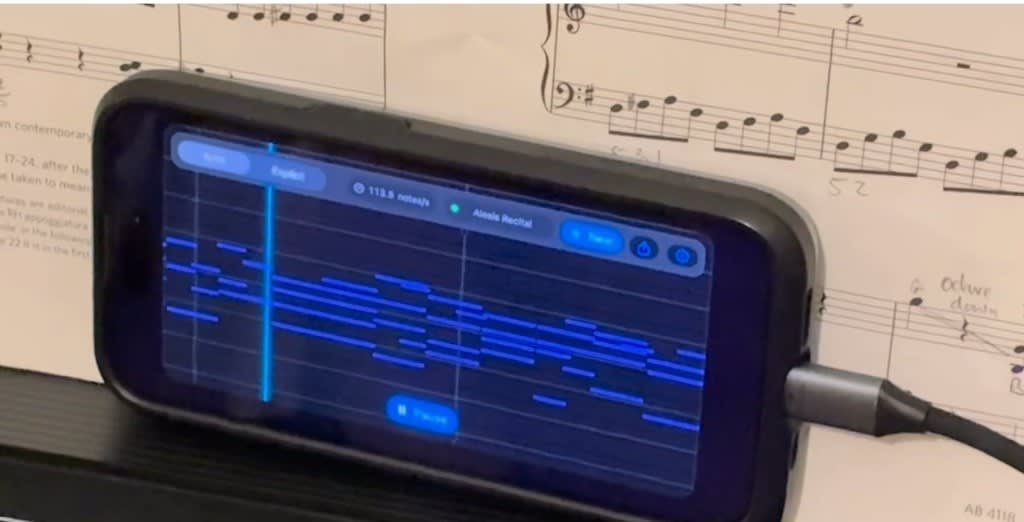
Two new developer tools, RollTab and Huzzah, illustrate the shifting landscape of generative AI. RollTab brings on-device MIDI completion to mobile, while Huzzah addresses the growing fatigue with text-based AI coding agents.
The Evolution of AI-Assisted Creativity and Productivity
Recent developments in the developer community, specifically the introduction of RollTab and Huzzah, signal a maturation phase in generative AI. While the early 2020s were defined by the rapid deployment of massive, cloud-based models, the current trend is shifting toward specialized, on-device efficiency and a re-evaluation of how humans interact with AI agents. These two projects highlight the bifurcated nature of modern AI development: one focused on low-latency creative performance and the other on solving the friction inherent in large-scale code generation.
RollTab: Pushing On-Device Boundaries
The development of RollTab, a 125M-parameter transformer model capable of autocompleting piano music on an iPhone 15, represents a significant technical achievement in edge computing. By processing 108 notes per second locally, the creator has bypassed the latency issues that plague cloud-based musical accompaniment. The project emphasizes that model performance is not solely dependent on parameter count, but rather on high-quality data curation, optimized MIDI representations, and effective post-training techniques like Direct Preference Optimization (DPO). This reflects a broader industry trend where developers are prioritizing hardware-efficient architectures over brute-force scaling.
The 'AI Fatigue' Phenomenon in Software Engineering
The emergence of Huzzah addresses a growing sentiment of 'AI fatigue' among software engineers. After the initial excitement surrounding coding agents in early 2026, many developers have reached a plateau where the overhead of writing descriptive long-form English prompts to guide AI models has become tedious. Huzzah seeks to move beyond the current paradigm of prompt-heavy development, suggesting that the industry is entering a phase where developers are demanding more granular control and deeper insight into the underlying codebase, rather than simply relying on black-box text-to-code generation.
Implications for Future Interaction Design
Both RollTab and Huzzah indicate a shift toward more intentional AI integration. RollTab demonstrates that AI can be a seamless, real-time creative partner when optimized for the hardware it inhabits. Conversely, Huzzah highlights that the 'chat-with-your-code' interface is not a universal solution for productivity. As the novelty of general-purpose coding agents wears off, we can expect to see a surge in specialized interfaces that balance automation with human oversight.
Long-term Trends in AI Development
Looking ahead, these projects suggest that the future of AI will be defined by two key factors: extreme optimization and user-centric control. For developers, the goal is shifting from 'getting the AI to write the code' to 'maintaining agency while leveraging machine intelligence.' For creative tools, the focus will remain on minimizing latency and maximizing the 'feel' of the interaction, ensuring that AI enhances human performance rather than replacing it. These experiments serve as a microcosm for the broader software industry as it navigates the transition from experimental AI adoption to sustainable, long-term technical integration.
Multiple Citing Sources