Scientists build AI robot that acts like an angry parent to train teachers
Source Entity
TOI TECH DESK
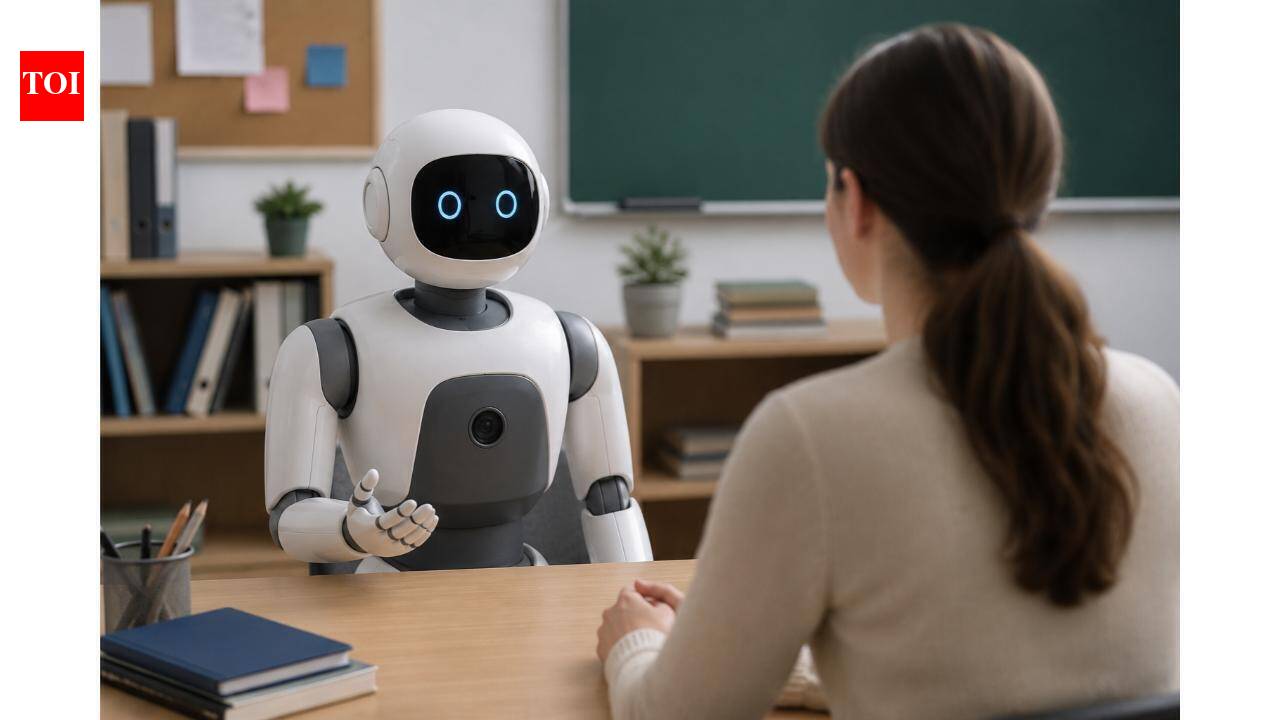
Researchers at La Trobe University have developed an AI robot named Fletch to simulate challenging parent-teacher interactions. This tool aims to help educators practice de-escalation techniques in a controlled environment to reduce stress and improve retention.
Bridging the Gap: AI as a Training Partner for Educators
In a pioneering effort to address the mounting pressures faced by modern educators, researchers at La Trobe University in Australia have unveiled 'Fletch,' an AI-powered robot designed to simulate high-stress interactions. By embodying the persona of a disgruntled or angry parent, Fletch provides trainee teachers with a unique, low-stakes environment to navigate complex emotional landscapes before stepping into a real-world classroom. This initiative represents a significant evolution in pedagogical training, moving beyond traditional theoretical models toward experiential, adaptive learning.
The Mechanics of Adaptive Interaction
Unlike static training simulations that rely on rigid, pre-programmed scripts, Fletch utilizes advanced AI to dynamically adjust its responses based on the teacher's input. This fluidity is critical; it mimics the unpredictable nature of human communication, where tone, content, and emotional state can shift rapidly during a conflict. By forcing trainee teachers to react in real-time to an evolving persona, the technology ensures that the training remains challenging and realistic, rather than becoming a repetitive or predictable exercise.
Addressing the Teacher Retention Crisis
Teacher burnout and attrition remain systemic issues globally, often exacerbated by the emotional labor of managing difficult stakeholder relationships. By providing a safe space to practice de-escalation, conflict resolution, and assertive communication, Fletch aims to lower the barrier to entry for new teachers. The goal is to build professional resilience, ensuring that when educators eventually face a genuinely difficult conversation in a school setting, they are equipped with the emotional toolkit to manage it effectively rather than feeling overwhelmed.
Implementation and Institutional Integration
La Trobe University, in collaboration with various Victorian schools, is currently integrating this technology into its training curriculum. This practical application signifies a shift toward evidence-based professional development in the education sector. By incorporating artificial intelligence into the training pipeline, the university is not only modernizing its approach but also demonstrating a commitment to the mental and professional well-being of its students as they transition into the workforce.
Future Implications for Pedagogical Training
Looking ahead, the success of Fletch could signal a broader trend in professional training across various sectors. If AI can effectively simulate the nuanced, high-stakes interactions found in parent-teacher conferences, similar applications could be developed for healthcare, customer service, and social work. This intersection of robotics and emotional intelligence training offers a scalable solution to human-centric problems, potentially setting a new standard for how we prepare professionals for the complexities of interpersonal communication.