Air India crash: Draft final report on tragedy will be ready only by Oct, AAIB tells SC
Source Entity
DHANANJAY MAHAPATRA
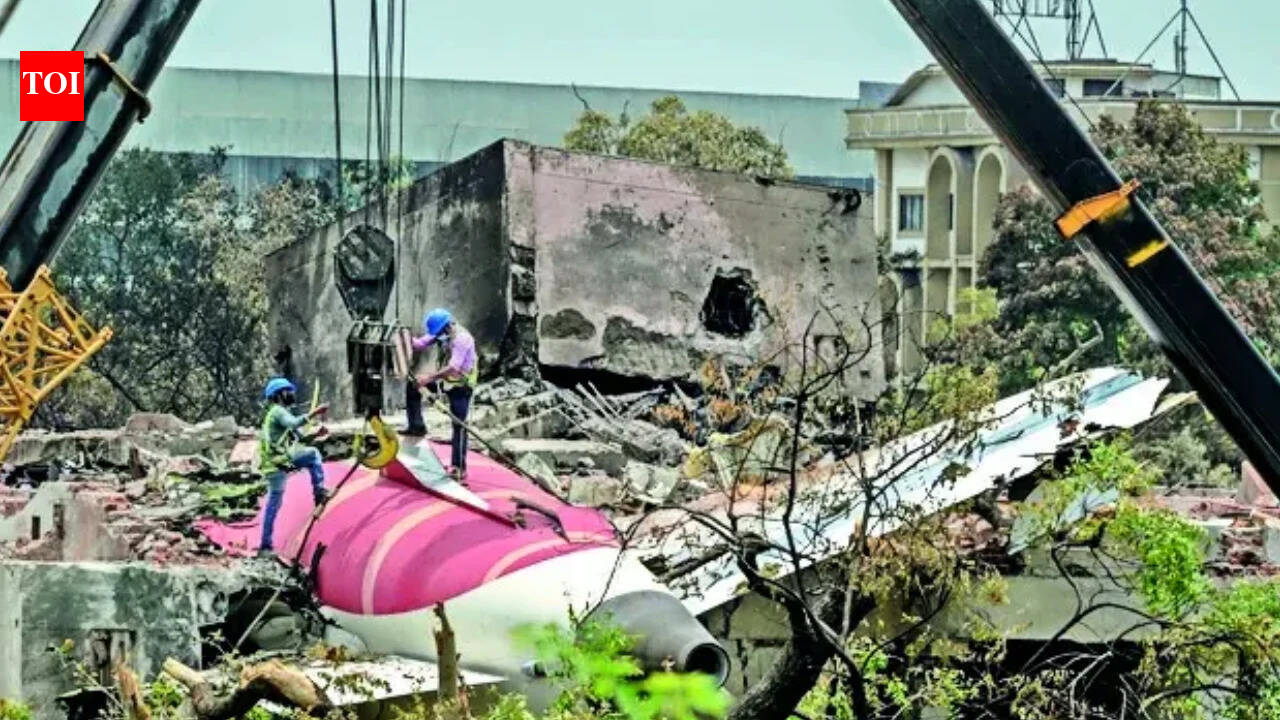
The Aircraft Accident Investigation Bureau (AAIB) has informed the Supreme Court that the draft final report for the Air India crash investigation will be ready by October 2026, with technical analysis expected to conclude within six weeks.
Legal and Technical Timeline for Air India Crash Investigation
In a significant update regarding one of the most scrutinized aviation tragedies in recent memory, the Aircraft Accident Investigation Bureau (AAIB) has provided the Supreme Court of India with a definitive timeline for the conclusion of its inquiry into the Air India crash. The bureau has clarified that while the immediate analysis activities are expected to be completed within the next six weeks—contingent upon external variables—the comprehensive draft final report will not be ready for review until October 2026. This announcement underscores the immense complexity involved in reconstructing the final moments of a flight and the rigorous standards required for a judicial-grade investigation.
The Complexity of Aviation Forensic Analysis
The six-week window mentioned by the AAIB refers specifically to the 'analysis activities,' which typically involve the synthesis of data from the Flight Data Recorder (FDR) and the Cockpit Voice Recorder (CVR), often referred to as the 'black boxes.' These devices provide critical telemetry and audio evidence, but interpreting this data requires sophisticated software and expert calibration to account for sensor errors or mechanical failures. Beyond data, the AAIB must correlate these findings with physical wreckage analysis and meteorological data from the time of the crash. The gap between the completion of analysis and the final report in 2026 is necessary to ensure that every hypothesis is tested and that the findings can withstand the scrutiny of both the Supreme Court and international aviation bodies.
Judicial Oversight and Accountability
The involvement of the Supreme Court indicates that this investigation is not merely a technical exercise but a matter of significant legal and public interest. When a tragedy of this scale occurs, the judiciary often steps in to ensure that the investigating agency remains accountable and that the process is transparent. By reporting the timeline directly to the Court, the AAIB is acknowledging the legal pressure to provide closure to the victims' families and to ensure that any systemic failures within the airline or the regulatory framework are exposed. This judicial oversight prevents the investigation from stagnating and ensures that the eventual report is not a mere formality but a catalyst for legal and safety reforms.
Alignment with International Aviation Standards
The AAIB's assertion that this timeline aligns with international practices is a reference to the standards set by the International Civil Aviation Organization (ICAO), specifically Annex 13. Globally, aircraft accident investigations are notoriously slow because they prioritize accuracy over speed. A rushed report that misses a critical mechanical flaw or a human error could lead to the same tragedy recurring in other aircraft of the same model. By setting a target date for October 2026, the AAIB is adhering to a global gold standard where the final report serves as a permanent safety record, often involving consultations with the aircraft manufacturer and the state of design to ensure every technical nuance is understood.
Broader Implications for Aviation Safety in India
The findings of this report will likely have a profound impact on the operational protocols of Air India and the wider Indian aviation sector. If the report identifies lapses in pilot training, maintenance schedules, or air traffic control communication, it could trigger a nationwide overhaul of safety audits. Historically, major accident reports have led to the implementation of new cockpit resource management (CRM) techniques and stricter adherence to checklists. As India continues to expand its aviation infrastructure and fleet, the lessons derived from this specific tragedy will be instrumental in shaping a safety culture that can support rapid growth without compromising passenger security.
Conclusion: The Balance of Speed and Precision
While the October 2026 deadline may seem distant to the families of the victims and the general public, the technical nature of aviation disasters demands a meticulous approach. The AAIB's update to the Supreme Court highlights the tension between the urgent need for answers and the methodical requirement for factual certainty. Ultimately, the value of the final report lies not in how quickly it is produced, but in its ability to provide an airtight explanation of the cause of the crash, thereby ensuring that such a tragedy is never repeated in the Indian skies.