‘Bangladeshi nationals’ issue needs bilateral solution, not ‘pushback drama’ says Akhil Gogoi
Source Entity
India Latest News: Top National Headlines Today & Breaking News | The Hindu
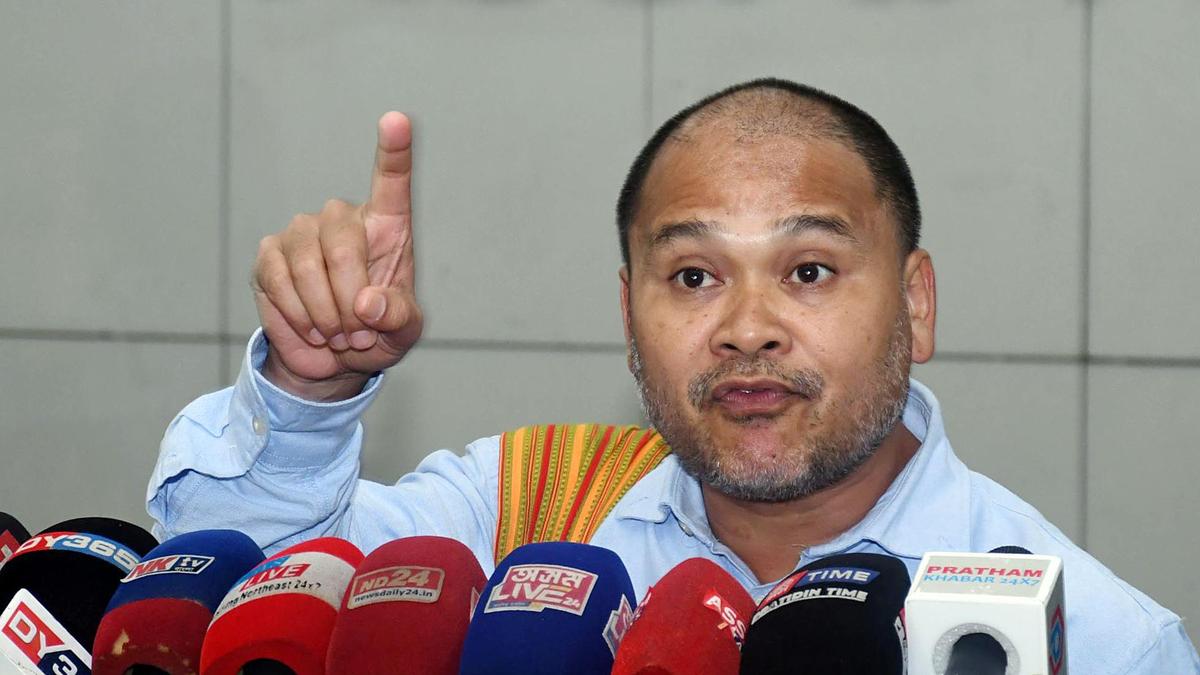
Assam Chief Minister Himanta Biswa Sarma is keeping the illegal immigration issue alive without establishing any legal mechanism, the Raijor Dal MLA says
Analysis of the Political Discourse on Illegal Immigration in Assam
Introduction: The Clash of Narratives
The ongoing tension regarding illegal immigration in Assam has once again taken center stage following critical remarks by Akhil Gogoi, a prominent leader of the Raijor Dal. The core of the dispute lies in the methodology used to address the presence of Bangladeshi nationals within the state. While the current administration under Chief Minister Himanta Biswa Sarma emphasizes strict enforcement and border security, Gogoi argues that these actions are performative rather than systemic, calling for a shift from domestic 'drama' to international diplomacy.
The Critique of 'Pushback Drama'
Akhil Gogoi's use of the term "pushback drama" suggests a critique of the tactical maneuvers used by the state government to handle illegal immigrants. In the context of border management, a 'pushback' refers to the immediate forced return of migrants at the border. Gogoi contends that these high-visibility actions serve as political signaling to the electorate—demonstrating a "tough on immigration" stance—without actually solving the root cause of the influx. By framing these actions as drama, the Raijor Dal MLA posits that the government is more interested in the optics of deterrence than in the actual resolution of the immigration crisis.
The Necessity of Bilateral Solutions
A central pillar of Gogoi's argument is the requirement for a bilateral solution. Illegal immigration is not merely a state or national policing issue but a diplomatic one. For any large-scale repatriation of Bangladeshi nationals to occur, a formal agreement between the governments of India and Bangladesh is essential. Without a bilateral treaty or a mutually agreed-upon framework for the verification and acceptance of returnees, individual pushbacks remain temporary and legally fragile. Gogoi asserts that until the central and state governments coordinate a diplomatic strategy with Dhaka, the issue will remain an endless cycle of intrusion and expulsion.
Political Instrumentalistion and Legal Vacuums
One of the most provocative claims made by Gogoi is that Chief Minister Himanta Biswa Sarma is intentionally "keeping the illegal immigration issue alive." In the volatile political landscape of Assam, the identity of the 'foreigner' is a potent electoral tool. By maintaining a state of perpetual crisis regarding illegal immigration, the ruling party can consolidate its base through the rhetoric of protecting indigenous rights. However, Gogoi points out a critical failure: the absence of a robust legal mechanism to identify, process, and legally deport these individuals. The gap between the political rhetoric of removal and the legal reality of deportation creates a vacuum where many individuals remain in a state of legal limbo.
Broader Implications for Regional Stability
The ideological divide between the Raijor Dal and the BJP-led government reflects a deeper struggle over the future of Assam's socio-political fabric. If the issue is handled solely through security-led 'pushbacks' without legal clarity, it risks increasing humanitarian concerns and regional instability. Conversely, a bilateral approach would require a level of diplomatic transparency and cooperation that may be slow to materialize. The tension highlighted by Gogoi underscores the difficulty of balancing national security and demographic concerns with the requirements of international law and human rights.
Conclusion: A Call for Systemic Reform
Ultimately, Akhil Gogoi's critique serves as a demand for a transition from populist politics to administrative governance. He argues that the solution to the 'Bangladeshi nationals' issue cannot be found in the theater of border enforcement but in the halls of diplomacy and the rigor of the legal system. Whether the Assam government will move toward establishing the legal mechanisms Gogoi describes or continue with its current strategy remains a pivotal question for the state's political future.
Verification Required?