In 1994, 100 obsolete battle tanks were sunk off Alabama; three decades later, they remain underwater fish habitat
Source Entity
Latest News: Todays Latest News Headlines from India & World | Hindustan Times | Hindustan Times
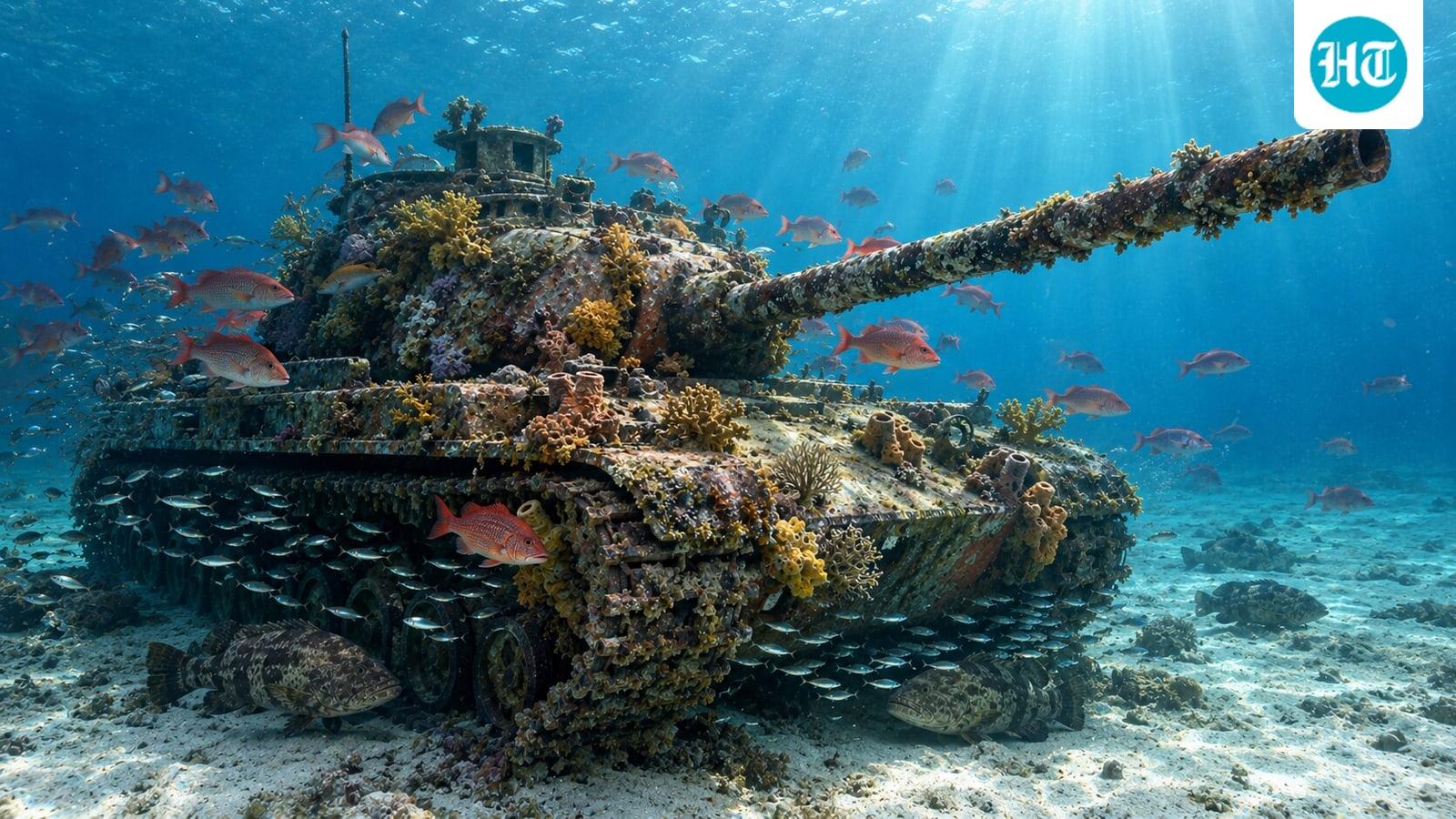
In 1994, Alabama deployed 100 cleaned-out military tanks as artificial reefs to enhance marine biodiversity. Thirty years later, these structures continue to serve as vital habitats for local fish populations.
The Legacy of Alabama's Submerged Battle Tanks
An Unconventional Solution to Marine Habitat Loss
In 1994, a unique environmental initiative saw the sinking of 100 obsolete battle tanks off the coast of Alabama. This project was conceived as a strategic method to address the lack of vertical relief on the seafloor, which is predominantly characterized by flat, sandy expanses. By introducing these massive metallic structures, the Alabama Marine Resources Division sought to transform barren ocean floor into thriving artificial reefs, providing essential cover and structure for marine life.
Rigorous Environmental Safety Protocols
Before these tanks reached the ocean floor, they underwent a meticulous decontamination process to ensure they posed no threat to the marine ecosystem. Inspectors from the Environmental Protection Agency (EPA), the U.S. Army Corps of Engineers, and the Coast Guard, alongside Alabama state agencies, conducted thorough examinations of every unit. Crews removed all oils, hydraulic fluids, fuel, munitions, and any radioactive materials. The success of this process was validated when the initial deployment of six tanks showed no signs of surface debris, oily film, or chemical sheen, establishing a high standard for future artificial reef projects.
Ecological Impact and Biodiversity
The primary goal of this initiative was to bolster local fish populations, particularly species highly valued by commercial and recreational fishers, such as snapper and grouper. In marine biology, the concept of 'structural complexity' is vital; fish require crevices and hiding spots to survive and thrive. By adding these tanks to the flat Alabama coast, the state effectively created a vertical oasis in an otherwise featureless environment, significantly increasing the carrying capacity of the local ecosystem.
Longevity and Future Projections
As the tanks approach their third decade underwater, they remain a testament to the durability of repurposed military hardware. State agencies have projected that these structures will maintain their integrity for approximately 50 years, suggesting a lifespan that concludes around 2044. This long-term stability demonstrates the viability of using decommissioned heavy equipment as a sustainable tool for habitat restoration, provided the necessary environmental precautions are taken.
Broader Implications for Marine Conservation
The Alabama tank project serves as a foundational case study in the intersection of military surplus management and environmental engineering. By repurposing obsolete equipment, the state achieved two goals: the efficient disposal of decommissioned assets and the enhancement of marine biodiversity. As global oceans face habitat loss due to climate change and human activity, the success of these artificial reefs provides a blueprint for future projects aimed at rehabilitating depleted marine environments through deliberate structural intervention.
Verification Required?