'Right to access to justice equal for all': SC frowns at out-of-turn hearings
Source Entity
DHANANJAY MAHAPATRA
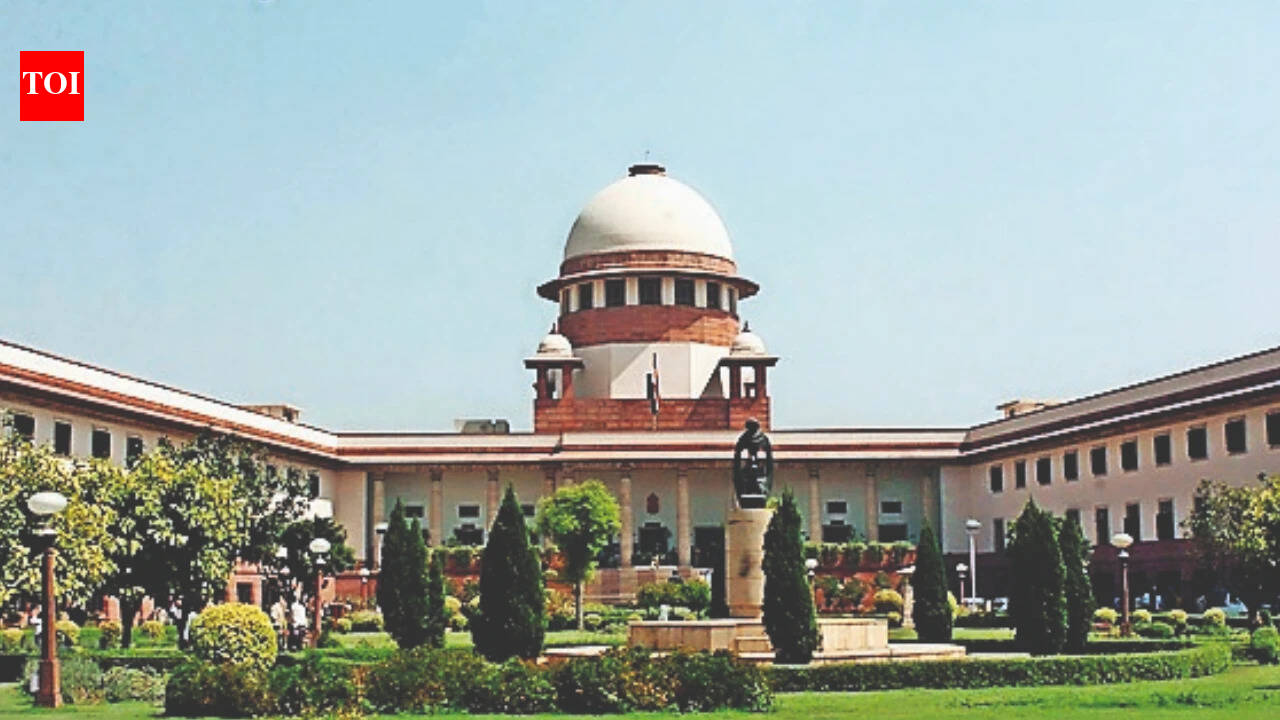
The Allahabad High Court and the Supreme Court have raised serious concerns over systemic delays in the Indian judiciary, highlighting the struggle of long-pending cases. Both benches emphasized the need for urgent institutional reform to ensure equal access to justice for all citizens.
The Crisis of Pendency: A Systemic Failure
The Indian judiciary is currently facing a profound crisis of confidence and efficiency, underscored by recent observations from the Allahabad High Court and the Supreme Court. The lament of 'tareekh pe tareekh' (date after date) has transcended from a cinematic trope to a harsh reality for millions. With cases languishing for over two and even four decades, the fundamental promise of timely justice is being eroded, leaving the common citizen in a cycle of perpetual legal uncertainty.
Judicial Accountability and Institutional Urgency
Justice Vinod Diwakar of the Allahabad High Court, in a landmark September 28 order, explicitly noted that prolonged pendency reflects poorly on the institution. By allowing petitions that had been stalled in lower courts for years, the bench signaled that the status quo is unsustainable. The court’s request for the Chief Justice to intervene highlights a growing internal demand for administrative reform, shifting the focus from individual case management to the broader structural accountability of the judicial system.
The Problem of Out-of-Turn Hearings
The Supreme Court has simultaneously addressed the inequity inherent in current litigation practices. By frowning upon 'out-of-turn' hearings, the apex court has identified a critical flaw: the tendency to prioritize litigants with significant resources. This practice creates a tiered system of justice where the wealthy can bypass the queue, effectively pushing those without means to the back of a never-ending line, thereby violating the constitutional guarantee of equal access to justice.
Historical Context and Societal Impact
The persistence of these delays is not a modern phenomenon but a deeply rooted institutional challenge that has plagued the Indian legal landscape for decades. When cases remain unresolved for 40 years, the evidentiary value of the proceedings diminishes, and the human cost—manifested in financial ruin and psychological distress—becomes immeasurable. This systemic lag fundamentally undermines the rule of law, as justice delayed is effectively justice denied.
Future Trends and the Path Toward Reform
Moving forward, the judiciary must pivot toward technological integration and procedural streamlining to clear the massive backlog. The recent judicial observations suggest a shift toward a more proactive, administrative oversight model. If the institution can successfully address the imbalance of 'out-of-turn' hearings and enforce stricter timelines for lower courts, it may begin to restore public trust. Without these systemic changes, the institution risks remaining a bottleneck rather than a facilitator of justice.
Concluding Perspectives
Ultimately, the convergence of these observations from both the High Court and the Supreme Court serves as a clarion call for reform. The judiciary is acknowledging that its internal inefficiencies are as much a threat to democracy as external pressures. Addressing the 'date after date' culture is no longer an optional improvement; it is a mandatory requirement for maintaining the integrity of the Indian judicial system.