Alexa Plus is getting an AI update to handle more complicated instructions
Source Entity
Emma Roth
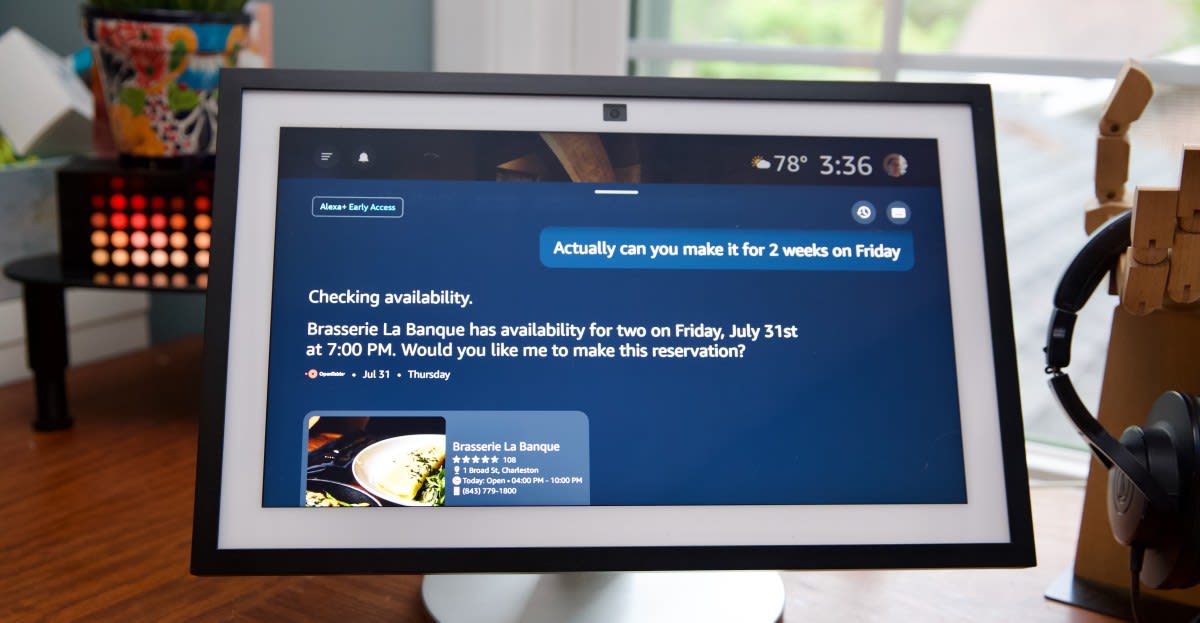
Amazon is upgrading its Alexa Plus assistant with advanced AI capabilities to seamlessly control a wider range of smart home devices. This update allows for complex, intent-based commands, such as requesting specific wash cycles for laundry.
The Evolution of Ambient Intelligence
Amazon has announced a significant leap forward for its Alexa Plus assistant, shifting the paradigm from simple, command-based interactions to complex, intent-driven automation. By integrating advanced artificial intelligence, the assistant is evolving into a more cohesive orchestrator of the modern smart home. This update represents a departure from static routines, moving toward a dynamic environment where the assistant interprets user needs and translates them into specific actions across a diverse ecosystem of hardware.
Expanding the Smart Home Ecosystem
The update significantly widens the interoperability of the Alexa Plus platform. By establishing deep integration with industry-leading brands—including Bosch, Delta, Ecovacs, iRobot, Yale Home, Whirlpool, Tapo, and Eufy—Amazon is addressing one of the most persistent pain points in the consumer tech market: fragmentation. Previously, users often had to navigate multiple proprietary applications to manage different devices. Now, Alexa Plus acts as a centralized intelligence layer that automatically routes requests to the correct hardware without requiring manual input from the user.
Contextual Understanding and Intent Routing
At the core of this upgrade is the assistant's newfound ability to handle sophisticated, multi-step instructions. An illustrative example provided by Amazon involves a user asking for a "deep clean" for a soccer jersey while specifying "cold wash only." Rather than requiring the user to know the specific settings of their Whirlpool machine, Alexa Plus parses the intent, consults the device's technical capabilities, and selects the appropriate cycle. This shift from keyword recognition to semantic understanding marks a major milestone in human-computer interaction.
Impact on Consumer Convenience
The implications for household management are profound. By offloading the cognitive burden of device settings—such as cycle selection, temperature controls, or device-specific scheduling—to an AI-driven assistant, Amazon is effectively lowering the barrier to entry for complex smart home technology. As these devices become increasingly automated, the "smart home" transitions from a collection of gadgets into a unified, responsive environment that learns from and adapts to the daily rhythms of its occupants.
Future Trends and Industry Positioning
Looking ahead, this update positions Amazon to remain a dominant force in the competitive landscape of home automation. As AI continues to advance, we can expect to see even tighter integration between disparate devices. The trend toward "invisible computing," where the technology functions silently in the background to fulfill user needs, is likely to accelerate. If this trajectory holds, the future of the smart home will be defined by proactive, rather than reactive, assistance, where the home anticipates tasks before the user even voices them.