Amit Shah compares INDIA bloc’s mock Parliament to Maoists’ Jantana Sarkar
Source Entity
India Latest News: Top National Headlines Today & Breaking News | The Hindu
Union Home Minister Amit Shah has sharply criticized the INDIA bloc for holding a mock Parliament session to impeach the Chief Election Commissioner. He labeled the act as reminiscent of Maoist-run 'Jantana Sarkars,' while offering to debate electoral concerns within official parliamentary channels.
The Clash Over Democratic Institutions
On November 3, 2026, Union Home Minister Amit Shah issued a stern critique regarding the political activities of the Indian National Developmental Inclusive Alliance (INDIA) bloc. The controversy stems from a "mock Parliament" session organized by opposition leaders at the residence of Congress President Mallikarjun Kharge on October 31. During this event, opposition members conducted what they termed a "public impeachment" of Chief Election Commissioner Gyanesh Kumar, citing alleged irregularities in the special intensive revision (SIR) of electoral rolls.
The Maoist Comparison: A Political Rhetorical Shift
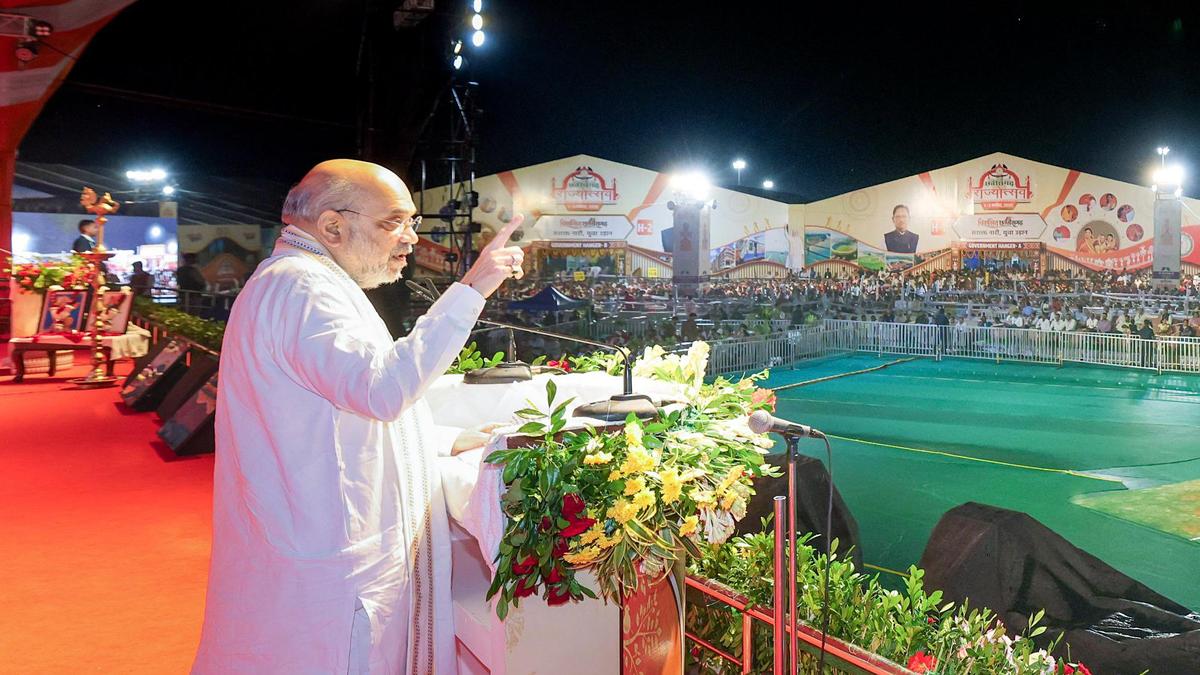
In his address at the Rajyotsav celebrations in Nava Raipur, Chhattisgarh, Amit Shah drew a provocative parallel between the INDIA bloc's mock session and the "Jantana Sarkar." The Jantana Sarkar refers to the parallel, unconstitutional governance structures historically established by Maoist insurgents in their former strongholds. By invoking this comparison, the Home Minister is framing the opposition's extra-parliamentary proceedings not merely as political dissent, but as a challenge to the constitutional legitimacy of India’s electoral oversight bodies.
The Core Dispute: Electoral Roll Revisions
The underlying tension centers on the special intensive revision (SIR) of electoral rolls. The opposition has consistently raised concerns regarding the integrity and transparency of these revisions, fearing potential disenfranchisement or manipulation. By holding a mock impeachment, the INDIA bloc seeks to highlight their lack of faith in the current Election Commission leadership. This move signifies a deeper crisis of confidence between the ruling coalition and the opposition regarding the neutral administration of democratic processes.
Institutional Integrity and Parliamentary Norms
The Home Minister’s response emphasized that the government remains open to "in-house" debates on all issues, including the contested SIR procedures. This highlights a fundamental disagreement over the venue of political accountability. The government argues that by bypassing the formal floor of the Parliament and opting for a private "mock" session, the opposition is undermining the very democratic institutions they claim to be defending. This creates a binary where the government advocates for institutional stability while the opposition opts for public performance to capture voter attention.
Broader Implications for Indian Democracy
This exchange underscores the deepening polarization within the Indian political landscape. The use of inflammatory comparisons like "Jantana Sarkar" serves to delegitimize the opposition’s protest tactics, effectively shifting the public discourse from the technicalities of electoral roll revisions to the ideological conduct of the parties involved. As both sides harden their stances, the divide between formal parliamentary procedure and public protest continues to widen, potentially complicating future legislative sessions.
Future Trends and Political Posturing
Looking ahead, this incident suggests that electoral integrity will remain a central battleground for the foreseeable future. The opposition is likely to continue utilizing unconventional methods to keep the pressure on the Election Commission, while the ruling party will likely continue to frame such actions as anti-constitutional. The reliance on such rhetoric suggests that the upcoming political season will be defined by high-stakes questioning of independent institutions, making the role of the Election Commission more politically sensitive than ever before.
Verification Required?