Amit Shah meets hill leaders to discuss 'permanent political solution' for Darjeeling
Source Entity
India Latest News: Top National Headlines Today & Breaking News | The Hindu
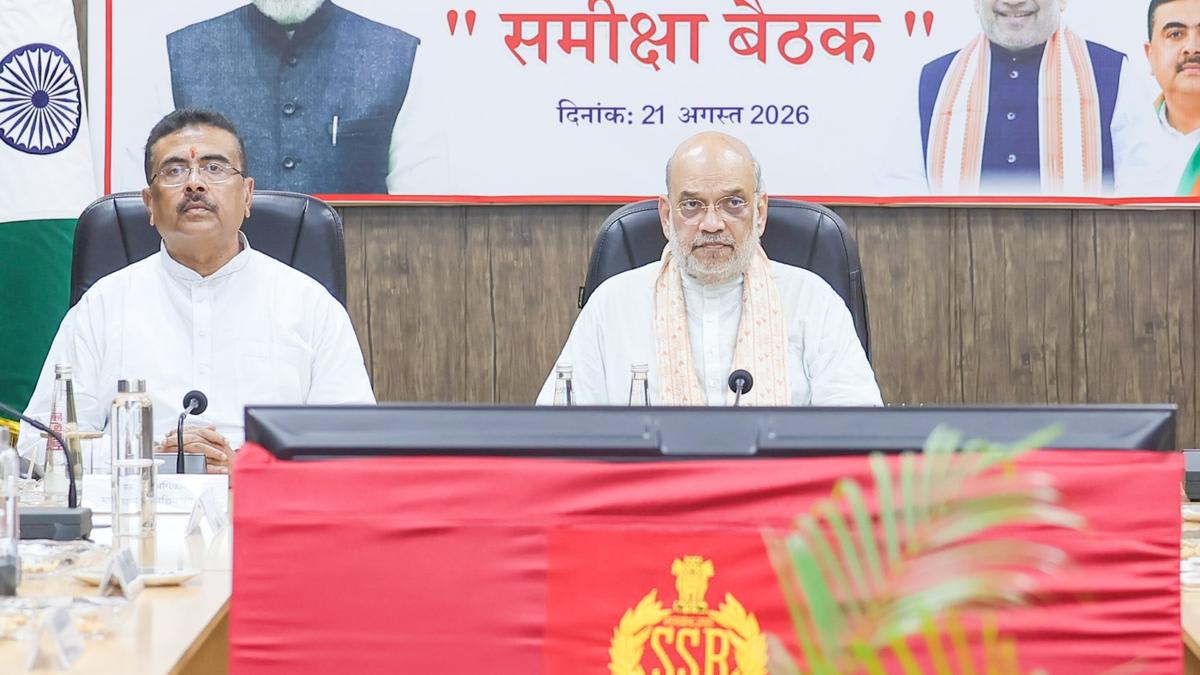
Union Home Minister Amit Shah met with key Darjeeling hill leaders to discuss a permanent political solution for the region. The high-level meeting included West Bengal Chief Minister Suvendu Adhikari and various Gorkha representatives, though specific details of the proposal remain undisclosed.
Assessing the Path to a Permanent Political Solution in Darjeeling
Union Home Minister Amit Shah’s recent meeting in Sukna, Darjeeling, marks a significant moment in the long-standing political discourse surrounding the Himalayan region. By convening with senior hill leaders—including GJM chief Bimal Gurung and GNLF head Mann Ghisingh—the central government has signaled a renewed intent to address the historical grievances of the Gorkha community. This meeting, held during Shah’s visit to North Bengal, underscores the BJP’s ongoing commitment to delivering on its pre-poll promises regarding a "permanent political solution" for the area.
The Historical Context of Gorkhaland
The demand for a separate Gorkhaland state is a decades-old agitation rooted in the desire for cultural identity, administrative autonomy, and economic development. For generations, the residents of the Darjeeling hills have felt marginalized by the state administration in Kolkata, leading to periodic bouts of unrest and political volatility. By framing the current discussions within the "ambit of the constitutional framework," the Union government appears to be seeking a middle ground that respects the territorial integrity of West Bengal while providing the hill districts with greater self-governance or legislative protection.
Key Stakeholders and Political Dynamics
The presence of West Bengal Chief Minister Suvendu Adhikari at the meeting is notable, signaling a potential shift in the collaborative approach between the State and the Centre. The inclusion of Darjeeling MP Raju Bista and various state ministers suggests that the government is attempting to build a broad-based consensus. By bringing opposing factions like the GJM and GNLF to the same table, the Home Minister is attempting to harmonize the fragmented political landscape of the hills, which has historically been a barrier to successful negotiations.
The Challenge of Transparency
Despite the high-profile nature of the talks, the specific details of the proposed settlement remain undisclosed. This ambiguity is a double-edged sword; while it may grant negotiators the flexibility required to navigate sensitive political waters, it also breeds skepticism among the local populace. The success of this initiative will ultimately depend on whether the "permanent political solution" can move beyond rhetoric to offer tangible, constitutional guarantees that satisfy the aspirations of the Gorkha community without triggering wider regional instability.
Future Implications and Outlook
As the government works toward a framework, the primary challenge will be balancing the aspirations of the Darjeeling hills with the broader geopolitical sensitivities of North Bengal. If the Centre successfully implements a solution that earns the trust of all local stakeholders, it could end decades of cyclical instability in the region. Conversely, a failure to provide concrete results could lead to further disillusionment. The coming months will be critical as the administration transitions from preliminary discussions to the formal drafting of a potential legislative or administrative roadmap.
Verification Required?