Sikhs protest outside Rahul Gandhi's residence against Congress leaders calling Sajjan Kumar ‘hero’
Source Entity
India Latest News: Top National Headlines Today & Breaking News | The Hindu
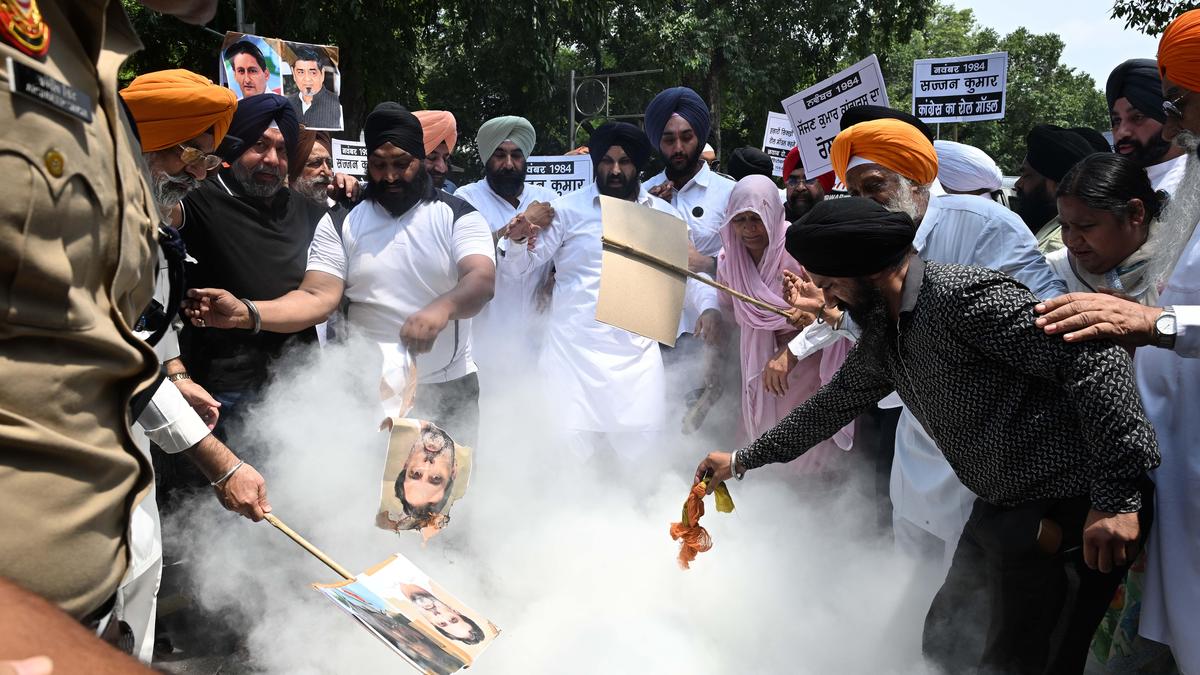
Sikh community leaders and 1984 riot victims staged a protest outside Rahul Gandhi's residence. They are demanding an apology for alleged remarks labeling the late, convicted Congress leader Sajjan Kumar a 'hero'.
Tensions Flare: Protests Erupt Over Sajjan Kumar Legacy
The recent passing of former Congress leader Sajjan Kumar on August 20, 2026, has reignited long-standing grievances regarding the 1984 anti-Sikh riots. Following his death, reports of certain Congress figures referring to Kumar as a "hero" and "role model" triggered an immediate and volatile response from the Sikh community, culminating in a protest outside the residence of Congress leader Rahul Gandhi at 5, Sunehri Bagh Road.
The Core Grievance: A Question of Accountability
At the heart of the protest, led by Delhi Sikh Gurdwara Management Committee (DSGMC) president Harmeet Singh Kalka and general secretary Jagdeep Singh Kahlon, is a profound sense of injustice. The protesters argue that framing a man convicted for his role in the 1984 violence as a "hero" is a direct affront to the victims and their families. By demanding an official apology from Rahul Gandhi and other party leadership, the community is seeking a formal disavowal of such rhetoric, which they perceive as glorifying perpetrators of communal violence.
Historical Context and Political Sensitivity
The 1984 anti-Sikh riots remain one of the most sensitive and divisive chapters in contemporary Indian political history. Sajjan Kumar’s conviction in cases related to these riots served as a significant legal milestone for survivors who had waited decades for judicial recognition of their suffering. Consequently, any positive public framing of his legacy is met with intense scrutiny and outrage from groups like the DSGMC, who view it as an attempt to sanitize a dark period of political violence.
The Impact of Rhetoric on Public Discourse
This incident highlights how legacy and historical memory continue to shape current political discourse. When political figures are posthumously praised, the impact is rarely neutral. In this case, the label of "hero" has acted as a catalyst for renewed public demonstrations, forcing the Congress party to navigate the delicate balance between internal party loyalty and the broader necessity of acknowledging historical trauma. The heavy police presence at the protest site underscores the volatility of these events and the potential for civil unrest when political narratives clash with the lived experiences of victims.
Future Implications for Reconciliation
The demand for an apology suggests that for many affected families, the judicial conviction was only part of the process; moral accountability remains elusive. As the political landscape continues to evolve, the pressure on national parties to address their historical baggage will likely intensify. Future trends suggest that survivor groups will continue to utilize public assembly and media pressure to challenge any attempts to rehabilitate the reputations of those associated with the 1984 riots, keeping this issue at the forefront of political accountability debates.
Conclusion
The demonstration outside Rahul Gandhi’s residence represents a pivotal moment in the ongoing struggle for closure regarding the 1984 riots. As the Sikh community continues to demand clarity and contrition from the Congress leadership, the incident serves as a reminder that history in India is rarely static. The path toward reconciliation will depend heavily on how political institutions address the grievances of survivors and reconcile their internal legacies with the demands for justice and historical truth.
Verification Required?