Judges are not gods, won't get every judgment right: Outgoing SC Judge Sanjay Karol
Source Entity
India Latest News: Top National Headlines Today & Breaking News | The Hindu
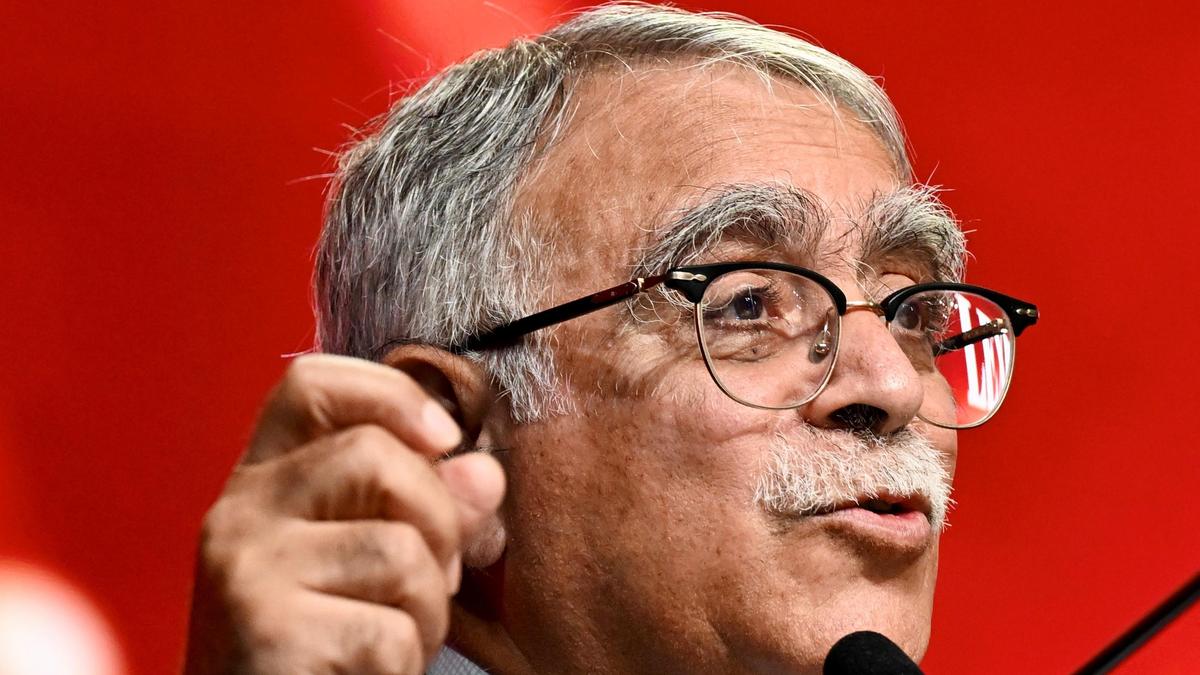
Outgoing Supreme Court Justice Sanjay Karol emphasized the necessity of judicial humility, asserting that judges are not infallible. The farewell ceremony highlighted his legacy of balancing legal rigor with empathy for the human element in litigation.
A Reflection on Judicial Humility: Justice Sanjay Karol’s Farewell
On August 22, 2026, the Indian Supreme Court held a ceremonial farewell for Justice Sanjay Karol, marking the conclusion of his tenure. In a poignant address, Justice Karol offered a candid reflection on the nature of the judiciary, asserting that judges are not infallible beings. By explicitly stating that "judges are not gods," he underscored the inherent limits of human decision-making and the reality that not every judgment rendered by the court will be free from error.
The Human Element in Jurisprudence
Beyond the admission of fallibility, Justice Karol emphasized that the act of judging requires a profound degree of humility. He urged his colleagues to look beyond the cold, clinical facts of a case to perceive the "real person" behind every litigant. This perspective advocates for a judicial approach that transcends procedural adherence, prioritizing the human experience and the societal implications of legal disputes. His philosophy suggests that the law should not be a mechanical application of statutes, but a nuanced process that acknowledges the dignity of those appearing before the court.
Constitutional Responsibility vs. Legal Accuracy
Justice Karol’s remarks highlighted a critical distinction between the technical application of law and the pursuit of justice. He noted that the Constitution does not merely demand the correct application of law, but the just application of it. This sentiment reflects a broader debate within legal circles regarding the role of the judiciary as a moral arbiter. By framing the responsibility of judging as a task that aims for justice rather than mere technical accuracy, he set a standard for balancing strict legal interpretation with equitable outcomes.
Recognition from the Bench and the Bar
Chief Justice of India Surya Kant and other prominent members of the legal community, including Solicitor General Tushar Mehta and Supreme Court Bar Association President Pradeep Rai, participated in the farewell. The tributes focused on Justice Karol’s patience, courtesy, and his unique ability to encourage younger members of the Bar. Colleagues remembered him as a "saintly judge," a testament to his demeanor in the courtroom and his willingness to listen to litigants, which helped bridge the gap between complex legal theory and the realities of life.
Legacy and Future Implications
Justice Karol’s tenure is characterized by his ability to give legal visibility to overlooked societal realities. By consistently urging advocates to look at matters "emotively," he pushed for a more empathetic judicial culture. As the Supreme Court continues to evolve, the emphasis on patience and the humanization of the litigation process remains a vital trend. His farewell serves as a reminder that the legitimacy of the judiciary rests not just on the authority of its rulings, but on the integrity and humility of the individuals occupying the bench.
Conclusion
In his final act as a Supreme Court judge, Justice Sanjay Karol left a legacy defined by intellectual honesty and a deep-seated commitment to the constitutional promise. His acknowledgment of the limitations of the judiciary serves as a call for continued self-reflection among legal practitioners. As he departs, his call for humility and empathy remains a guiding principle for the future of the Indian legal system, ensuring that the court remains a place where the human spirit is seen as clearly as the letter of the law.
Verification Required?