"No Compromise On Honour, Legacy Of Vande Mataram": BJP Passes Resolution
Source Entity
NDTV News Search Records Found 1000
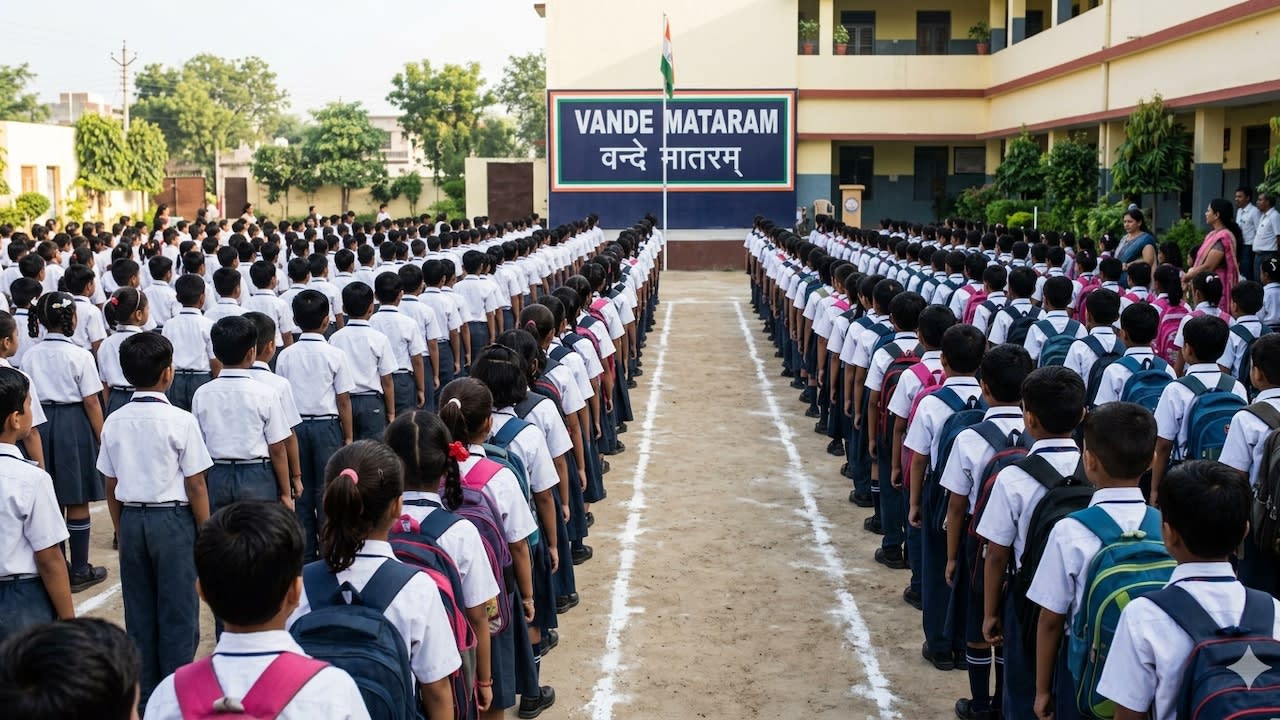
The BJP has passed a formal resolution condemning the Congress party's decision to restrict the singing of Vande Mataram to its first two stanzas. The BJP asserts this move undermines the national song's legacy and has announced a nationwide campaign to promote its full version.
The Vande Mataram Controversy: A Clash of Ideological Perspectives
On August 22, 2026, the Bharatiya Janata Party (BJP) formally passed a resolution reaffirming its commitment to the "honour, dignity, legacy and national status" of the complete version of Vande Mataram. This move serves as a direct rebuke to the Congress party, which recently moved to limit the singing of the song to its first two stanzas during party events. For the BJP, the song is not merely a composition but a "mantra of the freedom struggle" and an "immortal symbol of India’s national consciousness."
The BJP's Stance on National Identity
The BJP’s resolution, presided over by party president Nitin Nabin, frames the Congress party's decision as a form of "political convenience or appeasement." By categorizing the restriction of the song as a slight against the "national character" of India, the BJP seeks to emphasize its role as the primary guardian of India’s cultural and historical heritage. The resolution explicitly states that no compromise regarding the song’s full rendition will be accepted, framing the issue as a matter of national pride rather than mere party protocol.
Historical and Political Context
The debate over Vande Mataram is deeply rooted in India’s colonial history, often surfacing in contemporary discourse when political parties attempt to define or redefine the boundaries of national identity. While Vande Mataram was a rallying cry during the struggle for independence, the historical practice of singing only the first two stanzas has been a common convention in various administrative and political circles. The BJP’s current opposition to this convention underscores a broader effort to re-center traditional symbols in the national narrative.
Broadening the Scope of Confrontation
This ideological clash occurs against a backdrop of intensifying political friction between the BJP and the Congress. Notably, the resolution follows a period of heightened activity, including a sit-in protest led by Leader of Opposition Rahul Gandhi at the Parliament Street police station. The protest, which demanded an FIR regarding an alleged pellet gun attack on a student during demonstrations at Jantar Mantar, suggests that the BJP and Congress are currently locked in a multi-front political battle that encompasses both symbolic heritage and contemporary human rights issues.
Future Implications and Nationwide Campaign
As part of its strategy, the BJP has announced plans to launch a campaign aimed at spreading the "glorious heritage" of Vande Mataram to every corner of the country. By taking this debate to the public sphere, the BJP aims to consolidate its support base by highlighting the Congress party's stance as being at odds with traditional nationalist sentiments. This campaign is likely to serve as a key mobilization tool for the party, framing the upcoming political discourse around the protection of national symbols and historical legacy.
Conclusion
The dispute over the singing of Vande Mataram reflects the deep ideological divide in Indian politics. As the BJP moves forward with its resolution and subsequent awareness campaign, it is clear that the party intends to keep the debate over national identity at the forefront of its political agenda. Whether this strategy will resonate with the broader electorate or further polarize the political landscape remains a critical question for the near future of Indian governance.
Multiple Citing Sources
Verification Required?