'3 crore Bangladeshi infiltrators': Amit Shah counters Rahul's anti-SIR pitch
Source Entity
RAJEEV SINGH
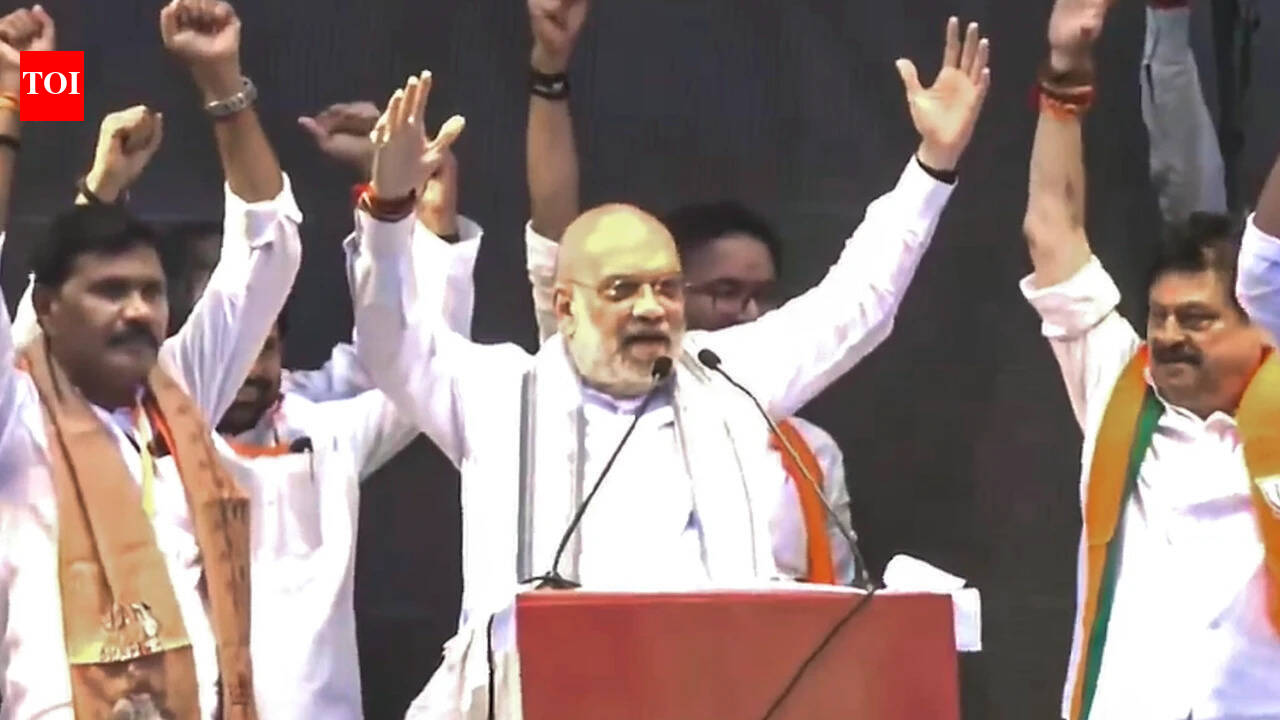
Union Home Minister Amit Shah has defended the Election Commission's Special Intensive Revision (SIR) process, alleging it removed three crore illegal Bangladeshi infiltrators from electoral rolls. The BJP maintains this exercise is a routine refinement to prevent bogus voting, rejecting opposition claims of vote theft.
The Controversy Surrounding the Special Intensive Revision (SIR)
The political landscape in India has been sharply divided over the recent Special Intensive Revision (SIR) of electoral rolls. Union Home Minister Amit Shah has launched a robust defense of the exercise, directly countering allegations made by Leader of the Opposition Rahul Gandhi. The core of the dispute lies in the legitimacy and intent behind the removal of 13 crore names from the national voter lists, a move the BJP characterizes as a necessary administrative cleanup to ensure democratic integrity.
Analyzing the Claims of 'Infiltration'
Amit Shah, speaking in Hyderabad, provided a granular breakdown of the 13 crore deletions reported during the SIR process. According to the Home Minister, these deletions were not arbitrary but targeted at specific categories of invalid entries. He claimed that three crore of these individuals were illegal infiltrators from Bangladesh, while 4.25 crore were registered in two different locations, three crore were deceased, and one crore were classified as duplicates. These statistics form the backbone of the government's argument that the electoral rolls were previously compromised by systemic inaccuracies.
The BJP vs. Congress Narrative
While the BJP, represented by spokesperson Sambit Patra in Varanasi, insists that the SIR is a standard, periodic verification process designed to remove the deceased, the absent, and those who have permanently shifted, the opposition views it through a different lens. Rahul Gandhi’s criticism at the Ramlila Maidan rally suggested that the process is designed to manipulate electoral outcomes. The BJP has countered this by accusing the Congress of attempting to facilitate 'bogus voting' and protecting illegal residents for political gain.
Historical Context of Electoral Refinement
It is important to note that the Election Commission of India (ECI) regularly conducts revisions to maintain the accuracy of the electoral roll. Sambit Patra emphasized that SIR is not a new or extraordinary exercise but a routine administrative function. The contention here arises from the sheer scale of the deletions—13 crore names—which has sparked a national debate regarding the threshold between administrative efficiency and the potential disenfranchisement of legitimate voters.
Broader Political Implications
This debate highlights the deep polarization surrounding national security and immigration policies in India. By linking the deletion of voters directly to the issue of 'illegal Bangladeshi infiltrators,' the Home Minister has elevated the SIR from a technical bureaucratic procedure to a central pillar of the current political discourse. The assertion that such individuals will be expelled from the country underscores the government's commitment to strict enforcement of citizenship and migration laws.
Looking Toward Future Trends
As India heads toward future electoral cycles, the transparency and methodology of voter roll management will likely remain a flashpoint. The government’s focus on 'refining' the rolls suggests a continued push for digital verification and stricter cross-referencing of identification databases. Conversely, the opposition is expected to continue demanding greater accountability from the ECI to ensure that no legitimate citizen is removed from the list during these massive administrative exercises.