Ancient Pre-Inca Human Offering Unearthed By Archaeologists At Ceremonial Site In Lima
Source Entity
Latest News: Todays Latest News Headlines from India & World | Hindustan Times | Hindustan Times
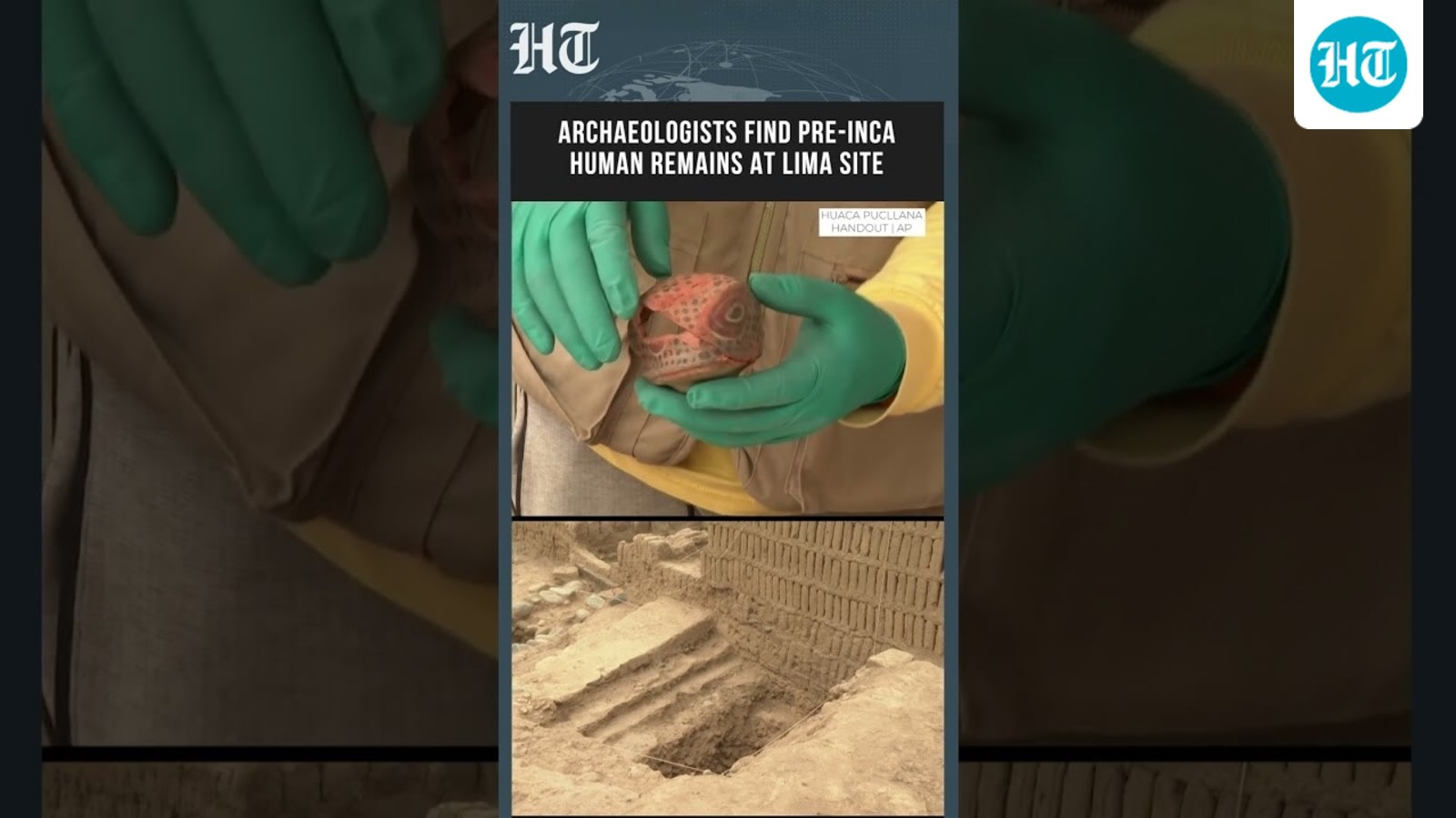
Archaeologists in Lima, Peru, have discovered human remains from a pre-Inca ceremonial site. This find offers valuable new evidence regarding the ritualistic practices of societies that predated the Inca Empire.
Unearthing the Pre-Inca Past in Lima
Archaeologists working in the heart of Peru’s capital, Lima, have announced the significant discovery of human remains identified as offerings from the pre-Inca period. This find at a known ceremonial site provides a rare, tangible link to the complex societal structures that thrived in the Andes long before the Inca Empire consolidated its power across South America. By examining these remains, researchers are beginning to piece together the spiritual and cultural landscape of a region that was once a mosaic of diverse, sophisticated civilizations.
Contextualizing Ancient Ritual Practices
The discovery of human offerings is particularly revealing because it highlights the profound importance of sacrifice and ritual in pre-Inca cultures. These practices were not merely isolated events but were deeply integrated into the communal and religious lives of the people. By analyzing how and where these remains were deposited, archaeologists can infer the social hierarchy, belief systems, and the level of organization required to maintain such ceremonial centers in what is now a bustling modern metropolis.
The Pre-Inca Civilizational Tapestry
It is essential to recognize that the Inca Empire, while the most famous of the Andean civilizations, was built upon the foundations of those that came before it. Civilizations such as the Lima culture, the Wari, and others occupied these coastal valleys for centuries. This specific discovery serves as a reminder that Lima’s urban sprawl sits atop a dense, multi-layered archaeological record that continues to challenge our understanding of how early Andean populations interacted with their environment and their deities.
Methodological Advances in Andean Archaeology
Modern archaeological techniques are allowing researchers to extract more data from these sites than ever before. Through the careful excavation of these offering sites, experts can now look beyond the surface to understand the diet, health, and potential origins of individuals chosen for these rituals. This scientific rigor is transforming our narrative of the past, shifting it from broad, generalized theories toward a more nuanced appreciation of specific, localized cultural identities.
Broader Implications for Historical Preservation
As Lima continues to expand, the preservation of these ceremonial sites becomes an urgent priority. The discovery underscores the necessity of integrating urban development with heritage protection. Each unearthed site is not just a collection of artifacts, but a vital piece of the human story that informs us about resilience, faith, and the evolution of human society in one of the most challenging terrains on Earth.
Future Trends in Andean Research
Looking forward, we can expect that continued excavations in Lima will yield even more evidence regarding the trade networks and cultural exchanges that occurred between coastal and highland peoples. As more data is analyzed, the timeline of human development in the region will likely become more precise, further cementing the importance of these pre-Inca sites in the global history of human civilization.
Verification Required?